


Divine Madness
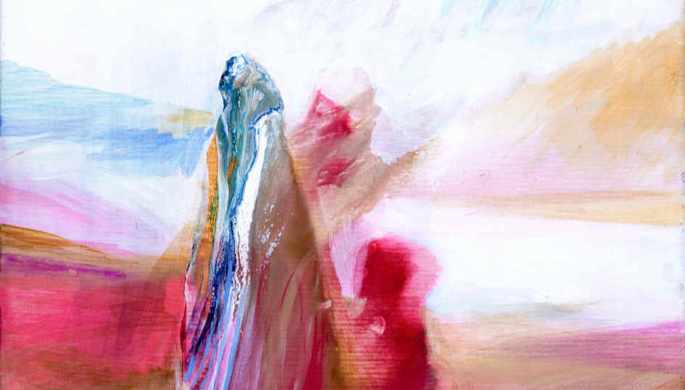
“The prophet is a fool. The man of spirit is mad.” (Hosea 9:7)
There is a certain madness to this idea of talking to G‑d, of saying “You” to the Ground of Reality— as though this were a person. Like the madness of love or of unbounded joy. Not the madness of a derelict mind, but the madness that rides upon the shoulders of reason, with all its qualities, but beyond. Beyond reason.
Reason scales lofty mountains. Reason alone can pull back the curtains and find G‑d there, hiding within existence. “Just as I extend from Mind,” says Reason, “so the pulse of life, the path of the electron, the entire cosmic order, all extend from one magnificent Mind.” And from where does that Mind extend? From That Which Is. As in the four letter name of G‑d, a conjugation of the verb to be.
But only madness could imagine entering a conversation with That Which Is.
Reason stands on the threshold, peering at a blinding light that bursts through the keyhole, trembling to open the door to her own womb. For in that place, she knows, the light is so great, there is no room for reason. She has shown the way, but now she must step aside for madness to break in.
Madness kicks down the door and liberates G‑d. Madness, the insanity of joy and of love, knows no fetters, respects no bounds. Madness says, “Why should I limit you to that which is? You can be found wherever You wish to be found! You can care about whatever You wish to care! Without reason—for You Yourself have no beginning, no end, so there is no Reason that will dictate to You how things must be.”
And so this madness, this wild, radical sense of freedom that breathes within the human spirit and lifts him from the status of object to person, this madness finds its partner in G‑d. “Both of us are free,” this madness says. “My freedom comes from You and Your freedom becomes real in me. So let us be partners and I will speak to the Ground of Reality and say You.”
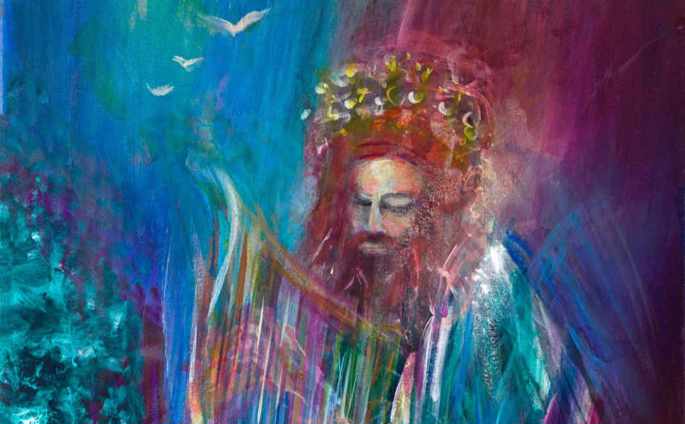
Yochanan Allemano, a 16th century Italian Kabbalist whose ideas had a profound influence on the early Humanists, wrote, "In knowing G‑d, reason plays only second fiddle. Its light is pale and diffuse. But dazzling bright, like the light of the sun, is the sweetness of divine madness."
King David sang, "I am a boor, I cannot know anything. I am an animal with you—and I am always with You!"
Rabbi Schneur Zalman explained what King David meant. "Because I am a fool, therefore I can be always with You."
And he himself could be heard in the divine madness of his prayer, muttering feverishly, "I don’t want Your Garden of Eden! I don’t want Your world-to-come! I only want You, You alone!"
"The wise understand," wrote Solomon, "but the fool believes everything." Who is the fool? Our sages said the fool is Moses. For he believed everything G‑d told him.

To Moses, G‑d said, "I am who I am. Tell them that I am sent you."
So Moses told Pharoah, "He Who Is Who He Is demands you release His children, that they may serve Him in the wilderness."
To which Pharaoh replied, "Moses, you are mad. The lesser gods, the forces invested within the natural order, to them we can speak and manipulate with our rituals. But He Who Is Who He Is—this you invoke? There is no care in that place, no concern to change matters. That Which Is is not a person to be concerned with Itself. Moses, go, be enlightened with your transcendental state of being. And then, reasonably, you must leave me to sit on the top of my pyramid and permit the people to remain oppressed. For that is just what is."
In ancient Egypt, they called that "mata." In India, it’s called karma. Moses called it a bum deal. He liberated G‑d and let Him into His world. Doing so, he liberated humankind as well, from a lonely being in a cold and hostile universe to a partner in a dialog we call Reality.
Moses was a wise madman, a holy fool. A liberator.
When we declared in Shushan, “We are Jews! We are the people of Mordechai, for life or for death!” there was no room for any notion otherwise. We all became holy prophets of divine madness. We became eternal—beyond knowing, and so, beyond time.
That is why Purim is a celebration of divine madness. “A Jew must become drunk with the joy of Purim,” teaches the Talmud, “until he does not know the difference between cursing Haman and blessing Mordechai.” Purim is that state of joy beyond knowing.
That is why on Purim we send gifts of food and drink to one another. That is why we feast together, drink together. That is why “Whoever puts out his hand, you must give to him.”
Beyond knowing, there are no “others,” no you and me and him and her—we are all one ocean of the energy of consciousness, of joy.
Beyond knowing, there is no good and bad—all that pours down from heaven is good, every moment is a moment to cherish and to celebrate.
Beyond knowing, the maddening delusion of being something other than G‑d dissolves. There is only G‑d—my ego nothing more than His will performed, my life nothing more than commentary.
To imagine otherwise becomes pure madness.
|
|
|
|
|
|
|
|
|
|
|
|
|
|
|
|
Join the Discussion
Divine Madness by Rav Tzvi Freeman Adar ll, 2019 with artwork of Yoram Raanan I heard the poetic voice of Rav Tzvi Freeman....beautiful! And the artwork is in a category of its own. As Rav Freeman says man really is a verb.
The method to the madness is to let go of even the thoughts,feelings and the identity of the person realising in the creator taking care of everything.Its quite frightening, but i guess for the higher consciousness to seep in that must be one of the prerequisites.Its a process whereby the subconscious is filled in with the material of the creator and his files begin to work on the individual.The good thing is theres no opposite in this state as its a state of utter bliss.
As always, Rabbi Freeman explains what the people in India call "accessing the Akashic Record," which holds all knowledge and answers all questions, which is only available to the spirit, and not to spirits encased in a 3-D limited physical body. But, using alcohol is not the healthiest way to do this -- it harms the physical body to which the spirit must return, it can also sometimes result in uncontrolled violence, and we are prohibited from harming HaShem's creations.
Deep, calm and peaceful meditation is the correct and much healthier, way to access our spiritual home.This may be difficult for Men, with their Yetzer Ha-Ra situation, but Mordechai did not benefit at all from using violence to try to save his people. Esther prayed and meditated, accessed the Akashic Record, received the answer, and saved all of her people, with no violence at all.
Divine Madness Enjoyed this article. Found it eye opening and thought provoking!Thank you for emailing me Daily Dose Of Wisdom.
What about holiness It seems that one thing is missing is this discourse: holiness. The presence of holiness makes it into a real freedom and not madness. If the holiness is taken away from this state of mind - the result is madness. (Similar to what happened to king Shaul)
Freedom Madness? Why, it's true freedom.
Logic
Thank you Rabbi Freeman, for understanding my mad love for G_d. It seems that all the world is mad with a personal logic that makes sense only if they ignore the Divine existence.
I do not fear death, for it is also only a servant, I do not want for an afterlife, for G_d's joy in my actions in this life is all I wish.
May Dear Rabbi Freeman, please pray that G-d give a divine quality to my mandness, I enjoyed your ariticle :)
I am not Jewish either although my soul seems to find a happy home in Judaism and I hope one day to be able to convert. I also adore Rabbi Freeman's article and insights. This one is no exception. I am also amazed at the number of non- Jewish readers there are on this site. It just shows that many people are searching to find a spiritual home.
Rabbi Freeman a Non-jewish approach: Its hard to explain how deep I find your writings. Reading them gives me a feeling of going back home but its more than that, Its deep pleasure, big pleasure, kind of intellectual, kind of spiritual. Thank you for teaching Torah so amazingly and for serving our G-d.
" Moses called it a bum deal. He liberated G-d and let Him into His world. "
What a delight of of inspiration! That one statement epitomiizes the essence of Judaism. It separates us from all the "ancient religions" and in a nutshell it crystalizes why we are "we" and "they" are them.
Not Jewish, but for some time already I 've been reading articles on chabad.org. Sometimes I may be feeling at a loss, (as a non-Jewish reader), because of certain attitudes some texts espouse, but most of times reading feels like weirdly "coming back home". .
Well, the latter is mostly thanks to Tzvi... I fell in love with his writing long ago, but this piece deserves a special thanks.
Divine Madness I am not Jewish, but I absolutely LOVED this little essay. It is profoundly spiritual and very practical at the same time. It has touched me at a very deep level.
Divine Madness Yasher koach!
Inner Dimensions
Tzvi Freeman is one of the best thinkers of our time. His dynamc, modern approach makes it easy to understand even the deepest dimensions of the Torah.
Every bit of his writings are facinating and fun to read. Everyone can get inspired by understanding and internalizing these articles.
I don’t mean to be negative. Indeed I very much value what you write and teach.
But, madness? Why, really, are you using this word in this context? I’ve read this piece carefully and see where you’re headed. I like it and get the idea. But I think madness is the wrong (and dangerous) way to describe it.
I know you know that the verse in Hosea doesn’t relate to the quality of madness in a positive way at all. The prophet critiques the wayward people for treating true prophets as fools and inspired people as mad.
I’m not suggesting restraint. You’re teaching against too much restraint. I get it. But madness means a whole lot of things that are quite different than what you’re encouraging.