


No other city has captured the hearts, minds, and souls of Jews worldwide like Jerusalem. But for hundreds of thousands of Jews of all types and stripes, it’s not just a dream—it’s home. As we mourn the destruction of the Holy Temple and pray for its imminent reconstruction, let’s explore 12 facts about the Jews who live right next door.
1. Jerusalem Has Had a Steady Jewish Presence
Jews have lived in Jerusalem since Biblical times. By 2892 (869 BCE), King David had made it the capital of the Land of Israel. The destruction of the Second Temple and intense Roman persecution left the city desolate—but not for long. Over the centuries, Jews slowly made their way back, ensuring a near-constant presence within its holy walls.
Read: 15 Facts About Jerusalem
2. They Came From All Over
Over the centuries, the Jews of Jerusalem weathered ups and downs, sometimes almost decimated by war and plague and sometimes bolstered by pilgrims. In the 18th and 19th centuries, large waves of Jewish immigrants settled in Jerusalem. These newcomers came from all over: Sephardic Jews from North Africa and the Middle East; Mizrahi Jews from Persia, Bukhara, Yemen, and other regions; and Ashkenazi Jews—both chassidic and non-chassidic (Lithuanian) alike—from Europe. Despite their differences, they developed a shared Jerusalemite culture, complete with unique customs, food, and clothing.
3. Jews Around the World Helped Support Them

In the days before modern industry, going back to medieval times, most Jerusalemite Jews relied on help from their fellow Jews in the Diaspora. Special fundraising groups, called kollels, were formed on behalf of immigrants from specific regions, such as Poland, Hungary, and Russia. Each kollel would periodically send emissaries abroad, collecting money to support people from their country now living in the Holy Land. This system evolved in the early 20th century, as conditions worsened in Eastern Europe and economic opportunities grew in Palestine.
Watch: Israel’s Oldest Charity
4. They Built New Neighborhoods
For much of history, Jerusalem’s Jews lived inside the Jewish Quarter of the Old City. But as the population grew and space became tight, pioneers began building neighborhoods outside the safety of the ancient walls. The first such neighborhood was Mishkenot Sha’ananim, built by British Jewish philanthropist Sir Moses Montefiore, followed by Machaneh Yisrael, built by North African Jews. These early neighborhoods paved the way for the sprawling metropolis of Jerusalem we know today.
Read: How Jerusalem’s Jews Settled Outside Her Ancient Walls
5. Weddings Without Music
A unique custom in some Jerusalem communities is that weddings include no instrumental music—only drums. This tradition began around 150 years ago as a spiritual remedy in response to a deadly plague.1 It was also intended as a way to mourn the destruction of the Temple—in the very city where it stood.2
6. They Start Shabbat Early

In Jerusalem, Shabbat candles are lit 40 minutes before sunset—much earlier than the more common 18-minute standard in other cities.3 This extra time is a long-standing Jerusalem custom, followed by many (though not all) of the city’s residents. Interestingly, the city of Petach Tikvah also lights 40 minutes early because it was founded by Jerusalemites who brought the tradition with them.
Read: Why Light Shabbat Candles Eighteen Minutes Before Sunset?
7. Their Clothing Is a Hybrid of Ashkenaz and Sephard

Many Jerusalemites—particularly among the more traditional communities—are known for their unique style of dress. Men wear a Sephardic-style light-colored, striped kaftan (long robe) tied with a sash, and an Ashkenazic wide-brimmed hat on weekdays and a fur shtreimel on Shabbat. The kaftan is full of spiritual symbolism. For example, it is made of 26 pieces (the numerical value of G‑d’s name), and its stripes reflect the direction of the tefillin straps.
8. They Celebrate Purim a Day Later
One of the most famous unique Jerusalem practices is celebrating Purim on a different day! While most Jews celebrate on the 14th of Adar, Jerusalem celebrates on the 15th—Shushan Purim—because the city was walled in Biblical times.4 In fact, Jerusalem is the only city today that meets this criterion—with some cities celebrating both days just to be sure. Many Israelis enjoy celebrating Purim in their hometowns and then head to Jerusalem the next day to continue the festivities.
9. A Kugel That Mixes Sweet and Spicy

Just like its people, Jerusalem’s cuisine is a blend of cultures. One standout is Yerushalmi (Jerusalem) kugel—a noodle dish created by Ashkenazi settlers that combines caramel sweetness with the bold kick of black pepper. It’s a delicious example of European food with Middle Eastern flavor, and a staple in many Jerusalem homes on Shabbat day.
10. They Pray in a Variety of Synagogues—Including Near the Holiest Place on Earth

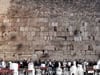
Jerusalemites have plenty of synagogues to choose from—some old, some new, but all inviting. You can pray in historic sanctuaries like the Hurvah, Ramban, or Tzemach Tzedek Synagogues in the Old City. You can join the crowd in the majestic Belz Great Synagogue or slip into a small, warm shtiebel tucked away in an alley. And of course, many head straight to the holiest place of all where Jews may go nowadays: the Western Wall, the last remnant of the Holy Temple.
11. Their Yiddish Pronunciation Is Unique
The Ashkenazi community of Jerusalem was dominated for generations by migrants from Lithuania (Litvaks), whose accent shaped the unique dialect of Yiddish that has developed in the city. One unique feature of the Jerusalemite pronunciation is that its speakers often transpose the aleph and hey.
Read: 13 Facts About Yiddish
12. Their City Unites Them—and All Jews—as One

Jerusalem isn’t just a city—it’s a place that unites all Jews. On 16 Adar, 5747 (March 17, 1987), the Rebbe spoke about this special quality, connecting it to that same date in 335 BCE, when Jews returning from Babylon began to rebuild the city’s walls. Quoting Psalms, he emphasized Jerusalem as “the city in which all are joined together.”5 Similarly, the Talmud teaches that when Jews pilgrimaged to Jerusalem for the festivals, upon entering the city’s walls they became united—as if they were a single entity.6


Join the Discussion