


Emor
Please Meet “Rabbi Y”
Dear Friend,
Judaism is all about asking questions. In fact, before the Internet was invented, Chabad.org’s founder, Rabbi Y. Y. Kazen, was fielding questions from all around the world via message boards and other precursors to e‑mail as we know it.
To this day, our Ask the Rabbi team replies to hundreds of questions on a daily basis on every topic imaginable. From the Jewish backpacker seeking a warm meal and a place to pray, to the curious gentile wondering about Jewish tradition—each and every one is answered with care and respect.
Since the early days of our site, we’ve been publishing some of these questions (of course, removing any identifying information to ensure the privacy of the questioner). Today, Chabad.org has a collection of thousands of such correspondences online for all to enjoy.
We’re thrilled to announce that Rabbi Yehuda Shurpin, who joined the Ask the Rabbi team in 2009, has begun a new column called Ask Rabbi Y. As you may have guessed, it will be a place where you can ask “why.” Why do we write Hebrew from right to left? Why do we make a blessing on fire on Saturday night? These are just some of the issues he’s been addressing on a weekly basis.
Is there something you’re wondering about? Just submit your “why,” and Rabbi Y will consider it for an upcoming column.
Enjoy!
The Chabad.org Editorial Team
P.S.: Rabbi Shurpin also maintains another column, The Court of Jewish Law, where everyday questions are analyzed in the light of halachic tradition.

Why are Jewish people living in the United States speaking German? Can’t they speak in English, or at least Hebrew?
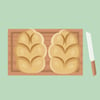
The long-standing Jewish custom is for Shabbat breads to be braided. Here's why.

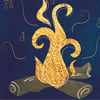
Lag BaOmer is a festive day on the Jewish calendar, celebrating the anniversary of the passing of the great sage Rabbi Shimon bar Yochai and the end of a plague that raged amongst the disciples of the great sage Rabbi Akiva.


I would never have expected that I would meet a sister in Beijing, but that’s exactly what happened.

It has taken many soggy salads, but I now appreciate that tzedakah is more than a Jewish ethical obligation or a mitzvah to check off. It also has a spiritual component.

Join the sages of yesteryear as they explore the deeper meaning of this week’s Parshah. As quoted from the Talmud, Zohar, Maimonides, the Code of Jewish Law, and more . . .

A talk in which the Rebbe explains the deep meaning of the name of this Torah portion, Emor.

Rabbi Chezky Lifshitz and a fellow rescuer fly to find the living—and the dead, while Chani Lifshitz and her staff continue to care for the stranded and the desperate in Kathmandu.

Bonfires by night and parades by day in a massive celebration of Jewish unity.

With disaster has come loss; the daunting work to help the suffering in Nepal continues.

Award in memory of three Israeli teenagers kidnapped and slain in June 2014.

Various added restrictions, responsibilities and honors that apply to the patrilineal descendants of Aaron even in our days.
Our self-love helps us excuse our faults. No one likes when others point out our shortcomings and reveal what we worked so hard to conceal. Can we apply this principle to loving another?
The “Second Passover” sacrifice was offered as a makeup for the paschal sacrifice, for someone who was ritually impure or too far away from the Temple at the time of Passover. On the other hand, the commentaries explain that the Second Passover is also a celebration in its own right.

“You will plant and won’t harvest; you will bring in and won’t bring out; you will bring out and won’t bring in . . .”


We are one because we share a single soul, like a single, brilliant sun shining into many bodies. Since the soul is what counts, that makes us essentially one.
That is the meaning of the mitzvah of the Sukkah—a place that encompasses us all equally, rendering us a single whole.
We are also one because none of us are ali...


