


Balak
Mother and daughter; father and son; brother and sister; husband and wife; friend and friend; teacher and pupil. To the varied array of human relationships, the phenomenon and experience of Chassidism has added one more: the bond between the rebbe and the chassid.
The Lubavitcher Rebbe, Rabbi Menachem Mendel Schneerson of righteous memory, passed away on the 3rd of the Hebrew month of Tammuz, in the year 5754 (June 12, 1994). This Tuesday, July 5th, we commemorate his yahrtzeit. Traditionally, this is a day for reflection, learning, prayer, positive resolutions and acts of lovingkindness. Many also have the custom to visit and pray at the Ohel, the Rebbe’s holy resting place.
But what is the nature of the rebbe-and-chassid bond?
There is fierce love in it, and unquestioning loyalty. There is passion, devotion, admiration, appreciation, awe, mentorship, care, concern, sacrifice. Almost every human emotion is there, in heightened form.
But can it be described?
Read about how people from all walks of life speak about their relationship with the Rebbe on our page commemorating the Rebbe’s anniversary of passing.
On this special day, let us join together with Jews throughout the world in learning extra Torah, reciting an additional prayer, and giving some extra charity. Let us also try and apply some of the Rebbe’s care and selflessness to our own interactions with family, friends and strangers. There can be no more fitting tribute to the Rebbe than millions of good deeds, performed on his day.
May G‑d help us, in the merit of our collective acts of goodness, to quickly greet the righteous Moshiach.
The Chabad.org Editorial Team
One day, after another round of my incessant questioning, the teacher suggested, “Why don’t you write a letter to the Rebbe requesting a private audience?”

Around 1970, a young teenage girl who had inexplicably lost her voice emerged from the Rebbe’s room speaking again! Now a healthy mother of eleven, she tells “the rest of the story.”

Dr. Yitzchak Block is Emeritus Professor of Philosophy at the University of Western Ontario. In the mid-1950s, he accompanied a group of college students to a private audience with the Rebbe.
Four women share their personal stories of how their lives were changed by their relationship with their respective shluchos.

The Rebbe believed to his core in the value of the individual. He never lost sight of each tree in the forest.

“Aren’t there way too many things to do?” “Is there anything in your life that you wish you could do, but you can’t?” The questions came hurtling toward me, one after the next . . .

I took to heart the idea that I was created to make a positive difference to my surroundings. I couldn’t be selfish anymore . . .

Optimism is contagious. We achieve the most when we pass on the tools of success to others. We must lead by example . . .

She was about to move into an assisted living apartment. It was not something she was looking forward to. We knew that we had persuaded her to make the move . . .

Am levadad yishkon, a nation dwells alone. In ways we can’t always appreciate, that dwelling is a benefit to us and to the world. History attests to that, even as it does not explain it . . .

The hallmark of the careless, irresponsible person is the notion that something “just happened.”

Do not look into your neighbor’s tent to help decide what you should be doing. Your decisions in life should not be based on what other people are, or are not, doing.
He’s declared to be nothing less than the equal of Abraham (in passion) and Moses (in prophecy). Yet, he’s described as the most corrupt human being ever to walk the earth!
It’s easy to mock the ancient idol worshippers for their misplaced emphasis on style over substance, but how many of us make similar mistakes in our personal lives?

On one side stood Moses, the greatest prophet of all time. On the other side was Balaam, the far-famed soothsayer. At stake was the most critical question in all creation.
a frightened king and a greedy prophet, a sword-wielding angel and a talking donkey, curses, blessings and a messianic prophecy, a plague provoked by pagan debauchery and a zealot who saves the day . . .
True peace is apparent only between people who have opposite perspectives and still manage to live in harmony with each other. Guest Expert: Chana Weisberg.
An in-depth analysis of some of the most unusual prophecies ever known to humankind!
Footage from a 1985 satellite broadcast of the Rebbe’s annual gathering in celebration of his father-in-law’s birthday and release from Soviet incarceration.

As G‑d’s children, we must act and look the part, conducting ourselves with dignity and modesty.
This presentation sheds light on writing a Jewish will and the legalities of estate issues with regard to inheritance.

I keep encountering quotes from the Bible about Zion, but I can’t work it out. Is Zion a specific mountain? So who is the “daughter of Zion”?
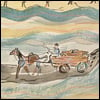
“That is all fine and well,” replied Rabbi DovBer’s friend, “but there remains one slight problem: I need the
merchandise . . .”

Where are we headed? What is the Jewish interpretation of history? Twenty-eight articles and dozens of source texts on the why, how, who, when and what of Moshiach and the future redemption.
Yom Kippur is described in many ways. One very poignant description is that it is “once in a year.”
You see, the human soul is also described in many ways, with five different names, each describing a deeper level of her being. The fifth, deepest level is called yechidah, which means “one and unique.” Yechidah is th...


