


Beshalach: Living Miracles
Dear Friend,
You may have heard of Johnny Appleseed, who traveled around the (then) western U.S. planting apple orchards and nurseries. His simple acts introduced countless apple trees to large swaths of the Midwest.
This week is framed by two major days: the 10th and the 15th of Shevat.
Monday, the 10th of Shevat, is the day that the sixth Lubavitcher rebbe, Rabbi Yosef Yitzchak Schneersohn, passed away in 1950. Exactly one year later, Rabbi Menachem Mendel Schneerson accepted the leadership of Chabad, and set about transforming the face of world Jewry.
On this day, Chabad chassidim reflect on their relationship to the Rebbe, and how they are (or can be) doing their part to make the world a G‑dly place. But it is often hard to see how one individual, who can do only one thing at a time, can make much of a difference.
Perhaps the answer comes on Shabbat, the 15th of Shevat, which marks the end of the (Israeli) rainy season and the time when trees begin to blossom and grow fruit.
Planting a tree feels fruitless. We throw away a useful seed, and wait. But if we water, plant, prune and pray, we can be assured that blossoms and fruit will follow. And those fruit can bring yet more and more fruit.
The Chabad.org Editorial Team

When faced with the seemingly impossible, it is beyond logic, beyond nature. You just have to move. You have to know where you need to get, and refuse to let anything stop that . . .

Two chassidim from Odessa once traveled to their rebbe in pursuit of a blessing. In a private audience, the first one was asked, “How are things in Odessa? Are the young people pious? Are they passionate in their service of G‑d?”
There is no one Torah model of leadership. We are each called on to fill a number of roles .

Pharaoh changes his mind, and chases the Israelites. Trapped between their pursuers and the Reed Sea, the Israelites panic, and G‑d splits the sea for them. In the desert G‑d provides water, manna and quails. Two portions of manna must be collected on Fridays, enough for Friday and the Sabbath.

A chassidic gathering celebrating the New Year for Trees includes insights into the special theme of this holiday.
After the split of the monarchy, the descendants of King Solomon rule over the Kingdom of Judah in the south. In this lesson we learn about the reigns of the kings from Rehoboam through Joash.
At his instruction, I entered my ID and password into the cute little upgrade. I watched in awe as its very soul reappeared before my eyes.

Shortly after my bat mitzvah, I decided it was time to get a better handle on G‑d. Did He really exist? If so, did He call the shots down here on Earth, and in particular, in my own life?
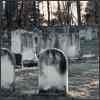
There, through the now bare branches in our backyard, I could see rows and rows of graves. The cemetery was small, but its presence overwhelmed me.
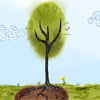
The 15th of Shevat on the Jewish calendar is the day that marks the beginning of a “new year” for trees.

When’s the last time you wished a tree Happy New Year? The 15th day of the Hebrew month of Shevat is a great opportunity. It’s known as Tu BiShvat, the New Year for Trees.
Children already have an innate sense of wonder when it comes to nature. They see beauty, mystery, even spirituality in the little things that adults often write off as uninteresting or insignificant.

From trees, to birthdays to yartzeits, this month has got it all!

Both the Bible and the Mishnah provide environmental legislation. The Jewish nation in Israel felt an eternal bond to the Land of Israel, and therefore a responsibility to protect their environment.

When the tree is young, especially when it is still in the stage of a seedling, every good care, however insignificant it may seem, is an investment.

“Sir, you have a first-class ticket,” said the conductor. “Why you are lying under a bench in a third-class car?”

Once, they had been well off, and had many friends. But now they were poor. The father had died suddenly when lightning struck their house, leaving the mother bedridden and causing considerable fire damage.

Miriam had such faith in Hashem! She sent the only gateway to redemption down the river to be taken by literally the daughter of the other side, Pharaoh. Yet she still had faith that G‑d would take care of her brother.

When viewing this portrait, one can imagine what it would be like being alone with the Rebbe during a deep, thought-provoking moment. The intention of this piece is to give a personal touch to the public farbrengen experience.

The ultimate Tu B’Shevat recipe, which combines several of the special fruits of Israel into a delectable treat.

The tests would normally be given over a long period of time, and the Rebbe wanted to have the certificate as soon as possible.
“It’s unbelievable how it makes you feel, when you’re going to war, and you have [such] big support behind you.”
Afterlife is a very rational, natural consequence of the order of things.
After all, nothing is ever lost—even the body only transforms into earth. But nothing is lost.
So too, the person you are is never lost. That person—that soul—only returns to its origin.
If your soul became acutely attached to the material worl...


