


Bamidbar
Self-esteem.
It’s a basic human need, vital for self-development. It provides us with a sense of competence and enables us to successfully deal with the challenges of our lives.
But what is self-esteem? And how can we acquire a healthy sense of self, independent of the values and judgments of those around us?
In this week’s Torah portion, G‑d commands Moses and Aaron to count all the members of the Jewish people who go out to war. From the greatest to the lowliest, each individual is counted as no more, and no less, than one.
At some point in our lives, we may need to “wage war”—to battle against prevalent norms, or to fight to preserve our values. To stand tall in the face of overwhelming opposition, we need to foster within ourselves a sense of worth not founded on the opinions of others.
True inner confidence is born of the knowledge that we "count,” that we are important, and that we have a unique and indispensable contribution to make in this world. G‑d, who is the essence of goodness, created us, and therefore we too have an inherent goodness.
This week, G‑d teaches us a fundamental lesson—you count and matter to Me!
Chana Weisberg,
on behalf of the Chabad.org Editorial Team

Out of nowhere a well-dressed, kind-looking woman appeared. She smiled and said, “I can lend you the money, and you can pay me back at your convenience . . .”
I felt physically enveloped in holiness as I watched each resident enter the room and step into a private place where soul meets Creator . . .
After waiting for what seems like an eternity, his wife places a plate before him. He takes a look, and all he sees is a hard-boiled egg and a potato!

No task was beneath this great Torah scholar as he created a blazing fire in the fireplace, unpacked the food from the sack and lovingly fed the children . . .

For the family of four, being Jewish meant nothing but an endless stream of discrimination and anti-Semitism.
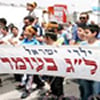
From their lookout, the Jews trembled in fear that the cruel Cossacks would decide to search the hills, and their hiding places would be discovered . . .


Bonfires, Jewish Unity parades, bows and arrows and more. Find out what is traditionally done on Lag BaOmer and why . . .

We don’t usually think of the kitchen as a holy space. Yet eating, when done mindfully, is a holy act which renders all your cooking utensils divine instruments . . .

I believe we are instructed not to kneel when we worship. Is this correct? If so, what is this instruction about?

We are commanded to “redeem” firstborn sons after they reach 30 days of age. What is the significance of this rite, and how is it done?

It’s my favorite oxymoron: If one indeed lives in the future, it’s not the future anymore, is it? And if one only thinks he’s living in the future, then he's not really living there, is he?

Where have all the Jews gone? At 1.8 children per Jewish family, we aren’t even replacing ourselves.

According to the Mishnah, “Ten things were created at twilight.” What is twilight, and what is its significance?
Numbers in the Book of Numbers: 4 camps, 12 tribes, 273 surplus firstborn, 22,300 Levites, 603,550 Israelites—each of whom count . . .

To us on earth, the stars seem tiny and insignificant. Yet each is a powerful and unique force.

There are times when we must wage an external battle, and there are times when we must safeguard our internal treasures . . .

A census is a “head-count.” The greatest of the great and the smallest of the small all count as one person, no more, no less.

It may be tempting to claim a deferment from duty, but the truth is that when fighting G‑d’s fight, everyone is a professional soldier.

Take these words of Mine to your hearts and to your souls…teach them to your children so that this will be what they speak about, when you are sitting at home, walking on your way, lying down to rest, and arising from your sleep. (Deuteronomy 11:18-19)
The simple meaning of this instruction is as follows:
You must ...


