


At End of Night, At End of Death
Every morning, one’s first wakeful words are Modeh ani...1 — “I offer thanks to You, living and eternal King, for You have mercifully restored my soul within me; Your faithfulness is great.” Some commentaries2 on the Siddur perceive this statement as an affirmation of our faith in Resurrection: just as G‑d returns our departed souls to our body anew each day, so too will He resurrect the dead.
Soon after Modeh ani, early in the Morning Blessings, comes the following explicit statement on the Resurrection:377 “My G‑d, the soul which You have placed within me is pure. You created it..., and You preserve it within me. You will eventually take it from me, and restore it within me in Time to Come. So long as the soul is within me, I offer thanks to You..., Master of all works, L‑rd of all souls. Blessed are You, G‑d, Who restores souls to dead bodies.”
Likewise, three times a day, the second blessing of Shemoneh Esreh3 praises Him Who “resurrects the dead with great mercy..., and fulfills his trust to those who sleep in the dust.... Who can be compared to You, King, Who brings death and restores life, and causes deliverance to spring forth! You are trustworthy to revive the dead. Blessed are You, G‑d, Who revives the dead.”4
The Melaveh Malkah Meal
With the Melaveh Malkah meal at the close of Shabbos, the Sabbath Queen is escorted on her way. This meal nourishes the luz bone, and from this bone the body will be reconstituted at the time of the Resurrection.5
Our Body: The Work of G‑d’s Hands
During the summer months between Pesach and Rosh HaShanah it is customary to study a chapter of Pirkei Avos (“The Ethics of the Fathers”) every Shabbos afternoon. Each week’s reading is prefaced by the following mishnah:6 “All Israel have a share in the World to Come, as it is said,7 ‘Your people are all righteous; they shall inherit the land forever; they are the branch of My planting, the work of My hands, in whom I take pride.’” This preface implies that knowing of the reward in the World to Come is a relevant introduction to the study of Pirkei Avos.
Now, the World to Come is the reward for a person’s entire service of G‑d through Torah and mitzvos. Why, then, was this particular mishnah selected as an introduction to Pirkei Avos? What specifically connects this reward with the content of Avos?8
To answer the above question a further introduction is necessary. One of the reasons given for studying Avos at this time of year is that man’s desires are aroused at this time, and the study of Avos inspires him to pursue positive character traits.9 The content of Avos is thus ethical.10 However, the Talmud states11 that the teachings of Avos are directed to a chassid, one who aspires to transcend the basic requirements of the law12 — yet the custom is that every Jew, from the smallest who is just starting his spiritual path in life, to the greatest who is not distracted by bodily desires, both read Avos. This tractate thus possesses two dimensions — one ethical, relating to the control of one’s passions, and so on, and the other chassidic, relating to the aspiration to transcend the letter of the law. Both these dimensions are represented in the preface, “All Israel have a share in the World to Come,” as we shall now clarify.
The World to Come as mentioned in this mishnah is a reference to the Resurrection.13 The reward of the Garden of Eden — the World of Souls — is not equal to all Israel,14 whereas in the world of Resurrection, when all souls will be reembodied, all Israel will have an equal share, as is explained at length in the teachings of Chassidus.15
The reason for this distinction is that the reward of the Garden of Eden — for souls without bodies — is granted mainly for Torah study,16 which varies (among other things) with the intellectual faculties of each individual soul. The reward of the Resurrection, by contrast, is granted for the mitzvos which were observed with and through the body; it is thus appropriate that it be granted to embodied souls.17 Since individual Jews vary widely in their study of the Torah, their respective rewards in the Garden of Eden also vary widely. The observance of mitzvos, however, belongs to the realm of action, which is equal to all: even the sinners of Israel are as full of mitzvos as a pomegranate is filled with seeds.18 For this reason, all Israel have a share in the Resurrection of the World to Come.
This raises a difficulty. How could it be that Resurrection, which is a greater reward than that of the Garden of Eden, is granted for the mitzvah observance of even a simple Jew? Surely the scholar’s more elevated manner of serving G‑d through Torah study should be more richly rewarded than the simple Jew’s observance of the mitzvos.
The explanation: Superficially, all Jews are equal in the realm of action, which is the most basic of human faculties and requires neither mental nor emotive greatness. At the same time, this seemingly unimpressive faculty of action is uniquely precious.19 G‑d’s ultimate will is that Jews should construct for Him an “abode in the lower worlds” — in this world, the lowest of all worlds.20 It is specifically this World of Action that embodies the purpose of creation — the refining and elevation of the body and its environs. And since all Jews are “the branch of My planting and the work of My hands,” all Jews feel this inner intent and carry it out.
We can now understand why the reward of Resurrection is granted specifically to embodied souls. G‑d’s intent of having an abode in this physical world is reflected in every Jew — who is one with the Essence of G‑d — since G‑d’s choice focuses not only on the Jew’s soul but also on his body.21 This also explains the everlasting aspect of a Jew’s physicality — the luz bone,22 from which the body will be reconstituted at the time of the Resurrection. In this way, even when the physical world has been refined and elevated and transmuted into an abode for G‑d, His choice of the Jewish body will still be manifest.
To revert to our original question: Why is the study of Avos prefaced by the mishnah that teaches that “All Israel have a share in the World to Come”? — In order to stress that the study of Avos, which guides one in refining the physical body, is vital to every Jew, for his body, too, is the work of G‑d’s hands.23 It is in the work of His hands that G‑d takes pride:383 “though last in creation, it was first in [G‑d’s] thought.”24 Since it is the work of G‑d’s hands, every Jewish body has the potential to be refined.25 Furthermore, since G‑d26 “devises means that he that is banished be not cast away from Him,” even such a man will eventually be refined. Thus no one, however lowly he may be, has the right to excuse himself from refining his body.27
On the other hand, since G‑d takes pride in the work of His hands, viz., the body, not even the man of stature described above by the Sages as a chassid, should underestimate the value of refining and elevating his body.
The lesson of the mishnah is therefore twofold: it reminds the individual tempted by his passions of the Divine Source of his body, and it teaches the chassid that even though he is beyond the temptations of the body he should not refrain from elevating the physical world, for in this lies the ultimate purpose of creation.28
The Third Meal of Shabbos
The usual custom of the Rebbeim of Chabad was not to eat bread for the Third Meal on Shabbos but to fulfill the mitzvah by partaking of lighter refreshments. The Rebbe fully explains29 the basis for this custom both according to the Halachah, the legal framework of the Torah, and according to Chassidus, the inner dimension of the Torah; moreover, he explains how these two explanations obviously harmonize, since the revealed and the mystical dimensions of the Torah — the nigleh and the nistar — are (respectively) the Torah’s body and soul.30
The Third Meal of Shabbos foreshadows the Shabbos-like state that will prevail in the World to Come. As to the well-known statement of the Sages31 that “in the World to Come there is neither eating nor drinking...,” the Rebbe points out that the world view of the AriZal and of Chassidus coincides not with the stance of Rambam — which identifies the World to Come with Gan Eden, and perceives the ultimate reward as being enjoyed by disembodied souls — but with the stance of Ramban and many other major authorities: The ultimate state and the ultimate reward at the time of the Resurrection will be enjoyed by souls that are garbed in bodies.32 At that time the ultimate superiority of the body will finally become apparent.
In the above-quoted sichah, the Rebbe used these concepts and others to explain why the Third Meal should in fact be marked by eating, and also explains why alternatives to bread may be perceived as more than merely permissible substitutes.
Preparation for Burial: Burial as a Preparation
Many of the laws and customs observed by the chevrah kadisha when preparing a man’s physical remains for burial are inspired by the anticipation of Resurrection.33
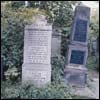
For example: Though in practice the use of costly shrouds is forbidden, one of the Sages held that their use evidences a belief in the Resurrection.34 Conversely, one of the reasons that cremation is forbidden is that it denies the principle of Resurrection.35 Finally, an aerial view of a Jewish cemetery (known in the Holy Tongue as Beis HaChaim — “The Home of the Living”) often discloses that the plots are arranged in such a way that the foot of each grave is directed towards the Holy Land; within the Holy Land, towards Jerusalem, the Holy City; within Jerusalem, such as on the ancient Mount of Olives, towards the Temple Mount — so that the body of every departed Jew is laid to rest “as if ready to arise and go up to Jerusalem.”36



Start a Discussion