


Q&A: A Snapshot of American Jewry From Two Young Rabbis’ Five-Week Road Trip
Who they met during a coast-to-coast assignment, what they accomplished, how they were inspired


Rabbi Zushi Rivkin, 25, and Rabbi Mendy Wilschanski, 24, just completed a five-week assignment in which they visited Jewish communities and individuals from South Florida to Southern California. As part of Chabad’s Merkos Shlichus “Roving Rabbis” program, they shared the beauty of Judaism wherever they went—helping men and boys wrap tefillin, handing out Shabbat candles to women and girls, hanging mezuzahs, answering all sorts of Jewish-related questions and offering Torah study.
During the time they spent on the road, the two met a total of 192 Jewish people from state to state.
Rivkin shares some of their experiences and newfound inspiration from the trip.
Q: You’ve met many, many Jewish people with a variety of backgrounds. What is it that unites them all?
A: If there is one common thread that we found, I’d say it is the genuine desire that everyone had to come closer to G‑d, each one in his or her own way. We suggested to those we met to add one mitzvah to their lives, and not one person told us that they weren’t interested. Some affixed mezuzahs to their doors. Others took it upon themselves to study Torah. Still others lit Shabbat candles. Everyone seemed to do something, and they seemed genuinely happy to do so.
Q: In most places you went, you had very few contacts to start out with initially. How did you manage to connect to local Jewish people?
A: As anyone who has ever participated in the “Roving Rabbis” program can tell you, this is a business where you very clearly see G‑d’s hand in everything you do.

For example, even before we started out, we went to a printer in Florida to make magnetic signs to attach to the sides of our car. It turned out that the owner was Jewish, as was the graphic designer and the girlfriend of one of the guys behind the counter. Of course, we had our tefillin and Shabbat candles ready—and that was even before we started.
Another amazing example was in Pratt, Kan., which has a population of 6,835. We stopped to change drivers, pulling over in the lot of a furniture store call Aaron’s. It’s a national chain, but we didn’t know that. We wondered if Aaron was perhaps Jewish and went in to find out.
Of course, Aaron was not there; he may never have stepped foot in that store. But we did meet a Jewish person behind the counter. He was originally from Alaska and going through a very difficult time in his life. He introduced us to his cousin, the only other Jew in town. They had been looking for a synagogue (there is none there); instead, we brought the synagogue to them.

Q: Who left particularly deep impressions on you?
A: Every individual made an impression. But here are a few who stood out.
In New Mexico, we met a woman with significant medical expenses who lives pension check to pension check. She told us that she wanted to improve her prayer experience and learn what each section of the prayers mean. At the end of our visit, we showed her that we had book called My Prayer that does a superb job at explaining the meaning of each one. She wanted to buy it, but asked that we wait until her next check was deposited, casually mentioning that she would need to go a month without meat in order to do so, but that it would be worth it. Of course, we just gave it to her.
There are so many others ... like the man who does his Jewish learning via computer. He showed us the tiny sukkah he built in his yard, using the guidelines he had read online.

And people were so very kind. For example, we dropped off some clothes at the cleaners prior to the nine days before the Jewish observance of Tisha B’Av. We mentioned to the lady behind the counter who we were, what we were doing, and that Jews do not launder clothing during that time. When we returned, she said that she had told another customer about us, and he graciously paid half our bill. We were blown away by that. At the same time, they learned something about the holiday.
Another act of kindness that was very touching came from a woman who met us together with her 95-year-old father at a Barnes & Noble bookstore in Rio Rancho, N.M. After we talked about various Jewish subjects, she handed us a CD she had burned for us in advance. “I know you guys drive a lot,” she said. “So I made you this CD of nice Jewish music.” It was wonderful to hear that she enjoyed such music at home.
As for us, as we drove through Kansas—which is flatter than flat—you can be sure we made good use of that CD.
Q: Where did you celebrate Shabbat, and with whom did you celebrate?
A: Our first Shabbat was in Harbor Beach, Fla., where our friend Rabbi Eliezer Perlstein recently opened a new Chabad center. In fact, the Shabbat we celebrated there was the first time he offered Saturday-morning services to the community.
The next week, we were way west in Shreveport, La., where there is a core of inspired young people who really make a difference in the local community. After a whole week of meeting people, we felt we were able to host Shabbat there. On Friday morning, after studying and praying, we drove to Dallas to pick up a complete catered Shabbat meal. There was couple who had just moved to town three weeks beforehand. They told us the first Shabbat there, they cried as they sat among the boxes. The next week, they hosted their parents who were visiting, and it was a bit better. They could not believe that their third Shabbat was among so many of their fellow Jews. It was beautiful!
Shabbat following that was in Kansas City, where we were able to be near an established congregation (Chabad has been there since 1970), since Sunday was the fast of 9 Av, Tisha B’Av.

The fourth week we were in Albuquerque, N.M., where our friend Rabbi Buzzy Ajzenszmidt hosts a large Shabbat meal following services. It turns out that he went out of town for Shabbat, so we stepped in for him. It was really nice to see that some of the people we had visited during that week attended the Shabbat services and meal, and seemed to really enjoy it. In fact, one man there gave us the good news that he had already ordered mezuzahs for his home as we’d discussed.
Our last Shabbat was in Poway, Calif. In a sense, it was our quietest one. We celebrated it with our friend, Rabbi Mendy Goldstein and his wife, Shterna, who recently joined his parents in running the local Chabad. It was a really nice way to cap off what had been five weeks of nonstop travel and talk.
Q: As you traveled across America and had the chance to absorb the landscape, what are some memorable sights that you encountered?
A: Probably the most beautiful were the breathtaking rock formations in the deserts of New Mexico. In fact, we took a few hours to enjoy the Grand Canyon in neighboring Arizona and actually spoke with a Jewish park ranger who was happy to put on tefillin.

Another uniquely American experience was driving along Route 66, the iconic road that connects Chicago with the West Coast before the creation of the Interstate. There is something charming about the old diners and rusting cars that you pass along the way. One interesting stretch of the road was covered with rumble strips. If you drive exactly 45 miles per hour, your car plays “America the Beautiful” as an incentive for people to slow down—an alternative to getting a ticket if you go too fast.
It worked, causing us to slow down and listen to the music. It really drives home the adage that you can accomplish more with honey than with vinegar.
Q: Was it challenging to find kosher food during your travels, aside from the hot meals eaten on Shabbat?
A: We ate a lot of tuna wraps, rice cakes, guacamole and other foods that stay well outside of a fridge. And we brought packs of kosher gum and mints with us from New York to keep us busy while driving.
You’d be surprised by how many things you can get at large retail stores or even a local shop. Of course, every once in a while eating like this causes cravings for a warm meal. Many times the closest we would have to that would be using a coffee-maker in a hotel room to add hot water to instant soups, or coffee or tea.
Q: You mention some other surprises in terms of meeting people—people, perhaps, you didn’t expect? What is a lasting message there?
A: So many people inspired us. But what we didn’t expect was the reaction we got from children of the Chabad-Lubavitch emissaries we met along the way. They have the strength and inspiration to be different, to be unique, in places where there aren’t so many other kids like themselves. They set a Jewish example.
And that’s what we hope we helped impart—be yourself, be Jewish, be proud. That message comes from the very young and reaches those of every age.


Where Will ‘Roving Rabbis’ Observe Tisha B’Av? Just About Everywhere
As part of their worldwide summer travels, they’ll take time with those they meet to fast, pray and remember

The summertime travels of “Roving Rabbis”—young Chabad-Lubavitch rabbinical students and newly minted rabbis who visit isolated Jews and small Jewish communities all over the globe—are filled with exciting, hectic days and nights in which they share the joys of Judaism with others. But on Tisha B’Av, they have a unique opportunity for a relatively quiet day of reflection, in which they can learn more about the local Jewish community and deepen their times with them.
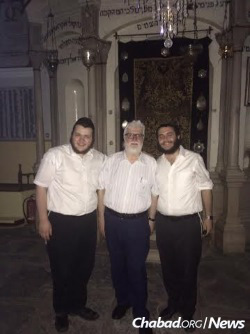
The Ninth of Av, Tisha B’Av commemorates, among other things, the destruction of the Temples in Jerusalem and the subsequent dispersion of the Jewish people throughout the world. Observed this year after Shabbat on July 25 and ending the following night, the day of mourning includes a fast that lasts throughout the night and day.
“We plan on observing the fast together with the local congregation, which is currently without a rabbi,” says Rabbi Peretz Lazaroff, who is on the island of Curaçao in the Caribbean with Rabbi Yisroel Wolff. “We haven’t yet ironed out details like our meals before and after the fast, but we will certainly be in the synagogue with the very lovely people we’ve been meeting since our arrival, and we are doing our utmost to muster up a minyan so we can hold full services. If not, we will still be able to observe the central element of the evening: reading the book of Lamentations.”
For others, the day will be a welcome respite from weeks on the road.
After a grueling three-week tour of Greece—and soon to take up a second posting in Dubrovnik, Croatia—Rabbi Mendy Tubul took the chance to “recharge his spiritual batteries” in Israel. He plans to commemorate the saddest day on the Jewish calendar at the Western Wall in Jerusalem, literally steps away from the epicenter of the destruction nearly 2,000 years ago.
“This summer,” he says, “I have met Jewish people living in some of the oldest extant Diaspora communities—Greek Jews, whose ancestors have lived there back when the Second Temple was standing in Jerusalem—and now I am able to trace their steps in reverse.”
The symbolism also extends to his next destination, Dubrovnik, a charming port city that juts into the Adriatic Sea.
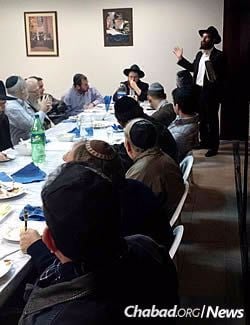
The community flourished in the 16th century, where it was a haven for Sephardic Jews fleeing the Spanish Inquisition. It was on the ninth of Av in 1492 that Spanish Jews were faced with the grim ultimatum of either converting to Catholicism or leaving the country they had lived in for hundreds of of years. Some of them moved to Dubrovnik, which was then known as Ragusa, where they turned a small Jewish community into a vibrant center of Spanish-Jewish culture for several hundred years.
Across the globe, Rabbi Nosson Huebner and Rabbi Yecheskel Posner will observe the 25-hour fast at the Chabad House in Lima, Peru, taking a break from their six-week tour of the country, where they comb cities and towns frequented by Israeli backpackers and other tourists. Since Chabad there runs a kosher bakery and restaurant, the duo welcomes the opportunity to enjoy complete meals both before and after the fast, perhaps the last full-fledged kosher meals they will have until their travels bring them back to the capital city next month.
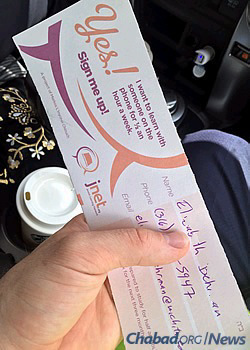
Out in the American heartland, Rabbi Zushi Rivkin and Rabbi Mendy Wilschansky will take a break from their six-week cross-country tour to join the Chabad community in Kansas City.
But they plan on doing more than just praying and fasting. Earlier this week, in Shreveport, La., an elderly Jewish couple they’d met gave them the contact info of a friend in Kansas City, whom they felt would appreciate a visit from the pair of rabbis. “Assuming we feel up to it, in the afternoon, when the mourning restrictions ease up somewhat, we hope to visit them,” says Rivkin. “Even if we are fasting, we are still very much on our mission to meet as many Jews as possible, and encourage as many mitzvahs as we possibly can.”
Articles and videos about “Tisha B’Av, a Day of Mourning, a Day of Hope,” including its history, laws, customs and inspirational meaning, can be found here.


A Quick Fast Muse

Jews all over the world fast today to remember the destruction of the holy Temples in Jerusalem. So will the roving rabbis.
I remember when I was a roving rabbi in Ireland. One of the observances of the fast is that we do not wear leather shoes. I had planned to get a pair of slippers, but we did not have a chance to breathe until late in the evening, just before the fast began. By that time, all the shoe stores in Cork, Ireland, were closed, and I began the fast in stockinged feet. (We Americans learn the hard way that in most of the world there are no stores that are open 24 hours, and groceries do not sell shoes; they sell food.)
The next morning I ran out to get a pair of flip-flops. We had planned a quiet day—not wanting to have to move around too much with no food or drink. But one thing led to another, and we ended up spending the entire day out visiting. Just to add to the fun, it was a fine sunny day, and many of our hosts decided that the back yard would be a perfect place to meet. So there we were, chatting in the hot sun without even a drink. I wonder if they thought we were weird for wearing dress pants and slippers and refusing the refreshing beverages proffered. Hey, thank G‑d we were busy.
When we came “home” that night, we set off the smoke alarm in our hotel room with our bachelor cooking, but that is a post for another time.
I also recall how we spent the day in Hattiesburg, Mississippi. At that time we had only one contact in town. He was a non-Jew who occasionally drove down to the Chabad house in Louisiana for a Torah class. We passed a friendly (but hungry) afternoon chatting with him in his house at the end of a dirt road.
The Temple was destroyed, and our nation fragmented, due to senseless hatred. The roving rabbis are doing their part to glue the fragments back together with love. Let us wish them—and our brethren all over the world—an easy and deeply meaningful fast.
RootedRabbi
Eli Will Not Be Roving. Why?

Hi All,
This is RootedRabbi, the anonymous editor-rabbi who moderates the Roving Rabbis blog. My job is to track down the rabbis as they rove around the world doing mitzvahs and help them see that the ordinary things that they do are really extraordinary and interesting to our readers. Normally I kick off the summer season by writing about the guys who are about to hit the road. Today, I want to share with you a conversation that I had with a Roving Rabbi who will not be travelling anywhere. Here is the scoop:
Today, my friend Eli (our most avid readers may know him from a previous post) told me that he and his friend had been planning to travel to S. Luis Obispo, a beautiful stretch of California coast. The tickets were booked, the itineraries planned, and the Jewish books had been purchased. But they are not going.
“You see,” Eli explained to me, “this all began on the 10th of Shevat, the anniversary of the passing of thesixth Lubavitcher Rebbe and the day that the seventh Rebbe took his place at the helm of the Chabad Lubavitch movement. The Gift of Life Foundation (a wonderful organization that helps people with leukemia and other diseases find much-needed donors) had set up a recruiting booth right near the Ohel, the resting place of both the sixth and seventh Lubavitcher Rebbes, as well as at the central gathering for all Chabad Yeshiva students. Inspired by the Rebbes’ legacy of caring and love, my friend decided to be tested to be a potential donor.
“Just the other day, he got a call from the folks at the Gift of Life telling him that he was a match for someone who desperately needed his stem cells. As you can imagine, our plans for a summer on the road were immediately sidelined. After all, what greater mitzvah could there possibly be than saving a life?”
So for now, we are not sure if Eli will be able to share his stories this year, at least not the kind of stories one usually sees on this blog. But we are honored and proud that our Roving Rabbis are really living the Rebbe’s message of love and sacrifice for others—even when the view is just a hospital room.
Spring Missions Complete, Roving Rabbis Turn Sights on Summer

This year, 650 young rabbinical students left their families for Passover, choosing instead to bring the holiday spirit to Jewish communities all over the world. Travelling to such far-flung locales as Iceland, Italy, China, India, Rwanda, Ghana, New Zealand, Poland and Russia – and some places closer to home, like Texas, Florida and California – the teams of dedicated volunteers did whatever was required so that locals and tourists alike could celebrate the eight-day festival of freedom.
Dispatched from Brooklyn, N.Y., by Merkos L’Inyonei Chinuch, the educational arm of Chabad-Lubavitch, the young men are popularly known as “Roving Rabbis.” Many of their experiences over the past several weeks were followed by thousands of people from the students’ collective blog hosted by the Judaism website Chabad.org.
“The goal of this program is to give every Jew, no matter where he or she may be, the opportunity to participate in a Passover Seder,” said Rabbi Moshe Kotlarsky, vice chairman of Merkos L’Inyonei Chinuch. “The young rabbis make the Passover experience accessible, inviting, and relevant to every Jew, everywhere.”
“This year was definitely the biggest so far,” stated program coordinator Rabbi Schneur Nejar. “In past years, there were times I had to try to fill positions. This year though, we were full almost immediately after we opened registration for volunteers.”
To prepare for their missions, the young recruits were briefed on their assignments and counseled by veterans of past trips. For many, the isolation of some locations can present a shock.
“In some of the more remote locations,” Nejar explained, “the boys have to do everything. They are rabbis, cooks, and janitors.”
They left Brooklyn with boxes of prayer books and handmade matzah, cartons of kosher meat, and beaming smiles.
They were received with open arms.
“[Our children are] hungry for this,” said Barry Katz, a resident of Destin, Fla., as he watched his child participate in a model matzah bakery organized by Levi Mentz and Hirshy Sputz.
Similar comments could be heard in all 58 countries the rabbis visited.

Eileen Mills of Kenai, Alaska, said that meeting with the two roving rabbis that came to her area bolstered her spirit. She hadn’t seen another observant Jew since she moved there 11 years ago, and savored the opportunity to speak about religious and cultural issues.
In Poland, a local man walking through the Warsaw ghetto donned the Jewish prayer boxes known as tefillin for the first time when he met other roving rabbis. Afterwards, he thanked them profusely.
“It’s about showing love to all the Jewish people,” explained Boruch Gancz, who was dispatched to Marquette, Mich.
Nejar is currently focusing on the summer, when the next crop of rabbinical students will spend several weeks in places not served by full-time Chabad-Lubavich emissaries. With an average of 500 volunteers who sign up, it takes a lot of planning.
“The boys work hard,” he said, “and every year it’s a success.”
Army of Rabbinical Students Dispatched to Farthest Corners of Globe

With destinations stretching from Rwanda and Ghana to Poland and Russia, China and India to Texas and California, Greece, Iceland, and all points in between, 650 rabbinical students set out from Brooklyn, N.Y., to run Passover Seders for Jewish communities large and small, all over the world.
Dispatched by Merkos L’Inyonei Chinuch, the educational arm of Chabad-Lubavitch, under its popularly-known “Roving Rabbis” program, the students spent the last few days getting briefed on their assignments and learning the ins and outs of any problems that might arise when Passover arrives April 18.
“While you may look like a wreck after having worked for days on end to prepare the Seder, it is important the guests don’t see that side of you,” Rabbi Tzali Wilshansky, a veteran of such efforts who today serves as a Chabad-Lubavitch emissary in Kenosha, Wis., advised the young men. “There is no excuse for not looking presentable.”
Saadia Weingarten of Grand Rapids, Mich., found the conference and send-off to be “fascinating.”
“I feel far better prepared to be able to perform the Seder with maximum efficiency and responsibility,” said the rabbinical student, who will be coordinating Seders in Pristina, Kosovo.
The students left New York with boxes of Haggadahs and handmade matzah, cartons of kosher meat, and other necessities.
“We have done everything possible to ensure a smooth experience for each of these rabbinical students who are giving up spending Passover with their families to help their fellow Jews,” said Rabbi Moshe Kotlarsky, vice chairman of Merkos L’Inyonei Chinuch.
For a complete photo gallery click here.
Reflections of a Retired Rover
Guest Post
On second thought, that title isn't particularly appropriate (even if it does get full marks in the alliterative department). First of all, once a shliach (Chabad emissary), always a shliach, and second of all, it's way too pretentious. Just last week I assisted an Israeli customer (I work in retail) who needed help finding a minyan in Manhattan. Another customer, this one a South African, happened to be celebrating a birthday, and I directed him to the Rebbe's Ohel (resting place). Is it the same as visiting Jews in Kansas, Missouri, and Connecticut? It's something along those lines.
Point is, there's always someone out there waiting for the proverbial lamplighter to come by and spark a flame inside. Wherever we are, whatever we're doing, we can be the ones to light that wick and create a raging fire. And that's really what Roving Rabbis is all about. Reading the stories of the current crop of Roving Rabbis makes me realize how truly awesome it is to have been part of something so incredible. Like everyone connected with any enterprise, I never realized how much I was accomplishing through my simple slogging-through of the spiritual desert that is much of modern day America. Because really, that's what it's all about. Take a car, crank up the AC, and drive out onto the prairie, following in the footsteps of all those pioneers on the Oregon Trail so many years ago. Once you're out on the road, open up the local Yellow Pages, Google a bit, and find some Jews. Reach out, put on tefillin, put up some mezuzahs, inspire, get inspired, drink some Coke and eat some potato chips, and generally make the world a better place. And if you have any cool stories, submit them here to this blog.
Thing is, there are so many Jews out there waiting to be found, their souls simply crying out for spiritual solace, and all you've got to do is try. We don't expect any miracles, and there aren't even any quotas to be filled. There's no measurement for accomplishment; the only requirement is to rove far and wide, searching for the remnants of a people that has been beaten so many times it's often forgotten how to raise its head in pride. Which is exactly what the Roving Rabbis are for. Lift those heads high, show them what you got. I know this has all sounded corny, but sometimes life is like that. Kansas is like that too. I mean, lots of corn.
My How Things Change...
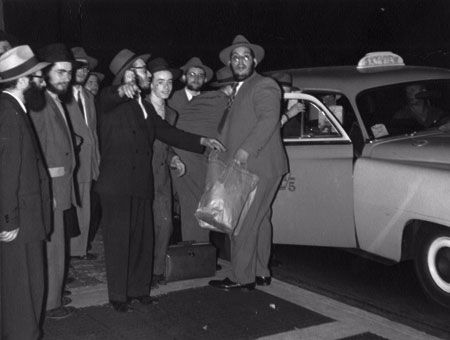
The Roving Rabbis have been roving for a very long time. In fact both my grandfathers participated in the program in the '40s and '50s.
In those days, each pair consisted of an American-born student and one fresh immigrant from Europe, a survivor of the Holocaust or Stalin's brutal regime. As most Jews spoke Yiddish, they had no problem communicating with the people they met. But having an English speaker made it much easier to get around.
One of my grandfathers recalls spending his nights on the hard pews of a synagogue in rural Connecticut, only to be awoken every morning by the transplanted shtetle Jews who would come early in the morning to recite Psalms before dawn. After a few hours of restless sleep, they would travel from farm to farm encouraging the European-Jewish farmers to send their children to Jewish schools.
Another memory is of sitting down in the back of a bus in the Deep South. The two New Yorkers had just settled into their seats when the driver slammed on the brakes and shouted "either y'all get to the front of the bus or you get off!" Segregation was a foreign concept to them.
My other grandfather took the local train (known as the "milk train") from New York to Pittsburgh over the course of a few weeks, stopping in every town. He once told me about meeting Dr. Philip Birnbaum who was then in the final steps of producing what was to become the standard prayerbook of thousands of English-speaking Jews. His new work, which featured a clearly-set Hebrew text and modern English translations, would be a classic, known as "The Birnbaum."
Gone are the days of hard benches, segregation (thank G‑d!), and milk trains. But the heart and soul of the program remain the same: Jewish people connecting to other Jewish people.
RootedRabbi
Roving Rabbis are Ready to Rumble!

Hi Everybody,
It has been a long time since I have written anything. Though last summer feels like just yesterday, it's already been a full year! I am proud to tell you that, with G‑d's help, the Roving Rabbis program has become a year better, a year smarter and a year more dedicated.
I write to you from my desk in the Chabad.org offices after having just attended a conference of Roving Rabbis. A room full of young men, bursting with positive energy and inspiration. Some of these guys will live off matzah, sardines and canned soup for close to a month. Others will spend their days searching for long-lost Jews in jungle towns of South America. Yet others will inspire Jews in suburban Miami.
But wherever they will be, their message is the same: Every Jew is special, and every Jew deserves to be the best Jew that he can be.
So with tefillin in hand and mezuzahs in their suitcases, they are ready to hit the road.
But before that, let me tell you about the conference.

As the young men filed into the Jewish Children's Museum in Brooklyn, they were directed to two separate conference rooms. While the young men who are about to travel to posts within the United States heard words of inspiration from Rabbi Chaim Bruk, the funny and learned Chabad representative to Montana, those who are planning to go to other countries got to hear from yours truly, Rooted Rabbi.
After telling them the things I thought they needed to know, we had a special game show where the rabbis were called up to the front to answer questions that I had prepared as well as questions from their friends. For example, one group was asked to focus on how to build relationships in a town where no Rovers had been before, and there were no contacts in the database. Another group debated whether it would be more effective to invite people to a barbeque where some Torah thoughts would be shared or a formal Torah class.
What a fun way to pool together collective experiences!
Later, the Rovers joined in the main conference room to hear from Rabbi Moshe Kotlarsky, vice chairman of Merkos L'Inyonei Chinuch, the educational arm of the Chabad-Lubavitch movement, and director of the Roving Rabbis program. Rabbi Kotlarsky's unique blend of paternal caring, genuine concern, and wisdom culled from years of experience made his talk both entertaining and educational.
After hearing from Rabbi Yosef Chaim Kantor, Chief Rabbi of Thailand and director of its legendary Chabad center, the Rovers were urged to greet everyone with a smile by Rabbi Shmuel Kaminetzki, Chief Rabbi of Dnepropetrovsk, Ukraine.
Another special highlight of this year's conference was a special session with Rabbi Shlomo Yaffe, scholar-in-residence at Chabad at Harvard University, whose encyclopedic knowledge of all things—especially Torah—made for a thoroughly enjoyable and informative time.
Much more to write, but dinner awaits…
Look forward to sharing with you in the future!

Soul Journey

One of our rovers just forwarded to me a letter that he sent to a friend he had met this past summer. His friend had asked him how to become closer to G‑d, and below is his response.
Please feel free to share your thoughts in the comment forum below.
R.R.
This goal that you have chosen is one that will change your life profoundly. By working on increasing our connection to G‑d – intellectually, emotionally, and practically – we embark on a journey towards realizing the purpose for which we were born and the role we play in the course of universal progress.
The mystical texts of kabbalah and chassidic philosophy teach us that in addition to the "animal soul" – the unique vivifying force that makes us human – each of us also has an additional soul, a piece of G‑d Himself, which He has placed within us.
This means that each of us is always, at every moment in time, intrinsically and inextricably connected to G‑d—we literally have a part of Him within us. This connection always exists, however without the right nourishment and support it can be almost completely dormant.
Unfortunately, there are many, many Jewish people who have not had the opportunity to receive the relevant education and upbringing and may not even be consciously aware that this connection exists, let alone the fact that they have the opportunity and responsibility to nourish it.
By awakening and correctly nourishing the soul, we move it out of dormancy and cause it to thrive and live. In doing so, we change ourselves from being a person who was simply going about life, to one who has an active conscious, intellectual, emotional, and hands-on connection with G‑d.
G‑d created a universe, and each of us individually within it, for a reason. He has a specific plan for each of us, and a unique relationship planned and awaiting each of us, waiting for us to make it happen. He has also given us specific guidance in terms of how to go about achieving this connection.
The Hebrew word "mitzvah," often loosely translated as a good deed, is more precisely translated as both "commandment" and "connection." These two translations for the one word are by no means coincidental. G‑d has given us a means to connect to Him by observing these mitzvot-commandments-connections.
Some of the most fundamental of these connections are to believe in one G‑d, to love Him, to be in awe of Him, and to pray to Him.
In fact, it is a mitzvah (i.e. commandment and connection) to pray every day. To communicate with G‑d, to ask Him for the things we need. This may well include a prayer for success in increasing our active relationship with G‑d and becoming closer to Him in a readily apparent way.
In addition, it is imperative that you take this special relationship that you are developing and allow it to express itself in a tangible way. This can be something like putting a few coins into a charity box every day, celebrating the Shabbat, or donning tefillin. The important thing is for our spiritual bond with our Creator be anchored in something concrete and real.
Please let me know how your journey progresses and if there is any way that I can help.
Your friend,
Avraham Moshe
How Did We Get Here?

So the rovers are roving, but how did they get there and who makes it all happen? As the rovers hit the road two at a time, we take you behind the scenes to see how it all happens.

While summer is still a dream in the Brooklyn chill, Rabbi Moshe Kotlarsky, vice chairman of the educational and social arms of Chabad Lubavitch International - who has supervised the Roving Rabbis program for over 25 years - and his staff evaluate which countries will be receiving visitors.
One by one, the aspiring rovers, bearing letters from their respective yeshivas attesting to their scholarship and permitting them to take off the summer session, come marching in for personal meetings with Rabbi Kotlarsky. In his trademark avuncular style, he gets to know each boy a bit and shares tips from his years traveling the planet as a Chabad Lubavitch representative.
Then the fun begins, and the students are matched up with countries. Factors such as language fluency, experience, and personal preferences are all carefully weighed.
And then, one fine morning in the spring, an email goes out to all the boys informing them of where they will spend their summer months. In yeshivas all over the world, news passes quickly: "Did you hear who is going to Taiwan?" "I am excited to be going to New Jersey" "Who is going to India this year?"

As anticipation builds, a day is scheduled for the soon-to-be-rovers to come together for an afternoon of inspiration, training, practical tips, and experience sharing.
This year's conference took place last Thursday, just as Chabad Chassidim all over the globe were also gathering together to commemorate the 15th anniversary of the Rebbe's passing. A highlight of the conference was an address by one of the early Roving Rabbis, the chairman of the educational and social arms of Chabad Lubavitch International, Rabbi Yehuda Krinsky. He shared his personal musings and memories.
Now, after a few days of shopping and meeting with their predecessors for tips and contacts, the Roving Rabbis are ready to rove. They have booked their flights and rental cars, and made advance phone calls letting people know when they will be in town.
As the taxis laden with kosher food, fedoras, mezuzot, matza, Shabbat candles, and rabbis head toward JFK, the staff members in Brooklyn remain at their posts offering technical and moral support to the Roving Rabbis.
The Roving Rabbis are Raring to Run

I went to the supermarket this morning. No, not to shop, but to keep my baby happy while my wife filled our cart with supplies.
As I cruised down the aisles making whirring noises to my four-month-old (keinayinhorah), I noticed that I was dodging an awful lot of young men with shopping carts laden with pita, tuna, and non-perishable kosher staples. They were the Roving Rabbis preparing for another summer of tefillin, Torah, travel, and touching lives. This is their last chance to cram as much kosher food into their suitcases before they take to the road for weeks at a time.
I introduced myself and gave them some expert advice on what to pack and other useful tips picked up on my years on the road. Pack small mayonnaise tubes so that you do not need to refrigerate them. The packaged dried salami does not taste as good as it looks. A little extra liquorice never hurt on a long drive, and everything tastes good in a wrap!
The baby was calling, and they had a flight to catch, so we were only able to talk for a few minutes, but I am sure that they will be sending us lots of updates from wherever they are. From the green shores of Ireland to the sameness of Long Island, these young men will be spending their summers teaching and learning about what it means to be a Jew. So fasten your seatbelt and hold onto your hat because the summer is about to begin!
Your editor,
RootedRabbi
What a Summer it Was!
Or Was it?

The last of the rovers have come to roost. After spending weeks on the road, finding Jews and adventure all over the place, the boys are now ensconced on the benches of their respective Yeshivas. As they open their Talmuds and settle into their daily routines of prayer and study, it is hard to imagine that just a few weeks ago these same young men were hoofing it all over the world. They seem much more at home in this world of Aramaic texts and mystical Chassidic teachings.
But wait, they are not all back.
Although the summer may be ending, and the leaves will soon begin to turn, their adventures and meetings live on. They continue to inspire the countless people whom they have encountered throughout their wanderings.
The little boy remembers them every time he reaches up to kiss the mezuzah on his bedroom door. On Friday evening, the young woman thinks of them as she covers her eyes after lighting the candles they gave her. The elderly couple fondly remembers the bright young men who listened so attentively to their stories of bygone years.

And the rabbis are thinking of them as well.
They will continue to keep in touch. Emails, holiday packages, and letters ensure that the friendships created this summer will continue to grow and thrive.
And at the Chabad headquarters, Rabbi Moshe Kotlarsky and his devoted staff are already working on the High Holidays, Passover, and other trips throughout the year. And of course, they are laying the groundwork for next summer.
Then, a new cadre of idealistic young men will pack maps, Tefillin, and kosher salami and hit the road…
Shalom,
RootedRabbi

Purveyors of Fine Scribal Wares

To my dear and loyal readership,
You have all read about our boys trottin' the globe, totin' books, Tefillin, and Mezuzot. Where do these Judaica supplies come from? Read on and be enlightened:
Hidden in the upper floors of an ordinary looking building on Kingston Ave., in Crown Hights, Brooklyn, is Hasofer, purveyors of Tefillin, Mezuzot and Torahs. Hasofer is a veritable goldmine of Mezuzot (they have thousands in stock) and Torahs (they have dozens of those as well). A team of expert scribes are constantly hard at work, checking the new and repairing the old.
To those in the know, the establishment is known as 'Moshe Klein', after its founder and proprietor whose name is none other than…Rabbi Moshe Klein!
"Now Rooted lifted his feet and went to the Land of the people of the Mezuzot (see Genesis 29:1)."

I was greeted by Zalman Schapiro, a longtime employee, who told me that most groups take a pair of Tefillin and a ten, twenty Mezuzot. The boys take the supplies on consignment with the understanding that they need only pay for whatever they do not bring back from their travels. This arrangement allows them to bring these goods to the people they meet at cost-price.
According to Zalman, the hottest spots are South America, Eastern Europe, and the Far East, where these supplies are not so available. The boys who go to those places very often come back with nary a Mezuzah, and very often they sold the pair of Tefillin as well.
(Maybe another day I'll tell you about the people who supply the books and the other fine folk who make the whole operation tick.)
RootedRabbi


Yay Chabad.org
My good buddy, Mendy Goodman is currently roving in Romania. Now that you mention it, it's even cooler to write roaming in Romania…
He does not have internet access, so he was unable to post on the blog. (It's okay Mendy, I'm still your friend.) He did, however, call me on the phone to tell me something which made my day. At the moment I am floating somewhere above my desk in euphoric jubilation.
He is currently in a town called Arad. There are two young guys there who are the pillars of the tiny, mostly elderly, Jewish community. One of them is especially well versed in Judaism and Chassidic thought. He even studies Tanya daily! My buddy asked him where he got his Jewish education.
His response was…Chabad.org!
He had been googling for an online Chumash with Rashi, bumped into Chabad.org/bible and has been hooked ever since.
Three cheers for the home team!
Shabbat Shalom!
RootedRabbi
And They're Off!
Ever wondered how to get kosher food in India, or what it feels like to be a Jew in blood-soaked Poland?
Every summer, hundreds of Chabad rabbinical students and newly minted rabbis fan out across the globe, visiting Jews and Jewish communities worldwide. They come equipped with Tefillin, Mezuzot, and Jewish books, all liberally sprinkled with love.
This program, founded over sixty years ago by the Lubavitcher Rebbe of blessed memory, has brought Jewish awareness and joy to Jews all over.
A number of these roving rabbis will be sending us real time updates on their adventures. They will offer us an inside view of their travels, travails, impressions, and improvisations. Check this blog regularly for a rare insight into what the world looks like from under the black felt brim of the Chassidic fedora.
Hold on to your hat and sit back in your front row seat as one of the greatest Jewish stories ever told unfolds before your very eyes!
Shabbat Shalom!
RootedRabbi
|
AZ Jewish News
August 04 2023
Grand Forks Herald
July 24 2023
The West Australian
July 23 2023
Wahpeton Daily News
July 17 2023
Los Alamos Reporter
July 17 2023
|
- Snippets of Inspiration From our Passover 2018 Roving Rabbis
Friday, May 04, 2018 - Bill Brought Us the Greatest Gift
Friday, May 04, 2018 - Then and Now: My Jewish High School Friend Revisited
Wednesday, April 25, 2018 - A "Chance" Encounter in the Canary Islands
Wednesday, April 25, 2018 - A Spirited Seder in Szczecin
Thursday, April 12, 2018 - A German Jew in the Spanish Islands
Thursday, April 12, 2018 - A Bar Mitzvah at 102
Monday, October 16, 2017 - An Impromptu Bar Mitzvah in a Camera Shop
Wednesday, September 13, 2017 - Stop the Car or Turn Left?
Tuesday, September 12, 2017 - Finding Jews at the Sziget Music Festival
Tuesday, September 12, 2017 - Subscribe
