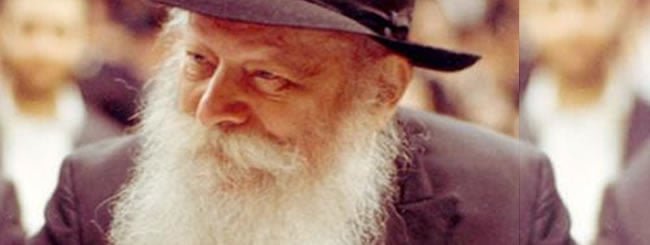
Rabbi Shalom Ber Lifshitz arrived in New York on a Thursday after a long flight from Israel with plans to continue directly to Canada. At the time, R. Lifshitz led an organization supporting Jewish educational institutions in Israel; he was traveling to attend a fundraising event with the hope that spending a Shabbat with the local community would engender some much needed support.
But the Rebbe had other plans for his emissary. Before he was able to leave for Canada, R. Lifshitz was tracked down by the Rebbe’s secretary and given an unexpected mission. An old classmate of R. Lifshitz’s had fallen into a depression, and the Rebbe requested that he stay in New York over Shabbat and visit the man to help lift him out of his pit of despair. Although he hadn’t been in touch with his former classmate for many decades, he immediately agreed to the Rebbe’s request, arranged a place to stay, and pushed his ticket reservation forward a few days.
True to his word, R. Lifshitz visited the man several times over Shabbat and tried to lift his spirits.
On Sunday, the rabbi was summoned to a private audience with the Rebbe. The Rebbe emphasized the importance of what he had done and showered him with many blessings for his willingness to compromise his plans and sacrifice his convenience to help an old acquaintance in need. The encounter left a lasting impression on R. Lifshitz, who would tell the story often as a reminder of the supreme importance and responsibility to prioritize the well-being of those who have been placed in your life by Divine Providence.1

Here we find yet another precious signal directing us to an essential aspect of our soul’s journey. The people in your life are not there merely by coincidence or circumstance; rather, they were woven into your life by Divine Providence for the sake of mutual blessing and personal growth.
In the Rebbe’s words, delivered during a farbrengen on Shabbat Parshat Matos 5741 (1981):
“For every Jew is apportioned a section of the world that he must refine and make anew, and from it, make a dwelling place for Him, may He be blessed... And therefore, when he meets another Jew [through particular Divine Providence], this is evidence that the other’s work of refinement is connected with him, and he must work with him.2
Spiritual Co-Travelers
The Kabbalists teach that before our souls descend, it is determined which souls we will encounter, engage, and travel with, and each of them hold sparks that will be our responsibility to help activate, illuminate, and elevate, and vice versa.
This includes all of the people in your life, including the seemingly random people you come into contact with, from schoolmates, friends, acquaintances, and clients to complete strangers. Regardless of the circumstances surrounding your encounters with others, the Rebbe insisted that the people in your life represent precious aspects of your purpose on this planet.
In his own life, the Rebbe embodied this principle to an extraordinary degree, taking personal interest and responsibility for anyone who entered his orbit of influence. One example among countless others occurred during the winter of 1973, when an erratic Jewish man arrived at 770 and began debating religion with the yeshivah students. One night, as the Rebbe hosted visitors for yechidut, the man stormed into the Rebbe’s room, only to be stopped by one of the secretaries. The Rebbe told him to let the man pass and took time to speak with him. At some point during the months that followed, the man told the Rebbe that he planned to convert out of Judaism. The Rebbe sat with him for a while and invested immense energy in trying to change his mind.
At a subsequent Shabbat farbrengen,3 the Rebbe shared a story of the Mezritcher Maggid, who stopped a disciple from converting by quoting a verse from the Torah, A soul that reflects. As the Rebbe told the story, he began weeping.4
The man left a handwritten note for the Rebbe expressing his thanks and sharing his intention to leave 770 and follow through on his plans, G‑d forbid:
“Thank you for your love and concern which you have so freely shown to me during my stay here…Thank you for the many things I have learned from your life…I plan to leave tomorrow. My only goal, I hope, is to find the Perfect Will of G‑d.”
The Rebbe circled the words “I plan to leave tomorrow” and wrote in reply:
“This is…certainly not G‑d’s will. Remain here until after Tishrei [some six months later], so that we will be able to celebrate all the Shalosh Regalim [Pesach, Shavuot, and Sukkot] together (and also my birthday)—including Simchas Torah. Utilize your time to study Torah in depth and with energy, to the extent that you will be able to energize others as well. G‑d will grant you success in this regard, because this is G‑d’s will.”5
The man ended up suspending his plans after receiving the note, which included the Rebbe’s personal invitation to his birthday celebration, an extremely rare occurrence. All in all, the man spent nearly a year at 770, where he remained a cherished guest.6
If this degree of loving-kindness and dedicated responsibility is warranted in the case of the seemingly “random” individuals brought into your life, how much more so when it comes to those who are more explicitly and inextricably built into the architecture of your life, such as parents, siblings, spouses, and children.
Sacred Roots
Naturally, among the most important people chosen to be part of our journey are our parents. As quoted previously from the sixth Lubavitcher Rebbe, R. Yosef Yitzchak Schneersohn, in Chapter 10:
“The life story of a person is a book that one must study. That book must be a guide in a person’s life…”7
Among the ten aspects that contribute to the book of a person’s life, according to R. Yosef Yitzchak, are “to whom this person was born…”
In this way, if the ten aspects composing a person’s Divine design are the book of their life, then a person’s parents and their influence are the very first page. From this point of view, your parents are not just the caretakers entrusted with your well-being and development into a healthy, independent adult. The souls of your parents (and by extension your siblings8 ) are foundational components of your life’s trajectory.
Their role as caretakers, guides, protectors, and nurturers creates the conditions that reveal the inborn connection they have to your soul rather than the other way around. In other words, it’s not what our parents (and siblings) contribute to our lives that creates their bond with us. Their nurturance and influence, rather, is an expression of the preordained and intrinsic bond they share with you.
This spiritual dynamic explains in part why the commandment to honor one’s parents9 is included in the first five of the Ten Commandments, all of which relate specifically to our relationship with G‑d, rather than in the second five, which relate to our fellow human beings. Its inclusion among the commandments pertaining to our relationship with G‑d reflects the fact that it is not social in nature. It is mystical, metaphysical, and intrinsic to your soul’s design and its purpose in descending to this world.
Climbing in Love
Another fundamental relationship that many establish along their providential pathway is with a spouse or life partner. On the surface, this relationship may seem less obviously orchestrated by Providence due to the underlying belief that we “choose” our life partners—sometimes to our detriment. Especially in those cases where the partnership becomes challenging, we may reframe the relationship as a poor choice that only revealed itself after we learned the truth of the one we chose.
From a mystical point of view,10 however, this is rarely the case. We may “choose” our partners in life, but the reasons for the choice—the specific virtues and qualities we were looking for, and the fact that the person we chose possesses them—were designed and hardwired into us by G‑d in order to bring “two halves of one soul together.”
This empowering perspective becomes a philosophical bedrock that supports our efforts to learn and grow through challenges that inevitably arise in any relationship, and to continue working on a relationship even when it appears to have outlived its value to the individuals involved.
The extraordinary extent to which our life partner is connected to our life purpose and mission can be seen in the Rebbe’s letter to a man who was struggling with marital discord.
“I wrote to you in my previous letter about the fact that you will certainly find challenges and difficulties especially in relation to domestic (marital) harmony, and this is precisely where one’s most urgent effort is required. For from the intensity of the difficulties in question, it is evident that this is a prime locus of your essential life-task of refinement, as is understood from the writings of the Arizal, and as made clear in Chasidut. For aside from a few exceptions, the souls of our generation have already been in the world and are returning now as a gilgul (reincarnation). Their main purpose is to rectify what they did not do among the 613 mitzvot in their previous lifetimes on this earth.
“…When it comes to those mitzvot that the person performed previously, the evil inclination does not put up its strongest opposition. It merely opposes sufficiently so that free choice remains. This is because this person has already affected refinement in these matters.
“However, in those matters where their service was lacking in previous lifetimes—meaning, in the specific portion of the world and their psyche that they failed to refine, the evil inclination’s opposition is at its fullest strength…
“With respect to practical action, which is the essential point: I will once again [seek to] inspire and implore you to make the greatest effort possible to establish a peaceful home, even though this requires concessions (as these are not concessions in Torah or mitzvot)...”11 12
To be sure, our most intimate relationships are rarely smooth and easy. In fact, these are the very relationships with which we often struggle the most and which cause the greatest emotional stress and turmoil, testing us to the extreme.
And that is precisely the point.
True goodness, including depth of character, virtue, and nobility, often emerges specifically in response to challenges presented by those closest to us, requiring us to dig deeper and tap into our true strength and greatest potentials.
Lifting the Veil
There is no relationship in the Torah where this idea is better illustrated than in the relationship between Jacob and his two wives, Leah and Rachel.
The Torah relates that Laban had two daughters, Leah and Rachel. Jacob loved Rachel, her character, and her manner, and he was so enamored that he offered to work for seven years to earn her hand. When the seven years were up, Laban substituted Leah for Rachel on the night of the wedding, a treachery that Jacob discovered only the following morning. Jacob accepted his fate and remained with Leah, but he also married Rachel, his bride of choice, and indeed loved her more than Leah.
Why did the marriage that formed the foundation of the Jewish nation—the marriage that produced the twelve tribes of Israel and every Jew since—have to come about in such a convoluted way?
According to Chasidic interpretations of the story, the Biblical characters of Leah and Rachel represent two dimensions that exist within each of us and offer a lesson for everyone.
Rachel, the beautiful woman, symbolizes the attractive, charming, and desirable characteristics in the people we love—and within ourselves.
Leah, whose name means “weariness” or “exhaustion,” represents the challenging and broken aspects in our loved ones and ourselves, becoming a living symbol of our psychological, moral, and spiritual battles.
The second Lubavitcher Rebbe, R. DovBer, known as the Mitteler Rebbe, explains that Leah is far deeper than Rachel.
Rachel represents the conscious and revealed self—the self that is projected, manifested, and expressed outwardly. Leah, meanwhile, represents the unconscious self, the shadowy components of identity that roil beneath the surface of our conscious experiences.
Indeed, we each have a “Rachel” and “Leah,” within ourselves, within our spouses, within our children, within our parents, siblings, and friends, within our entire lives—and within our relationship with G‑d.
Rachel symbolizes those dimensions of your loved ones and life that you easily comprehend, appreciate, and naturally connect with.
Leah represents the components of your life and loved ones that challenge you—the aspects that confront you with the need to unearth and address the ways you love, live, and relate to the world, and the dimensions of identity that lurk beneath the surface and take you by surprise when they arise.
It is especially in our closest relationships that we must learn to embrace and even love the unexpected aspects of the people in our lives, as well as the surprises that disrupt our carefully curated and comfortable existence. We must, because these unexpected and difficult aspects contain the most precious sparks to gather and redeem. Indeed, those aspects of your self, spouse, children, or siblings that frustrate you most may hold the key to precious discoveries about yourself and your very purpose on earth.
Of course, there is a predictable inclination to favor Rachel and to be wary of Leah as we move through life.
But if we persevere, we are likely to discover that the challenging aspects of our lives and loved ones are gateways to becoming the person we’re truly capable of becoming.13 14 15 16
In the end, it is the providential relationships that challenge us most that serve us best, and that we ultimately remember and look back on with pride, pleasure, and purpose, because they were ultimately what forced us to dig deepest, to extract our most precious insights, to refine our greatest potentials, and to fulfill our greatest calling.17
Quiz Yourself
Do the Thought Exercise
The relationships that challenge us the most serve us the best. Think of a challenging relationship in your life and identify two ways in which it has led to your growth.
Take the Challenge
Identify three “Rachel” aspects and three “Leah” aspects in your life. Challenge yourself to embrace the Leah aspects and use them to refine yourself and come closer to fulfilling your purpose in life.