


ב"ה
Shmuel Kaplan |
|
|
Sort by:
|
|
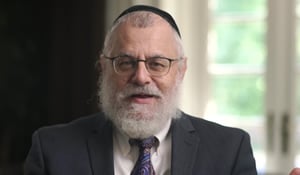 Rabbi Shmuel Kaplan is a noted Torah scholar and lecturer. He is the director of Chabad-Lubavitch of the Maryland Region, a board member of Merkos L’Inyonei Chinuch, the international educational arm of Chabad-Lubavitch, and of the Jewish Learning Institute. Rabbi Kaplan serves as the spiritual leader of The Shul at the Lubavitch Center in Baltimore, Md., and has hosted radio and television shows for more than 35 years, including hosting the acclaimed weekly radio show, "Awake, Alive, and Jewish," and co-hosting the weekly cable program, "Diana, Mike, and the Rabbi." Rabbi Shmuel Kaplan is a noted Torah scholar and lecturer. He is the director of Chabad-Lubavitch of the Maryland Region, a board member of Merkos L’Inyonei Chinuch, the international educational arm of Chabad-Lubavitch, and of the Jewish Learning Institute. Rabbi Kaplan serves as the spiritual leader of The Shul at the Lubavitch Center in Baltimore, Md., and has hosted radio and television shows for more than 35 years, including hosting the acclaimed weekly radio show, "Awake, Alive, and Jewish," and co-hosting the weekly cable program, "Diana, Mike, and the Rabbi."
The Origins, History and Purpose of Prayer


Where did prayer come from? Who created it? Where does it reside? When is it meant to happen? Why is it essential? Join Rabbi Shmuel Kaplan as we go back in time to the origins of tefillah, prayer, discovering the timeless vision of the future that it unv...
A special mission to inspire a Jew in the most isolated city in the world.
Isn't it a bit parochial and exclusionary to calim that we are the "chosen" people?

Discover the 6 steps of spiritual preparation the Jewish People observed at Mt. Siani, over a six-day period prior to the Giving of the Torah, and how you can take these spiritual steps today, as our ancestors did more than 3,300 years ago.
Part 4 of The Heart of Prayer

The core of every prayer service is the “Amida” or “Shmoneh Esreh” – the silent prayer. But in fact it is not so silent. In order to fulfill the requirements of the silent prayer, we have to physically verbalize the words so that we can hear the words we’...
Part 3 of The Heart of Prayer

At first glance, the structure of the prayers in the prayerbook may seem arbitrary. How did the “Men of the Great Assembly,” the Talmudic Sages who authored the basic liturgy of Jewish prayer, devise the structure that has remained for over 2,000 years? I...
Part 2 of The Heart of Prayer

Though the formal prayers found in prayerbooks today were established in Talmudic times, the origin of prayers dates much earlier, to Biblical times. The three patriarchs, Abraham, Isaac and Jacob, each introduced one of the three daily prayers, and their...
Part 1 of The Heart of Prayer

Does G-d really need our prayers? Obviously not. He wants our prayers. But why? The same question can be asked about existence as a whole – G-d doesn’t need a world, but He wants one, and wishes to have a relationship with every being in it. Through praye...

Prayer can be one of the most confounding of spiritual practices. If it is a personal, meditative, soul experience, then why is so much of it dictated by formality and structured liturgy?
Discussions on Prayer, Lesson 51

The popular prayer of ‘Aleinu’ – the final prayer – conveys the fundamental values of Judaism. Firstly, praise for being a unique people with a unique mission, the unique unity of G-d, and the hope for the time when G-d’s presence will be fully realized i...
| |
|
|