


Devarim
Jews and Unmet Expectations
Dear Friend,
This past Shabbat in Jerusalem, less than a mile from the site of the Holy Temple, a guest at our table reminded me that “expectations are resentments waiting to happen.” Indeed, predetermining the future is often the surest route to disappointment. Yet Maimonides’s thirteen principles of the Jewish faith includes, “I believe with complete faith in the coming of Moshiach, and although he may tarry, nevertheless, I wait every day for him to come.”
Day after day, year after year, we have waited, for thousands of years, expectantly but without resentment. How is that possible? There are many ways to approach this question, and much to learn on Chabad.org about the many deep meanings of Tisha B’Av, exile and redemption.
But one concept is central: Like parents who believe in their children no matter what, G‑d believes in us. And we believe in Him. We are believers, children of believers, certain of G‑d’s goodness, no matter how hidden that goodness may be. Our faith transcends resentment and unmet expectations.
Whether this Tisha B’Av will be a day of fasting or feasting, we
believe with a perfect faith that we are closer to the final redemption than
ever before, and we will continue to joyously await its imminent arrival.
Yaakov Ort
on behalf of the Chabad.org Editorial Team

On Shabbat, all public displays of mourning are strictly prohibited. This causes changes in many of the Tisha B’Av laws and customs.


9 questions from Chabad.org to see how much you know about this important fast day.

The Germans often remarked to the Jews, “Why don't you commit suicide . . . ?”

There was no music, no cymbals, no clown twirling batons and making people laugh.

The Midrash relates that at the beginning of the Babylonian exile, seventy years before the Jews’ return to Jerusalem, G-d instructed Ezekiel to teach them the dimensions of the Holy Temple, because when they engage in its study, G-d considers it as though they built it.


When our time on earth winds down, our focus naturally turns to the next generation, the children, who depend on our wisdom and life experience.

Stories connect us to value systems, a larger self and universal truth.

A condensation of the weekly Torah portion alongside select commentaries culled from the Midrash, Talmud, Chassidic masters, and the broad corpus of Jewish scholarship.

The habit of peppering our ordinary conversation with thankful mentions of G‑d was even displayed by our forefather Jacob.

Many of my friends who are in their 70s are making arrangements for their Jewish burials, so that the burden won’t fall on their children. Is this appropriate?

Until you care about every tiny detail of your relationship with G‑d, Shabbat is just a bunch of annoying restrictions.

"I take life as it comes. Every moment is a treasure that I cherish, that we cherish. I do what I need to do. This is the life I was given and this is the life I live with. I do my best. We all do our best."

It was a cold, wintry day, and he suddenly found himself in unfamiliar territory. Freezing and scared, he continued to wander deep into the night.

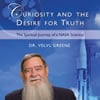
Curiosity and the Desire for Truth/The Spiritual Journey of a NASA Scientist is an engaging and enjoyable memoir detailing Prof. Velvl Greene’s search for higher meaning.


After the war, he shared the story of those who perished and those who survived.
Our world is a world where a rainbow could be.
At first, there was a world that only received and returned no dividends. Its inhabitants took no ownership. They lived with their Creator’s benevolence, they did what they did with no need for excuses, and eventually died as they died. And that was it.
With the Flood, this...


