


Passover II
Dear Friend,
Some 2,600 years ago, Sennacherib, king of Assyria, was leading his mighty armies toward Jerusalem. The prophet Isaiah foretold that Sennacherib would be defeated. He also prophesied that the entire nation of Israel—including the 10 tribes whom Sennacherib had banished—would return to their land. At that time, said Isaiah, a scion of King David will rise to lead the people with divine wisdom and inspiration. He will bring about an era of peace, when the wolf will lie with the lamb.
Inexplicably, 185,000 of Sennacherib’s troops died on the first night of Passover, leaving him to beat a hasty retreat. He was subsequently assassinated by his sons. The first part of Isaiah’s prophecy was fulfilled.
But we are still waiting for the realization of the second half. And every year, on the last day of Passover, we read this prophecy, reminding ourselves of our collective dream for messianic redemption.
But it is more than that. On the eighth day of Passover, we actually taste the coming redemption by participating in “Moshiach’s Meal,” a kind of Seder, replete with matzah and four cups of wine celebrating our future redemption. I encourage you to invite your friends and family for a Moshiach’s Meal, or join one at your local Chabad center. It is an experience not to be missed.
Baruch S. Davidson,
on behalf of the Chabad.org Editorial Team

Each year we retrace this inner journey. We count the days and weeks. The 50th day is the holiday of Shavuot, when we receive the Torah once again. We call it the “Counting of the Omer.”

Our liberation was not yet complete. Not until the Sea of Reeds parted for us—and then crashed down to utterly destroy our Egyptian pursuers. Only then did we feel our chains fall away forever.

Her eyes showed her amazement at the thought of one family having so many children. She had seen the parks full of children, but had convinced herself that each one belonged to a different family.
As the hours passed, the students became frustrated, and some planned on closing the doors early. They began assessing the cause of the failure.
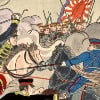
During the Russo-Japanese War, tens of thousands of Jewish conscripts found themselves in China. Collaborating with the imperial Russian government, the fifth rebbe of Chabad-Lubavitch instigated a campaign to provide them with Passover matzah.
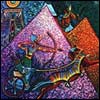
Winds blow, waters flow, plants grow. Only two things never change: G‑d, and our immutable faith in Him—a faith that will split your every sea.
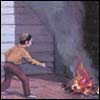
If chametz is so intolerable, why do we eat it all year round? And what is the significance of the unexpected appearance of “wet matzah” on the eighth day of Passover?

Impatient and frustrated by my lack of response, the driver switched lanes and zoomed past . . .

On the final day of Passover (Acharon Shel Pesach), there is a custom to partake of a festive celebration known as Moshiach’s Seudah (the meal of Moshiach). What is the source and meaning of this custom, and what is its connection to the final redemption that will come about through Moshiach?
Experience the miraculous exodus of the Jewish people out of the mighty Egyptian empire—in a unique, fun-filled (and educational) style!

There are cracks in the system. Cracks everywhere. Which is a good thing. Otherwise, it would be like living in a big, impersonal machine.

Here are tried-and-true traditional Passover favorites as well as their modern iterations, chef-tested and family-approved.

We are one because we share a single soul, like a single, brilliant sun shining into many bodies. Since the soul is what counts, that makes us essentially one.
That is the meaning of the mitzvah of the Sukkah—a place that encompasses us all equally, rendering us a single whole.
We are also one because none of us are ali...


