


Sukkot—Celebrating Together
The sukkah of my childhood stood on a busy Boston street, minutes away from Fenway Park. The holiday meals, discussions and tunes were punctuated by car horns, pedestrians’ footsteps, and the occasional home-run cheer.
Shadows often fell on the thin canvas walls as people walked by. When we noticed someone hesitating, whoever was nearest the door would rush to welcome the passing friend or curious stranger.
I remember my little brother—all of five or six years old at the time—perched on the stoop outside the sukkah, inviting everyone he saw to join us inside. One busy man responded with a curt “no thanks” and hurried on his way. An hour later he returned, drawn by the sincerity of a young child and the warmth of the sukkah.
The little sukkah overflowed with infants, college students, grandparents, rabbis with beards and people who had never seen a sukkah before. We couldn’t have been more different, but the light-filled sukkah united us, as we sang and celebrated together.
This year, embrace the beauty and unity of Sukkot. If you can, build a sukkah of your own. Invite a guest or two into your sukkah, or find a sukkah nearby. And if you’re in Boston, the sukkah in Kenmore Square still stands—stop by.
Rochel Chein,
Responder for the Ask the Rabbi team @ Chabad.org

Your one-stop-shop for: guides, stories, recipes, how-to tutorials, insights, audio and video classes, inspiration and much more . . .
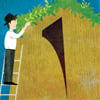

Feeling adventurous? Wish to venture into the uncharted waters of the Four Kinds market? Become a knowledgeable consumer!

Unity is the underlying theme of the festival’s three precepts: joy, the taking of the Four Kinds, and dwelling in the sukkah.
If we think of the mysteries . . . they are as enigmatic and elusive as when King Solomon pondered them thirty centuries ago.

It was the fourth day of preschool, but he still was scared to be there without me.

It takes time and sheer effort to maintain an inhabitable structure in the outdoors that can withstand the wear and stress of life’s myriad happenings.
I was determined to overcome my shyness and have the chutzpah to approach people . . .


I looked around at this haven of Jewish warmth in a sea of strangeness, and thought about all the reasons I had to feel grateful.

Dwelling—remaining in one place—is the essence of the mitzvah of sukkah . . .

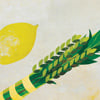
An etrog is a yellow or lime-colored citrus fruit used by Jews during Sukkot as one of the Four Species, along with the lulav, hadassim, and aravot.
In the future, says the prophet Isaiah, we will be consoled. Doubly consoled.
Because true consolation does not mean the anger and the wrath have passed, and now we can come out of hiding.
True consolation does not mean that everything is healed and now we are back together.
True consolation means to truly know t...


