


Vayikra
At some point in our lives, most of us have felt a guiding hand from Above prodding us, protecting us or comforting us.
Hashgachah pratit means Divine Providence, that G‑d is carefully orchestrating all the details of our lives, even if it may not feel that way. But there are some watershed moments when this guidance becomes obvious. It may be a chance encounter leading us to meet our soulmate, a missed flight whose purpose later becomes clear, or a life-threatening danger that is miraculously thwarted.
The holiday of Purim commemorates a script full of such “chance encounters.” Only in retrospect does a supernatural tale finally emerge.
This year, we celebrate Purim on Sunday, March 20th. As we prepare for this fun-filled, happy holiday, let’s reflect on the guiding Force that directs the many small and large, natural and supernatural details of our lives.
And as we do, every moment can become a new opportunity for us to connect with our Creator.
Chana Weisberg,
on behalf of the Chabad.org Editorial Team

We were praying for the same thing at the same place, just minutes apart from each other . . .

Maybe G‑d wants me to be on the next flight, where the guy next to me will be contemplating suicide and yours truly will be his savior!

Some time later the professor again visited the student for a class gathering. But when she approached the apartment, she did not see the mezuzah . . .
After the prayers were finished, the chassid went over to one of the guests and said very quickly in a soft, murmuring voice: “Werurygoigtdy?”

Prayer is something like watching a chess game. If you have no clue what’s going on, it’s about as thrilling as watching the grass grow.

If a person sinned and wished to make atonement, why does he sacrifice an animal? Why doesn't he sacrifice himself, for example?

The key to “korbanot” (sacrifices) is understanding that every obligation in Judaism is assembled from the components of everyday life . . .

Why does the book devoted to mitzvot start with the laws of sacrifices? Perhaps they encapsulate the inner meaning of mitzvot more than any other individual mitzvah . . .

Why must a Jew be taken to task for an innocent mistake? He had no intention of disobeying G‑d’s law—why is his behavior considered sinful and in need of atonement?

A mitzvah bundles up the person who is commanded and the Commander, creating a relationship and essential bond.
When no one was in the synagogue, he brought in the loaves under his cloak. He prayed that G‑d should look upon his offering with favor, and eat and enjoy the lovely, freshly baked bread . . .

Other than people’s body language, the main way we have of tuning into people’s feelings is through their eyes. When people look at us, they either heal us or harm us . . .

Weiner is clearly no conventional Jewish mother: A successful standup comic, she performs at Manhattan comedy clubs and for audiences across the tristate area . . .

The chassidic masters explain that the more one is nullified before G‑d, the more humble one becomes in the face of G‑d’s infinite greatness . . .

When you consider the cost and lack of originality of store-bought costumes, homemade costumes are a more fun, and oftentimes more cost-effective, option . . .
Is it true that there is no mention of the synagogue in the Torah? It’s hard to imagine “Judaism”—at least as we know it today—without synagogues!
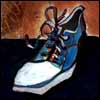
I saw the craziest thing in the Code of Jewish Law: it tells you how to tie your shoes! Am I a better person if I tie my shoes in a special way?
Intellect is inadequate because not all things can be explained. Intellect needs faith.
Faith is impotent because it remains forever obscure. Faith needs intellect.
But they are opposites, as contradictory as yes and no:
Faith accepts; Intellect questions.
Faith surrenders; Intellect struggles.
Miraculously, ther...


