


Tzav (Purim)
The Jews and the Japanese, this week has proven, have something in common: the inner fortitude to endure whatever comes at us and keep on going, heads high in the air.
For Japan, it was a disaster that would have flattened any other country its size. For the Jews, it was a horrifying tragedy, an act of unspeakable barbarism directly incited and supported by those with whom the world demands we negotiate.
The Japanese can be admired for busily putting life back together amidst the chaos and loss of human life. We Jews persist in building and replenishing our land with greater determination than ever before. And as soon as anyone offers true peace, we will be the first to embrace them.
While we mourn, we build. As we shudder in horror, we prepare to rejoice in the wild joy of Purim. That is how it was in Queen Esther’s time, and that is how it has been throughout 3300 years of history—crushed to the ground, we have miraculously sprung back; pulverized to dust, we have reorganized ourselves back into a living being. As Japan rebuilds bridges and towers, we renew our souls, with joy and with optimism. For we are the eternal people, with an eternal Torah upon our eternally promised land.
Tzvi Freeman,
on behalf of the Chabad.org Editorial Team
P.S. Please take a moment to write a message or mitzvah resolution to the Fogel orphans.


The day the Jews battled their enemy was a day of fasting and prayer. Fasting also preceded Esther’s approaching Ahasuerus . . .

Before Purim comes Shabbat Zachor, the Shabbat of Remembrance, when we read how the Amalekites attacked us out of senseless hatred . . .

Some things to be aware of when the holiday of Purim begins immediately after Shabbat.

With all the events and actions that contributed to the miracle of Purim, why is the festival named after the seemingly minor detail that Haman picked the date for his decree by casting lots?

Wasn’t Haman the guy who wanted to wipe us out? Why would we immortalize him by eating cookies that bear his name?

In our initial session, I determined that much of this angel’s trauma was due to occupational hazards that are apparently common in his profession . . .

Can we mentally peel away the masks from our trapped peers, ignoring looks, language, background, career and clothing? Can we focus rather on the human being underneath?

Her face smiled but her heart cried. She charmed all, but couldn’t be charmed. She was far away from home, and only she knew just how far . . .

The story of Purim is the tale of a nation in exile, a G‑d in hiding, and the beautiful and meek concubine who was not all she seemed . . .

Her mother told her over and over to be proud of who she was and never to run away from it. In the end, the internal whispers prevailed over the external shouts.

The Rebbe told him to arrange that the trial take place on Purim day. He also told him not to hire a lawyer, for he himself would send him an excellent defender . . .
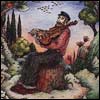
“Do you want to hear real singing?” the Baal Shem Tov called out, and not waiting for their answer, he added: “Listen to this boy . . .”
“We have good news and bad news,” I said. “Bad news: we’re way out of our four-block radius. Good news: we’re five minutes away from the one house that we were not planning to visit!”

The Jews of Iran have an incredibly long history that begins over 2,400 years ago and continues through today . . .
This year there was no Megillah scroll available to be read. There were some occasional loud noises, but they did not come from kids cranking noisemakers. There was no music to dance to, and nobody was really in the mood to dance....

How many ways are there to bake hamantashen? Probably more than you think. Plus kreplach and a host of other delicious Purim recipes.
If this is a story about G‑d miraculously saving us, why do we leave Him out of the story?

How long does it take to hear the Megillah? Is it a mitzvah to drink alcohol? How is Purim celebrated? These and more Purim FAQs.

Unless you’re into sci-fi or futuristic medical research, erasing a memory seems to border on the impossible.

What is the Torah? A book of laws? But what are these laws? Commands from infinite G‑d to infinitesimal man? The answer is in the two meanings of the name of our parshah, Tzav.

There are two ways to deal with our inner demons and dysfunctions. The first is to fight back. The second approach works by first generating a spiritual passion . . .

Eighteen Joyous Teachings of the Baal Shem Tov, A History in Three Parts, Guilt and Happiness, Humility and Happiness and more . . .

Do these people deserve my money? Since when does cash drift gently from leafy poplars? As these uncharitable thoughts flash through my system, I suddenly recall my mallards . . .

Meditation is a balm to the soul, an antidote to anxiety, a channel to the understanding of G‑d’s greatness—and man’s insignificance.

At 2 AM, my husband jumps out of bed. Soldiers are at the door. “Is everything O.K.?” I call out sleepily.
Israel Police blocked off the entrance to Jerusalem and detoured vehicles as more than 20,000 mourners waited silently to accompany the five innocent people to their graves.

Sleep eluded me. My thoughts turned to a twelve-year old girl in Israel, and what she found in the middle of the night....
We don’t learn Torah to gain knowledge—not even divine knowledge. At the time you are learning Torah, your mind itself is divine.
Your mind wraps itself in divine modalities. Your soul twirls and rises in a divine dance. As you wrestle with divine words, pathways and wisdom, you merge with them, so that your entire being...


