


Pekudei
With a glint in her eye, my one-year-old daughter grabbed my husband’s wallet from the table, and, in classic toddler fashion, began removing the contents and scattering them all over the room. Suddenly she turned to me and held out a quarter. “Daka!” she said with great enthusiasm (her version of “tzedakah”—Hebrew for charity). Our daily ritual of placing a coin in our charity box had obviously given her the idea that all coins are intended for that purpose. I was in no hurry to correct her, and we immediately went to place the quarter in its “rightful” destination.
Later, I smiled over the incident. If only we could all share my daughter’s single-minded view, I thought, that money is for giving, what a different place the world would be! Of course, money is for both giving and spending. And both giving and spending are means for us to make the world a better place. But there’s something special about giving.
This week, join us for an in-depth look at the art of tzedakah. From the mystical to the purely practical, it’s astonishing what a simple act of charity can accomplish. All in all, I think you’ll agree that to give is truly a gift!
Sarah Ogince,
on behalf of the Chabad.org Editorial Team
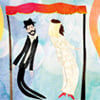

No one should have to pay with his dignity for another’s assistance. How you give, our sages taught, is more important than how much you give!

He turned his head to me, and in his soft, broken Spanish asked, “Cuando voy a morir?”—“When will I die?”
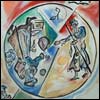
“If there’s nothing I can help you with,” said the Baal Shem Tov, “perhaps you’d like to hear a story?”

Hundreds of mitzvot were about to be performed in Shchedrin! How could it be prevented?

From that moment on, all of my energy, time and patience snowballed into one enormous goal—taking care of the woman who gave me the best years of her life.

There has to be some algorithm, some set of computer-coded logical rules, that stacks the odds in favor of the lottery while tantalizing the customer with a seemingly good chance of winning.

As he bent down he glanced at the writing on the monument, blinked, stepped back and read it again . . .

I always thought Mazel Tov meant “congratulations.” I recently heard that it actually means “good luck.” But I thought Jews don’t believe in luck . . .

He was warned that he could be prosecuted. So he agreed to dismantle the sukkah—which he did, after the holiday ended . . .

We all have different levels of ability, opportunity and commitment. The foundation of the edifice, however, is built of constancy . . .

Word by word, image by image, the great Temple appeared before us, rebuilt in its glory . . .

I’m thinking of getting the Star of David. I have heard that tattoos violate Jewish law. What do you think I should do?

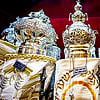
Torah refers to the Five Books of Moses, the entire Hebrew Bible, and the entire corpus of religious Jewish knowledge. Torah is how the Creator shares the purpose, intent, and desire behind all that exists.

The laws of kashrut require that in addition to not eating them together, we wait a specified period of time between eating meat and eating dairy.

I heard that G‑d does not want us to create hybrid fruit. So my question is, if G‑d is not happy with this fruit, should I make a blessing before eating it?

It seems that my daughter is expected to appear in school each day with a ponytail, which is taken as a sign that she has a good mother . . .
As long as we search for G‑d by abandoning the world He has made, we can never truly find Him.
As long as we believe there is a place to escape, we cannot be liberated.
The ultimate liberation will be when we open our eyes to see that everything is here, now.


