


Romania, a beautiful corner of Eastern Europe, has been home to Jews for centuries. Though the community was devastated by the horrors of Nazism and the oppression of communism, Jewish life is now making an inspiring comeback. Read on for 10 facts about the Jews of Romania.
1. Jews Have Lived in Romania Since Roman Times
Did you know that Jewish history in Romania goes all the way back to the Roman Empire? In the second and third centuries, when the area was called Dacia, Jews were already there. Archaeologists have discovered coins with Jewish motifs and other artifacts proving a Jewish presence during that time.
2. They Are a Blend of Sephardim and Ashkenazim
Romanian Jewry is a fascinating mix of traditions. Over the centuries, Jews from many lands settled in what’s now Romania. Many were Ashkenazi Jews who came from Poland and other nearby countries. But from the mid-1500s to mid-1800s, Romania was a vassal of the Ottoman Empire. Thanks to this Turkish connection, Sephardi Jews from Turkey also made their home there, settling in the south of the country.
3. Chassidism Had Early Roots There
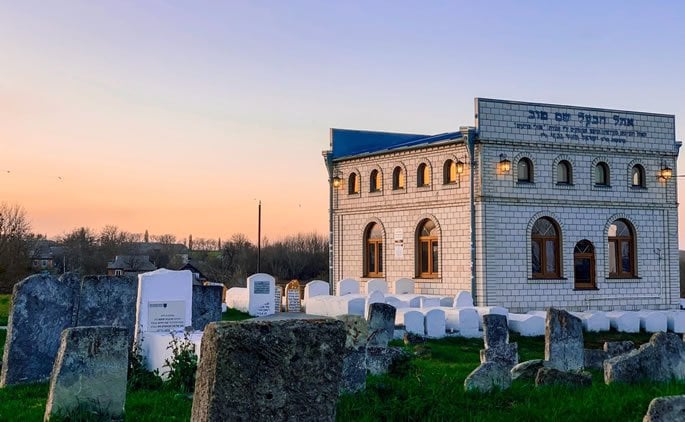
Romania played an important role in the early days of the Chassidic movement. The Baal Shem Tov, founder of Chassidism, was born in a tiny village called Okup, on the border between Turkey and the Romanian province of Wallachia.1 Later, while still a “hidden tzaddik,” he is said to have prayed at a synagogue in Piatra Neamț—a spot you can still visit today!
Read: 15 Facts About the Baal Shem Tov
Another giant of Chassidism, Rabbi Avraham Yehoshua Heshel of Apt—known as “the Lover of Israel”—served as rabbi of Iași for five years, spreading Chassidic teachings throughout the area. Iași was also home to many Chabad chassidim, led by Rabbi Moshe Yitzchak, a devoted follower of Rabbi Dovber of Lubavitch.
Read: The Myth of Charity
4. Wallachia Was Known for Its Heartfelt Songs
Wallachia, a Romanian region of breathtaking beauty—with snow-capped mountains, winding rivers, and serene lakes—once echoed with the soulful music of shepherds inspired by the natural beauty. These heartfelt melodies left such an impression that Chassidic composers created similar-style tunes, which they called “Vollachs.”2
Listen to a Vollach Composed by the Lubavitcher Rebbe’s Grandfather
5. Romania Has a Mixed Holocaust Legacy
Romania’s role in the Holocaust was complex. As a member of the Axis powers, it pursued antisemitic policies on its own, even before Nazi Germany demanded it. In 1941, horrific pogroms erupted in Bucharest and Iași. Later that year, as Romania joined Germany in invading the Soviet Union, Romanian forces led mass killings of Jews in Romanian territories taken back from Russia.
Yet, as the war dragged on, the Romanian government refused to deport its Jews to Nazi extermination camps—a decision that allowed hundreds of thousands of Romanian Jews to survive.
6. They Maintained Religious Life Through Communism
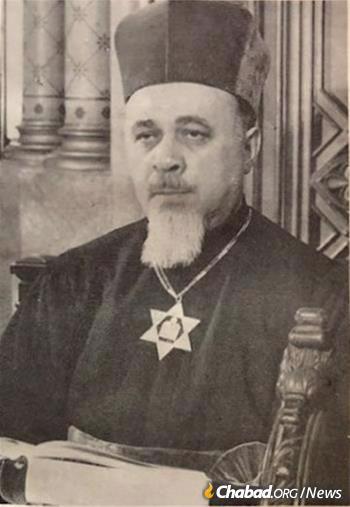
After the war, life for Jews in Romania was tough under communist rule. Rabbi Dovid Moshe Rosen, Romania’s chief rabbi from 1948 to 1994, maintained a unique connection with the Lubavitcher Rebbe. Rabbi Rosen often met privately with the Rebbe for hours, updating him on the status of Romanian Jewry and receiving detailed guidance. The Rebbe cared deeply about the Jews of Romania, down to the smallest details.
The Rebbe also encouraged Rabbi Yisrael Tzvi Heber to serve as a shochet (ritual slaughterer) and sent others to provide kosher food there as well. Rabbi Heber provided kosher meat and strengthened Jewish life in any way possible—even under the watchful eyes of the communist regime.
Read: Whose Time Is It?
7. The Skulener Rebbe Was a “Father of Orphans”
Another towering figure of Romanian Jewry was the Skulener Rebbe, Rabbi Eliezer Zusia Portugal. After the war, he personally cared for hundreds of orphans—feeding them, clothing them, and raising them as if they were his own. Twice imprisoned by the communist authorities, he eventually emigrated to Brooklyn, where he was revered by all.
8. Many Immigrated to Israel
Following World War II, tens of thousands of Romanian Jews immigrated to Israel. Unlike the Soviet Union, which forbade Jews from leaving, Romania allowed them to go. This mass emigration reduced Romania’s Jewish population from 300,000 after the war to about 10,000 today. More than 400,000 Romanian Jews and their descendants now live in Israel, making it one of the country’s largest Jewish communities.
9. Mamaliga Is Their Comfort Food
When Romanian Jews emigrated elsewhere, they brought with them mamaliga, a corn porridge that was immensely popular among the poorer Jews of the countryside. Filling and inexpensive, it often took the place of bread as a staple dish.
10. Judaism Continues to Flourish

After communism fell, Jewish life in Romania began to bloom once again. Today, Chabad centers in Bucharest and Cluj-Napoca serve both locals and newcomers who come for school or business, with a new center set to open shortly in Brașov. In Bucharest, you’ll find everything a Jewish family might need: daily prayers with a minyan, a day school and kindergarten, a beautiful mikvah, and even a kosher restaurant! These are all living testaments that Jewish life in Romania is thriving once more.


Join the Discussion