


One of the most famous women in the Torah, Miriam’s story runs alongside the story of the Exodus and the Jews’ wandering in the desert. Though often remembered simply as the sister of Moses and Aaron, her life is full of fascinating details. Here are ten facts you might not have known about Miriam.
1. Miriam Was One of the 7 Prophetesses of the Bible
The Talmud1 lists seven prophetesses in Jewish tradition: Sarah, Miriam, Deborah, Hannah, Abigail, Huldah and Esther, providing scriptural support showing that each one of these special women were indeed prophetesses.
2. She Was the Elder Sister of Aaron and Moses
As proof that Miriam was a prophetess, the Talmud cites the verse “Miriam the prophetess, the sister of Aaron, took a timbrel in her hand.”2 Why was only Aaron mentioned, not Moses? The Talmud answers that this verse reflects the fact that she began to prophesy before Moses was even born, when she was only Aaron’s sister.
What was her prophecy? She foretold that her mother would give birth to a boy who would lead the Israelite slaves to freedom.
3. Her Name Means “Bitter”
The ancient work Seder Olam,3 which provides a chronological history of the Jewish people, relates that Miriam got her name, which means “bitter,” as a reflection of the bitter oppression under which the people lived at the time.
4. She Is Identified As Puah
The book of Exodus tells the story of Shifrah and Puah, the brave Hebrew midwives who stood up to Pharaoh and refused to kill the baby boys who were born among the Hebrew slaves. Some of the sages4 say that Puah was Miriam, then a young girl, who assisted her mother, Yocheved (Shifrah), in attending to parturient women. She was called Puah, either because of the soothing sounds she would whisper to the babies5 (and their mothers6), or because she was calling out (“po’ah”) with prophetic words.
5. She Saved Moses’ Life
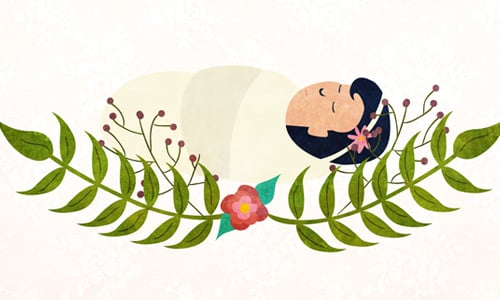
In light of Pharaoh’s decree that all baby boys be thrown into the Nile, Yocheved had no choice but to place her baby in a reed basket and set him adrift on the water. Miriam stood among the reeds and watched as Bithiah (Batya), an Egyptian princess, found him and tried to soothe him. Quick-thinking and brave, Miriam offered to get a Hebrew wet-nurse to care for the baby, calling none other than her own mother, Yocheved.7
Read: The Story of Bithiah
6. She Led the Women in Song
Not mentioned during the events surrounding the Exodus, Miriam reappears after the Parting of the Red Sea, when she leads the women in celebratory song and dance.8 How did the women have instruments? Even during the darkest times in Egypt, they had faith that they would be redeemed, and had their tambourines ready to praise G‑d for the miracles they knew He would perform.9
Read: Miriam’s Song
7. Miriam Was Struck With Leprosy
We read10 how Miriam and Aaron spoke badly about Moses’ Kushite wife.11 G‑d summoned the three siblings to the Tent of Meeting, where He explained to Aaron and Miriam that Moses was unlike any other prophet and his actions were justified. They then saw that Miriam was stricken with tzaraat (the biblical malady, often translated as “leprosy,” that affected gossipers). Moses prayed that Miriam be healed, and the entire nation waited in place for a week until Miriam finished her quarantine outside the camp.
8. She Was the Wife of Caleb
According to rabbinic tradition, Miriam was the wife of Caleb, identified in scripture as Azubah and Ephrath.12 Why did she have these other names? Azubah means “abandoned,” because everyone originally deserted her when she was the lone voice of hope in Egypt. Reading into other names mentioned in the surrounding passages, the sages further deduce that she was sickly and “plain as a curtain,” and became beautiful and radiant only after Caleb recognized her spiritual beauty and married her despite her external deficiencies.13
Read: Who Was Caleb?
9. Miriam Passed Away on Nissan 10
We read: “The entire congregation of the children of Israel arrived at the desert of Zin in the first month, and the people settled in Kadesh. Miriam died there and was buried there.”14 Rashi tells us that like her brothers, Aaron and Moses, Miriam died by divine “kiss.” According to tradition, this took place on the 10th day of the first month, commonly known as Nissan.
Read: Losing Miriam
10. There Was Water in the Desert in Her Merit

As the people ventured through the desert, they ate manna that rained from heaven. But what did they drink? Well, here is our hint. Shortly after Miriam’s passing, the people complain to Moses that they are thirsty,15 implying that for the past 39 years they had plenty to drink. What caused them to complain now (and Moses to sin by striking the rock)? The sages explain16 that a well of water traveled along with them in Miriam’s merit.
Why Miriam Was Important
On a simple level, Miriam was crucial to the Exodus. The rabbis credit her with convincing her parents to reunite and, thus, give birth to Moses, the redeemer. When Moses was set adrift on the Nile, it was she who watched him and cleverly had him returned to his mother’s bosom.
On a deeper level, she gave the people hope, teaching them that even in the darkest of times and in the most bitter points in the exile, there was hope and that G‑d’s salvation would come.
Her joyful reaction to the Parting of the Red Sea set an example for others to follow, inspiring joy, faith, and optimism until this very day.
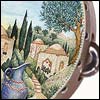


Miriam led the women in celebratory song and dance, Was this done separately, at a distance away from the men? Today, orthodox Jewish men will not allow women to sing or dance in their presence supposedly because it might make them think of lustful thoughts. So how could the women at that time be allowed to sing and dance if they were indeed in the presence of the men?
It’s not that Orthodox Jewish men will not allow women singing and dancing; rather it is that the women wish to sing and dance privately out of respect for the concept of modesty.
If you have ever been in an Orthodox shul you will see a “mechitza” or separation between men and women when praying. It is often a removable barrier that is curtains or mesh. It is not punitive; rather it lets us focus on the prayers. So this separation does not have to be vast. All the men had to do was step away until the women were finished.
When I was in the first grade my teacher taught us that the reason for Miriam leading the woman with tambourines in celebration was because they were too modest to sing so they just played on their instruments.
I am proud to be the carrier of such a great name.
is that what the men did? they step aside when the women were dancing, sighing and paining the tambourines?
I wasn’t there but they would have in deference to the laws of modesty. Most probably I would imagine that the women found a private area to celebrate. To live within the laws of Torah is a lifestyle choice so it would have been natural to practice these ways.
is there in commentary from rashi or anyone?
Wait. I'm no Torah expert but I do know some basics. The point where Miriam dances and plays her tambourines was after the Israelites crossed the Red Sea but *before* they arrived at Sinai where Moses receives the Torah. The Israelites were not yet the Jewish people who made their covenant with Gd. So where are these modesty rules supposedly coming from at this point in the story?
me too!!!!