


“My first encounter with Lubavitch sounds much more like an old chassidic tale than an incidental meeting in Corevallis, Oregon,” says Amiram Avital, a mechanical engineer from Kiryat Motzkin, Israel.
It was 1985, and Amiram’s contract with the Israeli defense department had terminated. The Avitals spent a sabbatical year traveling throughout the States. Four weeks before returning to Israel, Mrs. Avital developed a growth in her throat.
“At first, I didn’t pay much attention,” recalls Mrs. Avital. “We were on vacation and I didn’t want to be bothered. But the growth swelled each day and couldn’t be ignored.”
“I am used to functioning under tense conditions,” confided Mr. Avital. “I tried to be calm as the doctors diagnosed a malignant tumor requiring an immediate operation. But I could not help but respond with shock by the doctors’ refusal to assure us that the tumor could be completely removed.
“We tried to collect our thoughts. Perhaps we should fly directly to our next destination, San Francisco, where we could board a direct flight back to Israel. We would rather be at home than in Corvallis during this critical time. But the doctors insisted that the situation was urgent. We could not decide.”
The next morning, as Mr. Avital was walking towards the university complex, he heard a voice calling him to stop. A bearded man with a black hat approached.
“Excuse me sir,” said the man in Hebrew. “You’re Jewish, aren’t you? Why do you look so troubled?”
Mr. Avital’s worry gave way to irritated surprise: “I beg your pardon, but whatever brings you to confront a stranger? And besides, how did you know that I am Jewish and that I speak Hebrew?”
The man was not deterred. With friendly compassion, he insisted that he share his worry with him. Amiram did not need much coaxing. Here he was, far from home, with no friends, and someone offered to lend a listening ear. He told him of his wife’s illness and of their dilemma.
The man listened sympathetically, then said, “Look, someone can help you.” The man told him about the Lubavitcher Rebbe, whose blessings had assisted many Jews. Amiram had heard much about Lubavitch; he remembered those friendly bearded men who had visited even the most remote army bases in Israel. But he had never had any close contact with any chassidim or with the Rebbe.
Yet, Amiram decided that he was going to give it a chance. He did not even notice that the man had slipped away.
“Incidentally,” relates Mr. Avital, “I never saw that man before, nor did I ever see him again.
Ignoring the doctors’ advice that they receive care locally, the Avitals were soon on line at a travel agency. “I’d like to change the stopover on our return tickets to Israel, from San Francisco to New York.”
“Sorry, sir, all flights are booked until Saturday.”
Amiram could not see traveling on Shabbos to get a blessing from the Rebbe. As he turned towards the door, the agent suddenly called him back: “Sir, you’re in luck. I just located a cancellation. You can leave Oregon on Thursday and arrive in New York on Friday. Your flight to Israel departs Sunday afternoon.”
“I didn’t know that much about Divine Providence then, but I could not help but marvel at this coincidence, and that of the timely encounter with the mysterious bearded gentleman, or the fact that that Shabbos we spent in Crown Heights ‘happened’ to be a weekend experience offered as an “Encounter with Lubavitch” for uncommitted Jews.
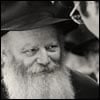
“We were hosted graciously and participated in all the sessions. On Sunday, I took my place on the line to see Rebbe. I was impressed by the Rebbe’s dignity, and felt calm as an inner voice told me that we had made the right decision. If anyone could help us, the Rebbe could.”
When his turn came, Mr. Avital introduced himself as an Israeli officer and asked for a blessing for his wife’s condition. The Rebbe handed him two dollars and said Brochah v’hatzlachah. He was already moving on when someone whispered loudly, “Sir, the Rebbe is beckoning you to come back.”
“When are you going back to Israel?” the Rebbe asked as Mr. Avital rushed back.
“Today.”
The Rebbe handed him two additional dollars: “This is for parnossah (earning a livelihood) in Israel.”
Outside, he met his wife. “I had been standing in line for two hours,” related Mrs. Avital. “When I passed by the Rebbe, I told him about the tumor and requested a blessing. He blessed me with a complete recovery and handed me an extra dollar. I went blank from nervousness, and I don’t know what I said or what the Rebbe answered. Without much thought, I went right back to the end of the line.
“When I reached the Rebbe, I described my illness again, and requested a blessing. The Rebbe said, ‘But I already wished you a speedy recovery. Do not worry.’ He handed me another dollar and blessed me again. I cannot understand how he could have remembered me among all of those people.”
Back in Israel, the Avitals went straight to a doctor, who confirmed the existence of a growth and performed an operation three days later.
The next step was critical. Was the tumor indeed malignant? Did the surgeon extract all of it? These questions could only be answered by sending a sample for laboratory analysis.
The final lab results confounded the doctors. The growth should not have been classified as a tumor and it was not malignant. They could not understand what had happened.
However, for the Avitals, this was not totally unexpected. It was part of the extraordinary logic that had characterized their ordeal.
“I still faced another problem,” concluded Mr. Avital, “Although I had received a salary during my sabbatical, when I returned, I was without a job. Yet, I believed in the Rebbe’s “post-scripted” blessing for a livelihood and I landed another very comfortable position in a matter of days.”



Start a Discussion