


Matot-Massei
Getting Past the Past
I don’t like to live in the past. Why waste the precious now bemoaning what was when there’s so many opportunities for what could be?
Yet these three weeks are a period of mourning for the ancient Temple in Jerusalem, its destruction and the beginning of our exile.
So let’s get this straight: We’re not mourning the past. The past is happening right now, and we’re fixing it for the sake of the future.
Rabbi Chayim Yosef Dovid Azulai, a brilliant star of 18th century Jewry, wrote that every historical event of the Jewish People reoccurs each year at the same time—just not in a way that's within the range of our five senses. Which means that now we have the opportunity to correct the greatest calamities of Jewish history. And if we are given the opportunity, that means we are given the power as well.
Jerusalem was destroyed and our exile began due to senseless divisiveness. Let’s start by fixing that. Get together with other Jews. Where there’s been a falling-apart, fall back together. Where there’s been acrimony, make harmony.
And then, where there’s been destruction and exile, let there be rebuilding and regathering.
Tzvi Freeman
on behalf of the Chabad.org Editorial Team
PS: What are your thoughts? Are Jews preoccupied with the past? Or is that our way of dealing with the future? Let me know.

Heightened mourning, uplifting visions and rejoicing with mitzvot

I’m planning to convert to Judaism. This has been something I’ve been considering and mulling over for years, and I’ve made my decision. What should I expect? What will the process look like?

Imagine a symphony of uncountable instruments, each playing its unique part in harmony and counterpoint. Problem is, the parts are out of sync.
Rabbi Levi Yitzchak devotes 25 pages of dense Kabbalistic text to explaining this discrepancy through the lens of Jewish mysticism.
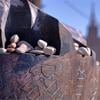
It is a common Jewish custom to place a small stone upon the gravestone of a loved one when visiting the cemetery.

This destruction of the Temple was a significant event in Jewish history, but it doesn’t seem to have any personal relevance to me. What does a destroyed building have to do with my wedding?

The stick, it can be said, is a piece of tree that has paid the price of leaving home. The stick, it can also be said, is one who has reaped the rewards of leaving home . . .
A condensation of the weekly Torah portion alongside select commentaries culled from the Midrash, Talmud, Chassidic masters, and the broad corpus of Jewish scholarship.


The philosophy in Jewish outreach: Every mitzvah that a Jew does has infinite value to our Father in Heaven.
Radically transform the way you look at yourself and the world around you. Join Rabbi Shais Taub as he presents a Jewish mystical six-step program toward discovering self and purpose, and managing challenges and addictions. (Recorded at Chabad Intown in Atlanta, GA)
G-d tells Moses, “A thousand for each tribe, a thousand from each tribe, from all the tribes of Israel you shall send into the army [to battle the Midianites].” (Numbers 31:4) The Hebrew word for thousand is “elef,” which is spelled the same as “alef.” What is the connection between the battle against Midian, the letter alef, and the Three Weeks of mourning over the destruction of the Temple?

“Why have they stopped crying?” wondered the villager. “Are they no longer hungry?” Then he remembered the cholent . . .


Two of the tribes request to stay on the other side of the Jordan, outside of Israel, where there is better pasture for their cattle.

A place to eat, sleep and clean up for those fleeing war and hunger on their way to family and friends in Northern Europe.

Students invite a guest speaker to wrap tefillin, and the memories start to flow …

Summer camping’s role in the resurgence of Jewish life in the former Soviet Union.

Connection between Jerusalem and Arkansas highlights a foundation of Jewish life.
Yom Kippur is described in many ways. One very poignant description is that it is “once in a year.”
You see, the human soul is also described in many ways, with five different names, each describing a deeper level of her being. The fifth, deepest level is called yechidah, which means “one and unique.” Yechidah is th...


