


Yitro: Making the Connection
Dear Friend,
“What, you don't want to be my friend?”
No that was not my preschool-age daughter speaking to her friend, but a grown-up acquaintance of mine. He really wanted to know why I would not be his friend. So I explained to him that my only friends are family members. Huh, you wonder?
Let me explain: Every day I am bombarded with Facebook friend requests, mainly from good friends of mine. But I use Facebook exclusively as a means to share family pictures and videos with my extended (and very scattered) family. Yes, I want to be his friend, but his real friend. For my real friends, I prefer real interaction.
My preferred mode of getting together with friends is a chassidic form of socializing, called a farbrengen. People chat about their lives, spiritual ideas and Jewish scholarly subjectsm, and encourage each other. We sing soul-stirring chassidic songs, and everyone walks away elevated.
There is socializing, but we get something deeper as well. To paraphrase the Lubavitcher Rebbe, Rabbi Menachem Mendel Schneerson, of righteous memory: “When two people meet, something good must come out of it.”
Truth is, you do not need to be a chassid to have a farbrengen; we can all do it. And every conversation can be a farbrengen.
Dovid Zaklikowski,
on behalf of the Chabad.org Editorial Team

From the very outset, the people of Israel knew something unprecedented had happened at Sinai.

The courtship had been brief but intense. So much had happened, and so fast. Like Cinderella, overnight the Israelites had been lifted from servitude to freedom, from rags to riches, from obscurity to renown.
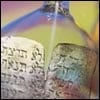
The Ten Commandments lay the foundation for our relationship with G‑d and our fellow man. Here’s how . . .
The Israelites camp opposite Mount Sinai, and declare their willingness to perform G-d’s will. G-d proclaims the Ten Commandments, but His voice is too intense for the Israelites, and they beg Moses to be their intermediary.

We are all pennies. Each one of us valuable, but our true power shows when we unite. Bring us together, and we are unstoppable. Indestructible. Exponential.

Everyone can become a “mother.” What comes naturally to the female half of creation can be learned and assimilated by all, and not only in giving birth to children, but in every one of life’s endeavors.

“If any child requires an individual evaluation and approach in order to achieve the utmost in his, or her, development, how much more so in the case of the handicapped.”

As an Israeli college student studying in London, England, Mrs. Orah Jurawel befriended a local Chabad family. When she subsequently traveled to visit New York, they asked her for a small favor: to deliver a gift to the Rebbe’s wife, Rebbetzin Chaya Mushka.
This lesson covers the last kings of Judah from the reign of Hezekiah until the final king, Zedekiah, in whose time the First Temple was destroyed.
In this episode of "Space Rabbi" Rabbi Blastoffsky deals with E.R.V.’s inability to provide useful information. The other robots do some other stuff.

This Shabbat marks the 25th anniversary of the passing of Rebbetzin Chaya Mushka Schneerson, of righteous memory.

Those who met Rebbetzin Chaya Mushka Schneerson say they learned a lot about human dignity from her.

His parents had been painfully trying to reach him the entire time he was in Shanghai . . . Had he made the right decision to depart from them? Would he ever see them again?

While his teacher was deep in thought, Berel decided he would have time to hurry home quickly to get something to eat.
Why does Judaism tell women to keep their bodies covered? Is there something shameful or evil about a woman’s body?

Devorah is Hebrew for “bee.” It’s also the name of two great women mentioned in the Torah.


“We live in a ‘me’ generation, filled with children who do not necessarily realize the impact that they have on others . . .”
“I love the learning and the lectures. After giving a little back to ourselves, we’re able to return home reinspired and reinvigorated . . .”
The sound of the shofar
is not the cry of a human voice.
It is the howl of an animal’s horn.
It is a cry so primal, so raw,
that the mind ceases to ponder,
the heart suspends its throb.
With the fury of a beast pent up in its cage,
the naked essence of the soul bursts out,
howling, ripping through heaven’s c...


