


Matot-Massei: Significant Journeys
Dear readers,
Times are pretty sad right now. During the Three Weeks we remember the desolation of our Holy Land and the subsequent exile that has lasted until today. Yes, most of us are comfortably ensconced in our host countries and have enough to eat, but as a nation we are far from our home. Spiritually speaking, we are in the desert, longing for the Promised Land.
Yet, as I helped a bar mitzvah boy learn this week’s Torah reading, I noticed a heartening lesson. We read about the daughters of Tzelafchad and men of Manasseh, each struggling to ensure that they get their maximum share of the Land of Israel. Surrounded by the barren wastes of the desert, they were fully focused on their goal: Israel. They are poised to enter the land, and they want to possess and embrace it to the best of their abilities.
Perhaps we can take a lesson. To paraphrase the Rebbe, “Live as if Moshiach has already arrived, and he will arrive already.” Yes, we are mourning, and yes, things are pretty rotten, but learning about the future era of Moshiach and the Third Temple will bring it all that much closer.
Menachem Posner,
on behalf of the Chabad.org Editorial Team

Jeremiah, the most passionate and tormented of all the prophets, has gone down in history as the prophet of doom. Yet this is unfair. He was also supremely a prophet of hope.

Life is a journey with stations along the way, some more comfortable than others. But when we settle in to those more comfortable stations, we may forget that we haven’t yet reached our destination.
Laws of annulling vows, war is waged and loot distributed. Boundaries of Israel are listed, cities of refuge designated, and some tribes request land outside of Israel.

The problem with the word “temple” is that Indiana Jones got to it. Picture jungle, torches, hieroglyphics, dark foreboding stone entranceways. So what was it really?

We are not a religion. We are a soul. Together we compose a symphony with no redundant parts, no instrument more vital than another.

Friends are there for empathy and absolute acceptance. Parents are supposed to provide direction. A family is not a democracy; if anything, it’s more like a benevolent dictatorship.

When the Torah states that G‑d placed the moon in the sky so to give light on earth, this does not exclude the possibility of man’s landing on it at some future time.

In contrast to the old adage that familiarity breeds contempt, familiarity for us has bred content, and much more.

Tonica Marlow couldn’t take her eyes off the rabbi or the Torah scroll he held in his hand. What am I doing here? she kept asking herself. So many times she had promised herself never to come here again, and yet here she was again . . .
The man was inconsolable, and indicated that if his wife was indeed deported, he wouldn’t think twice about taking his own life.


The six constants that apply to every Jew, at all times and in all circumstances, are readily accessible to one who seeks refuge from his failings.
Leveling a critique at widely accepted principles of medical ethics, Professor Glick argues that medical ethics cannot be based only on biology or philosophy, but on the “sanctity of human life."
It is a mitzvah to keep a vow, but it is also a mitzvah to have a vow properly annulled. How is a vow annulled?
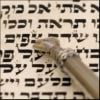
I read that it was the letter “vav” of the word “gachon” (Leviticus 11:42). My friend says that that is incorrect.
The story began more than 70 years ago in Romania and spanned three continents, finally ending up in New York’s Westchester County.
A mother of eight and electrical engineer who does research on robotics for the U.S. Army, Naomi manages to be all of this, and then some . . .
Our world is a world where a rainbow could be.
At first, there was a world that only received and returned no dividends. Its inhabitants took no ownership. They lived with their Creator’s benevolence, they did what they did with no need for excuses, and eventually died as they died. And that was it.
With the Flood, this...


