


Celebrating Sukkot and Simchat Torah
We all have moments when, although things are not going all that well, we put up a façade and paste a smile on our faces. We sometimes go to great lengths to mask our inner feelings. We’ll go about our day as if nothing is wrong, laugh along with our coworkers, and go home to our spouses and children smiling at them without a hint of our inner cares.
Every once in a while, we even exhibit behavior that is the complete opposite of what we feel. We dance when we’d rather mope, sing when we feel like crying, and smile when a frown would be a better indicator of what’s going on inside.
But “faking it” long enough will eventually affect your actual mood. You may forget why you were upset in the first place, or perhaps realize that it wasn’t such a big deal after all.
As we conclude the holiday of Sukkot, the festival of joy, and look toward Simchat Torah, the festival of extreme joy, we are reminded that regardless of what else is going on in our lives (spiritually and materially), spending time in the company of fellow Jews celebrating the Torah will certainly have a positive impact us now, and for the rest of our year.
This is the time of year when we revel in our connection with G‑d. But even if you are not yet in the mood, strap on your dancing shoes, find a celebration near you, and before you know it, you will be truly jumping for joy.
Wishing you a very joyous holiday and, indeed, rest of the year!
Rabbi Eliezer Zalmanov,
Responder for the Ask the Rabbi team @ Chabad.org

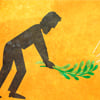
The day when the verdict that was issued on Rosh Hashanah and Yom Kippur is finalized.
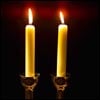
Prayers for rain, Yizkor, farewell to the sukkah, and . . . dancing!
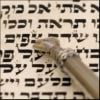
Unbridled joy, aliyahs for everyone, concluding the Torah and starting it anew . . .

On Simchat Torah we complete the yearly cycle of Torah readings, and celebrate by dancing with the Torah.

With ancient roots as a harvest festival, this holiday is perfect for celebrating the rich bounty of produce bursting from the earth at this time of year.
Understand why the Talmud asserts, “He who has not seen the rejoicing at the place of the water-drawing ceremony, has never seen rejoicing in his life!”
The movements we make with the Four Kinds each day are a meditation to bring our emotions into balanced harmony.

There are seven supernal guests who come to visit us in the sukkah, one for each of the seven days of the festival.

While it is important to directly address the rough spots in a relationship, there are ways to effect change by bypassing the negative in favor of the positive . . .

Throughout the year, the daily offerings in the Temple were accompanied by the pouring of wine on the altar. On Sukkot, water was poured in addition to the wine.
The philosophical Jew will abandon his faith, while the simple Jew will remain true. Ideas must be brought into the heart.

Why do we celebrate our relationship with the Torah on Simchat Torah, and not on Shavuot, the day we received the Torah?

One year, around the time of the High Holidays, the daughter of the Rabbi Meir of Premishlan fell severely ill.
“I want to know why the women aren’t allowed to dance with the men.” My anger sounded to my own ears flat, bold, the way I wanted it . . .

The arrangement whereby one person supports the other who learns Torah, and the reward is shared between the two of them.
There’s only one way to transform the ugliest, nastiest, darkest gunk of this world . . .

The problem was learning how to let someone into my soul, when there really had been room only for one . . .

From the moment I met him, I knew that Tal was someone special. But I could never have imagined how our relationship would shape my life.

“How can you talk about Harvard Law and G‑d in the same conversation?” It is a question that’s been thrown at me many times . . .

Gilad Shalit is finally home, but we’ve given in. Cold-blooded murderers, and those who helped them, who smiled when told the number of the children swept up in their blood-thirst: They’re all going free.
After five years of imprisonment in a cellar of hell guarded by terrorists, refused even a humanitarian visit from the Red Cross, Gilad is now home with Noam and Aviva Shalit, the father and mother who for years, camped out in front of the Prime Minister’s Office to draw attention to their son’s plea.
Our world is a world where a rainbow could be.
At first, there was a world that only received and returned no dividends. Its inhabitants took no ownership. They lived with their Creator’s benevolence, they did what they did with no need for excuses, and eventually died as they died. And that was it.
With the Flood, this...


