


Yitro
Yes in No
Dear Friend,
You know that stubborn, pugnacious, rebellious little grunt-like feeling that wells up in your gut when you hear the word “Don’t … ” at the beginning of a sentence addressed to you?
Have you ever felt it when you read the Ten Commandments—that is to say, the seven of them that begin with “Don’t … ”? If yes, then count me as a friend.
In the Mechilta, Rabbi Ishmael teaches that when the Ten Commandments were heard at Sinai, whenever G‑d said “Do … ,” the Israelites responded “OK, yes!” and whenever G‑d said “Don’t … ,” they responded “OK, no!”
Rabbi Akiva, however, teaches that they replied in the affirmative to every commandment. Even their no’s were expressed as yes’s.
Why was Rabbi Akiva able to see the “yes” hidden in each “no”? As the Rebbe once explained, it’s because he was a baal teshuvah.
A baal teshuvah has been nurtured, during the first part of his or her life, on the habit of resisting, rejecting and rebelling against anything like a “Don’t!” that seems to plop down “from the sky,” as if just to make life difficult and cramp one’s style. But a baal teshuvah has managed, during the second part of his or her life, to turn an ear to the inner positivity of even a “Don’t.”
A baal teshuvah experiences a Divine “Don’t” not as a door shutting one in from the wide world outside, but as a door protecting one from external distractions, and opening up the infinite wealth and countless blessings of being at home.
Michael Chighel,
on behalf of the Chabad.org Editorial Team
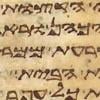
I recently read about some ancient writings that were in a script called Proto-Hebrew, which the Jews supposedly used to write in before the current Hebrew script.
A "house of law," the beth din is a Jewish court. It settles monetary disputes, oversees kosher production, handles marriage and divorce, and offers Torah guidance.

The inner wisdom descends without corruption, yet condensed and compressed countless times over, until it crystallizes in our world as an act to perform, or one not to perform.
One of the very difficult aspects of bereavement is the feeling that we are utterly alone in our misery—that no other human being can possibly share in the depth of our loss.

Jethro (or Yitro or Yisro) was a Midianite priest and the father-in-law of Moses. He is mentioned three times in the Pentateuch, once in the Prophets and in numerous places in rabbinic literature. Let us learn what we can about this fascinating figure.

Did Moses have trouble delegating responsibility? Was he afraid to let others help him?

Access seems like an innocent enough word, and an uninspiring enough concept. After all, it suggests that the giver of access created nothing of his or her own, and merely distributed the products of someone else’s genius.

fter witnessing the Divine service of the heavenly angels, a seraph angel brings a “coal” to Isaiah’s lips and atones for his sin . . .

The later it got, the crankier my brother became. Then he started whining and crying. He was exhausted, and wanted only to lie down and sleep. Finally the guide told them that it was too risky for him to take them any farther.

Handling electronic devices is not permitted on Shabbat, so I would have expected the rabbi to gently and respectfully ask his guests to refrain from using their phones. Not this rabbi.
I vowed to never associate myself with Jews, except for my family. I kept that vow till I was 56 years old.

I’m an excellent cook, but everybody has their off-days, especially when making a huge amount of food.


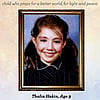
In ‘One More Light,’ Thalia Hakin essay focuses on the mitzvah of Shabbat candles.

Breaking the glass with friends and family from around the world for the happy occasion.

A work on the Lubavitcher Rebbe’s insights into human suffering.
If He loathes evil, then why does He allow it in His world? How can He breathe life into a world while all that is good and beautiful is ravaged by that which He hates?
It must be that His hatred of evil is not like the hatred of a mortal being for those who oppose him. Nothing can oppose Him, none of His creatures can c...


