


Tazria-Metzora
Do You Procrastinate?
Dear Friend,
Last night, I sat down to do some work, but then an interesting-looking article caught my eye. I thought I’d take two minutes to read it. But, as often happens on the Internet, one article led to another and then another and another. An hour and a half later, I emerged having read dozens of pages about the North Korean refugee crisis in China, last year’s Mount Everest avalanche, and the devastating 1993 famine in South Sudan.
I'd learned a lot but I was no closer to finishing my work.
And I know I’m not alone. A significant percentage of people are chronic procrastinators, and the vast majority of us do so periodically. (Certainly, educating oneself is not a waste of time, but it would have been more effective to wait until my work was done.)
These weeks, as we count the days between Passover and Shavuot, we focus on self-refinement. During this time, we read a chapter of Ethics of the Fathers each Shabbat. Every chapter is chock full of “advice for life.”
This week we read chapter two, which includes advice against procrastination: “Don’t say ‘When I’ll be free, I will study,’ lest you’ll never be free” (2:4).
There is so much we can accomplish. Why not start right now?
Miriam Szokovski
on behalf of
the Chabad.org Editorial Team

Learn the answer to this simple-seeming question in the light of history, Jewish law, and kabbalah.

That's like a room of two thousand people, with one puny guy sitting in the corner whom everyone wants to talk to (or pick on)!

Although in my mind I know that I have a lot to be grateful for, for some reason my heart doesn’t feel it. I feel that there’s something lacking, and I can’t put my finger on it. I find myself looking at others’ lives, and honestly, I’m jealous.

We were enjoying a lovely life in Maryland. So what did we do? We uprooted our family and moved to Israel!

Through the spiritual and emotional process of Iyar, we too can manifest this power to bring true, unlimited, revealed G-dly healing into this world.

Though we’re viscerally aware of the negative effects of gossip, how many of us can say that we’ve never indulged in it ourselves?

But before we can solve the problem, we must notice two further difficulties in its opening passage of the Parshah . . .

A condensation of the weekly Torah portion alongside select commentaries culled from the Midrash, Talmud, Chassidic masters, and the broad corpus of Jewish scholarship.

Time and again they revived him, but as soon as he remembered what had occurred, he would collapse once more.

Although it’s very hard to make sense of life after this terrible tragedy, we have heard from many people about the profound impact Gershon had upon their lives.

A Talmudic debate – as seen through the lens of Chassidus – on why the Torah sometimes grants temporary immunity from the effects of Tzaraas. (Based on Likutei Sichos vol. 37, p. 37.)

The real beauty of these little pizza bites is their easy simplicity.

The person who had previously been excluded from the camp, shut out in spiritual darkness, is able to shine his light again in his newfound humility.

First a parade, then a ‘farbrengen,’ then a new building With decades-long patience and persistence, the pieces began to fall into place.
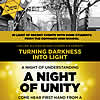
Sunday-night meeting to bring students, parents and residents together for education and awareness.

A personal and intellectual memorial from one Chabad rabbi to another.
In the future, says the prophet Isaiah, we will be consoled. Doubly consoled.
Because true consolation does not mean the anger and the wrath have passed, and now we can come out of hiding.
True consolation does not mean that everything is healed and now we are back together.
True consolation means to truly know t...


