


Ki Tisa
Dear Friend,
If you look closely at your Jewish calendar, you will see that this week we celebrate Purim Katan—the “small Purim.” Since this year is a Jewish leap year, and we have an extra month of Adar, the joyous holiday of Purim has been pushed off until 14 Adar II. Yet we celebrate 14 Adar I as Purim Katan.
The Code of Jewish law writes about Purim Katan (quoting from Proverbs), “He who is glad of heart rejoices constantly.”
It seems strange that this was the day chosen to teach us about rejoicing. After all, other than the custom to add something extra to your meal, there isn’t much we do on this day—just make sure not to fast, say certain overly heavy prayers, or deliver a eulogy.
Yet, that is the point. Even on days when there are no great happenings like the conclusion of the Torah or grand Purim feasts, we have to be in in a constant state of joy—just because we each contain a piece of G‑d, and He loves us.
Yehuda Shurpin,
on behalf of the Chabad.org Editorial Team
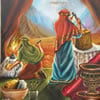
Only when Betzalel and Aholiav work in unity can we forge a connection with G-d.

The lesson that I needed to learn was that of responsibility. As long as my mother “owned” the results of my actions, I didn’t have to. It was only when I was the one who had to deal with the consequences that something shifted . . .

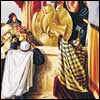
The Jews are counted, instructions are given for the remaining holy vessels, and two architects are chosen to direct the Tabernacle’s construction. When Moses doesn’t return on time, the people create and worship a golden calf. Moses breaks the two tablets, returns to heaven, and descends with two new tablets.

My elderly mother is adamantly against my doing this. She argues that charity begins at home, and that a relative might need my organ in the future.

I'm starting to feel uncomfortable about eating at the same families’ homes all the time.

It could have been the most joyous day of the year. Instead, “Little Purim” is an almost ordinary day, with no special observances associated with it. Almost, but not quite . . .

Here are some precautions to take to protect your child from becoming a victim, a bystander, or even the instigator of cyberbullying.


Rabbi Infinity teaches the meditation of all meditations—one that might just save your life.

Addressing children in 770, the Rebbe sheds light on the significance of the leap year and the special lesson that can be gleaned the extra month of Adar.
Familiarize yourself with the Talmudic principles of Hakchashah and Hazamah—two different classifications of disqualified witnesses.

They commanded Father to dress and come with them. Father came to my small bed, bent down, and gave me a kiss, long and painful. Tears—big ones, hot ones, blazing ones—rolled off his cheek and onto my forehead.

“Your other question was: if you daven (pray) the rest of the year, will you get a trumpet?”


The demand for quality Jewish preschools with strong religious and secular-based educational components is high, and so are the costs of establishing them. How did Chabad emissaries open so many excellent early-childhood programs in such a short amount of time? The second of two articles.
An estimated 400 early-childhood centers in North America are under the auspices of Chabad-Lubavitch emissaries.They cater to a wide range of Jewish families, many of whom are not religiously affiliated. The first of two articles.
Rebuilding a Jewish community in a city that has suffered from decades of decline is no easy task, but it is one that Rabbi Yisrael and Devorah Pinson, co-directors of Chabad of Greater Downtown Detroit—known locally as “Chabad in the D", are certainly up to.
Rabbi Jonah said, “The prophet Jonah ben Amitai was just another pilgrim to the Temple. He walked into the Sukkot celebration, the divine spirit rested upon him, and he became a prophet.”
The Magid of Mezritch taught:
Joy is the path to the divine.
And Sukkot is a time for joy.
A joy that can lift everyone to ...


