


Yom Kippur
Dear Friend,
I always find it strange when Yom Kippur falls on Shabbat. Instead of what I usually associate with Shabbat—good food, friends, relaxation, a jovial atmosphere—there is a serious intensity, lots of prayers, and of course no food. I almost feel like I missed a Shabbat, that it kind of got swallowed up into this bigger, more important holiday.
But then again, what really is the purpose of Shabbat? Is it just a day off of work, a day to unwind, unplug and eat? Or is it a day to cultivate a deeper relationship with G‑d, without distractions from Facebook dings and smartphone alerts? A day to look within, pray, meditate, and appreciate what we have?
In that sense, Yom Kippur is the ultimate Shabbat. Without the distraction of food, with the increased prayers, we can focus solely on G‑d, our beloved. Yom Kippur doesn’t have to mean counting the pages in the prayerbook and watching the clock. It doesn’t have to mean guilt and fear. Yom Kippur can be the closest, most intimate day with G‑d. The Shabbat of all Shabbats.
May you be blessed with a good, sweet year—and an easy fast.
Sasha Friedman,
on behalf of the Chabad.org Editorial Team

Yom Kippur (the Day of Atonement) is the holiest day on the Jewish calendar, when we fast, pray, seek forgiveness from G-d and our fellows, and come closer to G-d. It is the peak of the High Holidays.
What to do? Where to be? What not to do? We've assembled all the Yom Kippur basics on one easy-to-read page.

The Shema Yisrael of our time is unique even among the billions of Shema Yisraels that have been sung and shouted throughout our unfathomable history.

We have messed up, time and time again. We are too far. There is no hope . . . checkmate . . .

How many times do I push off asking for forgiveness? How many times does pride get in my way? What if time runs out and there is no more tomorrow? What is it about us that we think that we will live forever?

According to chassidic teachings, Yom Kippur falling on Shabbat doesn’t “deprive” us of the pleasures which Shabbat normally affords us. Rather the extremely holy nature of Yom Kippur accomplishes the same objective . . .

“I like to sit next to my husband during synagogue services; that’s why I don’t go to Chabad,” a nice lady told me.

There’s a caveat here, something you really have to know: You can’t send a goat away unless you first take ownership of it.
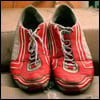
The rabbis determined that “affliction” means that we are to deny ourselves certain “luxuries.” Among them is wearing leather footwear.

Despite the tremendous losses, the Rebbe often pointed out the great miracles that G‑d had performed.

I am different from the swaying men, but not any different than how You created me. I cannot read the holy books, and cannot sing their songs, but I have my own song, and I will sing it for You.

It is okay for other people to know. Yes, let them know my life is not perfect. I am missing something, something big. And it is okay. Because I know that at the end of the day, I would not choose anyone else’s life over my own.

Although my life appears to be headed in a great direction, I feel more and more like I am getting lost.

Forty years later, Dovid Kestenbaum recalls his father’s interactions with the Rebbe at the time.
Watch our Jewish crafting guru, Abbey, demonstrate how to create unique candle holders that will be the centerpiece of your Shabbat or holiday table.
A look at the remarkable and heroic life of the mother of the Rebbe, Rabbi Menachem Mendel Schneerson, of righteous memory.
Ari discovers that multiple connections have their limitations—especially when attempting to achieve at-oneness.

We disembarked at the last stop to take some photos, when an elderly man approached and greeted us with a loud “Shalom.”
The husband introduced himself as Eduardo, an evangelical pastor, and started sharing his life story.

A selection of recipes traditionally served at the festive meals on the day before Yom Kippur, as well as a few new recipes which are high in protein, complex carbohydrates, and/or other nutrients that will help you get through the fast . . .
Being hospitalized is especially difficult during the High Holidays, and Rabbi Shraga Sherman and thousands like him around the world make it a point to blow the shofar and spend time with patients and their families, spreading faith and hope for a good new year.
For 17-year-old Sasha Pines of San Diego, the idea of starting a camp for special-needs kids was not just an inspiration, it was an idea that she brought to fruition in every way.
A quarter of a century ago, Rabbi Shmuel Weinstein and his wife, Sara, set up shop at the University of Pittsburgh. Their first program was for Rosh Hashanah. They had one student. How times have changed.
For the women who co-direct Chabad centers, especially on the coasts, it’s been challenging to switch to High Holiday mode when summer programs were in full swing, beaches and parks filled with tourists, and the temperatures teetering toward triple digits.
Texans are known for thinking big: big state, big hats, big cattle. Now Rabbi Mendel and Leah Blecher of Chabad of the Woodlands, who arrived in 2011, have a new Chabad center.
When the rabbi moved services to the firehouse, attendance spiked to nearly 100 people.
Yom Kippur is described in many ways. One very poignant description is that it is “once in a year.”
You see, the human soul is also described in many ways, with five different names, each describing a deeper level of her being. The fifth, deepest level is called yechidah, which means “one and unique.” Yechidah is th...


