


Simchat Torah: Swirling Joy
Dear readers,
Rosh Hashanah is over, Yom Kippur’s behind us, and Sukkot is quickly passing.
In a relatively short period of time we experience a series of emotions. The 40 days spanning the month of Elul, Rosh Hashanah, and Yom Kippur are charged with introspection, solemnity and seriousness. They culminate on Yom Kippur, and we launch into the joyous holiday of Sukkot. Seven days of Sukkot festivity are followed by Shmini Atzeret - an extra day to prolong the celebration, and Simchat Torah - a day of pure joy.
Simchat Torah is the bridge that will carry us over from the spiritually charged High Holiday period to the rest of the year.
So let's stock up on that joy! If you need a place to celebrate, you can find a Chabad center in your area. And in a few months from now, we’ll be able to draw on the joy of Simchat Torah to see us through until the next holiday period.
Miriam Szokovski
On behalf of the Chabad.org Editorial Team
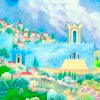
Every Jewish festival is celebrated with joy. Often there are additional emotions added to the mix, but the holiday of Sukkot is pure joy. In our prayers, we call it simply “the season of our rejoicing.”

Have you ever experienced a spontaneous bond with a perfect stranger? Happily, it is not only disaster that brings out our common spark, but also joy.

After filling the storehouses with the summer harvest, a person might feel confident about his financial situation, and forget the Creator who supplied him with all this material wealth.

For seven days of Sukkot, Jews walk around in circles, carrying an assortment of green and yellow flora. Then, on Simchat Torah, they dance in circles carrying Hebrew scrolls, working up to a frenzy.
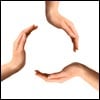
An essay on why we dance in circles on Simchat Torah, and how this day celebrates—of all things—how Moses shattered the tablets in the aftermath of the Sin of the Golden Calf.

On Simchat Torah we conclude, and begin anew, the annual Torah reading cycle, an accomplishment that produces unparalleled joy and dancing.

Why does she take the word of an archeologist at face value, while rejecting the historic testimony of an entire nation? Why do I accept an ancient document filled with puzzling statements as my guide for 21st-century living?

While I can say that I always loved this holiday, I can never say I treasured the sukkah—until this year . . .

The rebbe heard his words, sighed, and remained silent. A reaction that certainly did not bode well . . .
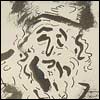
Many of the guests who came to spend Simchat Torah with the Rebbe that year arrived in Liozna with frostbitten fingers and toes, and many had fallen ill from the unexpected cold.

Before the Torah was given, it existed as “black fire written upon white fire.” This is alluded to by the unusual term “eish-dat,” which is written as one word but read as two.
How the mitzvah of building a sukkah is performed in three epochs of history: before the giving of the Torah, after the giving of the Torah and after Moshiach comes.
The tribe of Yissachar studied Torah, while the tribe of Zevulun made money to support them. Understanding the mitzvah of financially supporting Torah study.
Noah was a tzadik, a very great man. He saved the entire world. But he didn't approach Abraham's greatness.
When G‑d told Noah to build an ark before the world would be destroyed, Noah built an ark.
But when G‑d told Abraham He was about to destroy the cities of Sodom and Gomorrah—cities corrupt and evil to the core—...


