


Sukkot: Branch Out
Dear friends,
Do your Sukkot dinner plans include steaming hot soup and thick cozy sweaters? Or would iced drinks better fit the bill? Will you be contending with chilly winds, or a heat wave? Perhaps buzzing bees and pesky mosquitoes will be among the (uninvited) guests in the sukkah where you will spend the coming holiday.
Wherever you live, “eating out” takes on a whole new meaning on Sukkot. Far from a five-star restaurant, or even the simple conveniences of our homes, we brave the elements and trade secure roofs for flimsy vegetation overhead.
This puts us one step closer to our Creator, in whom we have complete faith. We trade climate control for G‑d-controlled climate.
Long ago, our ancestors acted on this faith when they left the civilization of Egypt and began a forty-year journey into the wilderness. “So said the L‑rd: I remember to you the lovingkindness of your youth . . . your following Me in the desert, in a land not sown.” (Jeremiah 2:2)
Relive history this year. Enjoy the delicious food and company of friends and family in the sukkah, and truly feel G‑d’s loving care and protection surrounding you.
Rochel Chein,
Responder for Ask the Rabbi @ Chabad.org

The seven days of Sukkot—celebrated by dwelling in the sukkah, taking the Four Kinds, and rejoicing—is the holiday when we expose ourselves to the elements in covered huts, commemorating G‑d's sheltering our ancestors as they traveled from Egypt to the Promised Land. The Four Kinds express our unity and our belief in G‑d’s omnipresence. Coming after the solemn High Holidays, it is a time of joy and happiness

Four types of vegetation are "taken" every day of the holiday of Sukkot. They are: lulav (palm frond), etrog (citron), hadasim (myrtles), and aravot (willows)
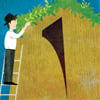
This sukkah guide will lead you through the fun mitzvah of building and dwelling in a sukkah—from the permitted and required components in its structure, to the basic rules of living in the sukkah.
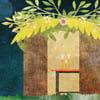
The sukkah, when done by the book, is incongruence itself: Live in a temporary structure as though it were permanent. What other structure does that remind you of?

The very virtues of the other three kinds—the understanding of the lulav, the feeling of the hadas, the across-the-board perfection of the etrog—spell their deficiency.
Why would I be so quick to take care of Zoe, a little girl I don’t know and will most likely never see again, when I didn’t seem to have that kind of time, patience or ability for my own baby?

Why is the holiday named after the mitzvah of sukkah? Why was this mitzvah chosen to represent the inner message of the holiday—what of the holiday’s other mitzvot?

Surely, Moses had lots of things to do on his last living day. Yet in his final hours, he is commissioned by G‑d to write and teach music.

A 70-line “song” delivered by Moses to the people of Israel on the last day of his earthly life, and his ascent to Mount Nebo to glimpse the Land of Israel.

An hour-long excerpt from a 1980 recording of the Rebbe’s pre-Sukkot gathering on the 13th day of the month of Tishrei, the yahrzeit of the fourth Chabad-Lubavitch Rebbe, Rabbi Shmuel Schneerson (1834–1882).

I don’t get it. Someone in the synagogue told me that he spent over a hundred dollars on his lulav and etrog set for the holiday of Sukkot. Why would he do that?

I am a 50-year-old man, and I have been widowed for the last two years. I would like to start dating again, but my daughters, now ages 14 and 16, feel very differently . . .

Often, anxiety takes root because a person’s external character is incompatible with his or her inner self.
The anxiety may dwell upon other issues and obsessions—but none of these are the true underlying cause.
Most souls can tolerate a few inconsistencies. But others are sensitive to every nuance.
As soon as some asp...


