


Dear Rabbi,
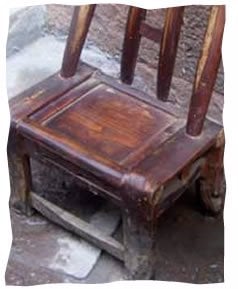
I am in the seven-day mourning (shiva) period for my sister. I was hoping you could tell me why we sit on low seats during these days.
Answer:
I am sorry to hear of your loss. May G‑d, the true Judge, comfort you amongst the mourners of Zion and Jerusalem.
As is known, Job (from the Bible) had a difficult life and experienced much suffering, including the deaths of family members. From the verses describing how he mourned, our sages deduce many of the laws of mourning.1
One of the verses says (Job 2:13), “They sat to the ground.” The Talmud points out that it says “to the ground” and not “on the ground,” indicating that when one is sitting during the seven-day mourning period, one should sit close to the ground,2 or on the ground.3 Today we specifically do not sit on the ground itself, but on a low chair or bench.4
The verse in Genesis (1:26) says that G‑d made man in His likeness. The Talmud explains that upon death, the body no longer reflects the image of G‑d, in effect “turning over” to a different reality; so too, symbolically, we turn over our chairs5 and sit closer to the ground.6
Rabbi Mordechai Jaffe notes7 that while it is not the custom in our times to turn over chairs and sit on them, we sit on something close to the floor to outwardly express the painful mourning for our loved one.
Please see the Basics of the Shiva Mourning Period.





 Texts
Texts

In the mode of creation In genesis we find that there are the heavens above and the watery abyss below and these were separated one from the other by that firmament from which we come and are bound to return. To be "low to the ground" is nothing more than recognizing your correct place in the
overall scheme of things. In life the umbilical cord which attaches us to the earth is broken and we are temoorarily released only to be reattached at death. We really never get very far from the source and henceforth we shall ever be "low" in relation to the firmaments above and below.