


Day Before Rosh Hashanah
Erev Rosh Hashanah
On the day before Rosh Hashanah (Erev Rosh Hashanah), morning prayer services (which do not include shofar) are longer, starting with early-morning Selichot and concluding with the annulment of vows.
Read: Erev Rosh Hashanah Morning Services
During this day, we prepare the festive and symbolic foods we will enjoy on Rosh Hashanah. These include kosher wine and sweet, round challah bread (often studded with raisins) and apples to be dipped in honey, fish (or ram) heads, pomegranates, and sweet foods made with honey, such as carrot tsimmes, teigelach, honey cake (lekach), and more.
Ask for Help
It is customary to visit the graves of tzaddikim (righteous, saintly people) and there to pray for a sweet new year. We ask the tzaddikim to intercede On High on our behalf, and we pray to G‑d to have mercy on us in the merit of these righteous people at whose resting places we are standing.
Today, many gather en masse on this day at the resting place of the Rebbe in the Queens borough of New York City (the "Ohel"). If you can't make it there on this auspicious day, you can email or fax a note with your blessing requests which will be placed by the Ohel. Click here for instructions how to do so.
Give Charity
Before the onset of the holiday, give charity freely, accruing merit for ourselves and for all of humanity, who will soon stand before G‑d in judgment.
Read: 15 Facts About Tzedakah
Visit a Mikvah
It is customary for men to visit a mikvah (ritual pool) on this day, to be purified before entering the High Holy Days. Speak to your rabbi to find out mikvah hours in your location.
A New Knife
Some have the tradition of purchasing a new knife before Rosh Hashanah. Click here for the fascinating reason behind this custom.
Psalms
"If you only knew the power of verses of Psalms and their effect in the highest Heavens, you would recite them constantly. Know that the chapters of Psalms shatter all barriers, they ascend higher and still higher with no interference; they prostrate themselves in supplication before the Master of all worlds, and they effect and accomplish with kindness and compassion" — Rabbi Menachem Mendel, 3rd Chabad Rebbe.
On the day before Rosh Hashanah, every spare moment should be spent reciting Psalms. Thus, one already enters the new year with a clean slate. The continuous Psalms recitation should continue throughout the 48 hours of Rosh Hashanah.
Rosh Hashanah is ushered in with candle lighting, followed by synagogue services and a festive meal.

Selichot, No Tachanun or Shofar, Annulment of Vows (Hatarat Nedarim)
The pre-Rosh Hashanah morning service has some extra features -- selichot and hatarat nedarim -- and is missing several features -- tachanun and the sounding of the shofar...
|
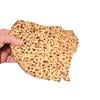
When a holiday runs directly into Shabbat, an eruv tavshilin is set aside before the holiday. This allows us to prepare on the holiday for the Shabbat that follows.
|
Join the Discussion
am wondering what prayer should I recite..
Prayer at graveside for the new year Is there a specific prayer to say?
Personally, I never “pray” at a graveside but rather speak or write as if the person was still alive today. I wouldn’t ask the Rebbe to heal a loved one, for example, but rather on what it is I should do more than I have in my supplication to Hashem for the healing and finding all the professional assistance I can. To me, he’s our wonderful, amazing Rebbe who is seemingly able to do many Rebbe things in his realm of no space or time. However, even he has advised people who rely on Rebbe of the past and present to start working with him on getting them to start relying on Hashem more and less on the Rebbe past and present. Nevertheless, he, the Rebbe, loves every Jew.
לשנה טובה תכתב ותחתם
I was once told it was a tradition to not blow the shofar not only to separate the month of Elil, but to keep Satan from knowing that God would return for his people on Rosh Hashana. The idiom given was "the day we don't speak of" Is this a common understanding?
Concerning:
"It is customary to visit the graves of tzaddikim and there to pray for a sweet new year. We ask the tzaddikim to intercede On High on our behalf..."
How is this accomplished?
Do tzaddikim hear/answer prayers? ALL prayers or only on Rosh Hashanah?
A tzaddik's resting place is holy all year round, and prayers there always have special significance, but all the more so on the auspicious days leading up to Rosh Hashanah.







My problem is both my parents and sister are buried in New Jersey and I live in England. There's no way that I can fly over to lay a stone on their headstone, in fact mom doesn't have one because it's not a year since she passed. Sadly my sister was cremated. Instead should I donate to a charity in their names?
Shana Tova U'Metukah
The article does not refer to visiting family graves - it is speaking about visiting saintly individuals who have passed away. That being said, it is always good, especially before Rosh Hashanah and Yom Kippur to give charity in memory of those who have passed.