The year was 1950.
The date, January 28, 10 Shvat 5710.
The Jewish world awoke to the devastating news of the passing of the sixth Lubavitcher Rebbe, R. Yosef Yitzchak Schneersohn. His passing created a leadership vacuum in this tight-knit community of scholars, mystics, simple Jews, and survivors.
Those who had taken refuge in the United States were a meager remnant of a once glorious dynasty, which in the past had numbered in the hundreds of thousands, with centers and outposts active across much of Eastern Europe.
But now their future was uncertain—what would become of their way of life in this new land? What would be their marching orders into the future?
Numerous debates and deliberations ensued. Where would they turn for comfort, strength, and guidance in life and Torah? Who would lead them? Who would become the next Rebbe?
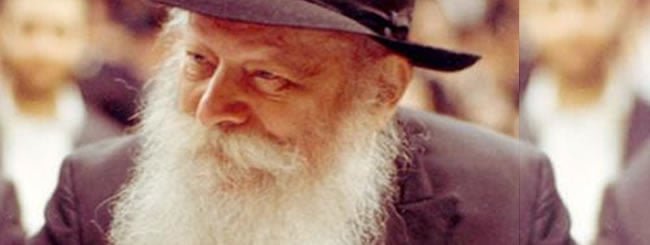
Some in the community considered the elder of R. Yosef Yitzchak’s sons-in-law, R. Shmaryahu Gurary, a renowned Chasidic scholar and communal activist, to be the natural candidate to lead the movement. Most of the Chasidim, however, looked to the younger son-in-law, R. Menachem Mendel Schneerson, known then as Ramash,1 to fill his father-in-law’s place.
Unlike his brother-in-law the Rashag, who had been raised and incubated in the court of the fifth Lubavitcher Rebbe, R. Shalom DovBer, known as the Rebbe Rashab, and had worked closely with R. Yosef Yitzchak on many communal matters, the Rebbe grew up in isolation from the epicenter of Chasidic life, spent much of his early years studying alone with tutors, and later lived a relatively cloistered life at the Berlin and Sorbonne universities, where he studied.
For his part, R. Menachem Mendel, who was fiercely private, had vigorously rejected the persistent requests of the Chasidim that he become the new Rebbe.2
However, as Providence would have it, rather than continuing to live a life of quiet obscurity, the Rebbe would become one of this century’s most public Jewish figures.
The Most Extroverted Introvert
Like Moses, whose initial response to the prospect of leadership was, “Who am I that I should go to Pharaoh, and that I should take the children of Israel out of Egypt?”3 the Rebbe initially responded to his communal charge with expressions of inadequacy.
“I received your letter [proposing my candidacy as Rebbe], and I was shocked to read it, demanding matters that are not [part of] me… I do not blame you, because you do not know me personally, but at least you should have checked before writing to me.”4
When R. Dubov, a prominent Chabad Chasid, urged the Rebbe to assume the mantle of leadership, the Rebbe questioned the very assumption that he was fit for leadership by exclaiming, “What do you suppose? That Mendel Schneerson is a Rebbe?!”5
Indeed, so opposed was the Rebbe to assuming the mantle of leadership that, at one point, he even threatened to run away if the Chasidim did not stop pressuring him to accept the role!
As late as two weeks before he accepted the position of Rebbe, he was still vehemently objecting to the nomination.
On January 2, 1951, a group of Chasidim came to see him with a letter announcing their acceptance of him as Rebbe. After reading just the first sentence, the Rebbe folded the letter and put it on his table. With tears on his face, the Rebbe said, “Please leave. This letter has no relevance to me.”6
So what changed the Rebbe’s resolve, and consequently the history of Judaism in post-war America?
A pointed comment from his wife, who was the daughter of the Previous Rebbe, has been said to have made the difference: “If you don’t become Rebbe, thirty years of my father’s life will have gone to waste.”7
Once it was put to him as an urgent call to preserve the community, the Rebbe assumed the public and all-consuming role of a Chasidic Rebbe.
Nevertheless, even after he accepted the demanding role and progressively expanded his responsibilities, the mantle of leadership still failed to grow on the Rebbe, as he once confided in a letter:
“I must emphasize that despite the aforementioned [urging you to be active in communal affairs], it remains now, just as it was when we met in person, that I myself take no pleasure in being involved with communal affairs…”8 9
This personal disclosure echoes another statement made during a private audience in 1965 with R. Hillel Pevzner, a shliach in Paris whom the Rebbe was trying to encourage to increase in his communal activism.
R. Pevzner complained, “Rebbe, it is too much for my introverted personality!”
The Rebbe replied, “By nature, I, too, am introverted. Nevertheless, I reluctantly accepted upon myself to be active in public life, because I knew how essential it was.”
And it is here that we arrive at the profoundly human struggle and question at the heart of the Rebbe’s story.
To live for myself or to live for others? That is the question.
From the moment he made his choice, this introspective scholar would spend day and night absorbing the pains, fears, anxieties, and aspirations of millions of people, at times responding to over four hundred letters a day, seeing people in private audience throughout the night three times a week, standing on his feet for seven to eight hours on Sundays to hand out dollars for tzedakah, giving out kos shel brachah (wine of blessing) to thousands of people on the night after Yom Tov, following a two- or three-day festival during which he would teach Torah to thousands of his Chasidim for many hours.
And to think that, by his own admission, the Rebbe’s public role and persona still did not come naturally to him, even nearly fifteen years after becoming Rebbe.
A Life of Service
To live for myself or for others—that is the question we are all called to answer, as individuals, as communities, and as nations.
As individuals, will we live a life devoted exclusively to self-actualization and development, however noble and lofty, or will we devote significant time, energy, resources, and mind-space to the well-being and betterment of our communities, schools, and wider society?
Will we design home and family cultures that are self-centered or other-focused, that look out for others or only for our own?
When structuring our communal value systems, what will we elevate above all other aspirations: ambition and success or altruism and service?
These questions have become increasingly relevant and urgent to address in a world and for a generation that has replaced the collective priority of We with the singular pursuit of Me.10
It was in this milieu of twentieth-century American hyper-individualism and self-absorption that the Rebbe emerged as a humble yet towering role model of someone who gave his all for others.
The Rebbe took the first step onto the bridge between post-Holocaust devastation and global renewal with an inaugural speech given on 10 Shvat 5711 (1951), at a gathering honoring the first anniversary of the Previous Rebbe’s passing. On the first night of his over forty-year quest to change the face of Judaism around the world, the Rebbe spoke with sober gravity, occasionally breaking into tears, choking on the poignancy and magnitude of the moment. Clearly outlining his intentions to help uplift all Jews, the Rebbe took upon his shoulders the overwhelming task of leading the way, and he fervently implored those gathered before him to do their part.
If you read the following excerpt from his inaugural speech with your heart, you may see in these words not only an attempt to turn a historically inward and insular community into a global taskforce for spiritual outreach. You may also discern in them the faint but forceful echoes of an inner struggle and a painfully honest, soul-searching conversation that was more intrapersonal than interpersonal:
“...It may not be by virtue of your own choice. It is not through your own achievements. Rather, it is handed to you. An individual cannot argue that this status is beyond him because of personal limitations. To the contrary, Chasidut explains in many places that every single Jew, without exception, must ask himself: When will my actions reach those of my fathers, Abraham, Isaac, and Jacob?...
“What was the approach of the first, Abraham? He was not looking for sacrifice. All he knew was that he had a mission to bring others close to G‑d, to go to a place where they don’t know about G‑dliness, [where] they don’t know about Judaism, [where] they don’t even know about alef-bet, and to place his own needs aside and devote himself to them. And when someone argues, ‘Look, the verse says only, He called out, it is enough if you yourself know G‑d,’ we say, ‘No! Do not read it, He called out.’ If you want G‑dliness to affect you, then [you must] cause others to call out…even if he feels no spiritual strength within himself, even if he feels he has nothing, and he cries out, ‘Who am I? What am I?’ and he has proof of this. He is nevertheless told it is not by your own choice…and since the path has already been trodden, each of us is obligated to take up this mission... He must realize how cherished he is and how much has been invested in him. He will then be able to fulfill his part of the mission to draw G‑d’s essence back down into this material world.”11
In the heartfelt words above, one can discern the Rebbe arguing the cause and making the case, addressing that most universal of struggles, and answering that most human of questions, in a way that would irrevocably change his life and so many others by extension.
Will I live only for myself or will I live for others?
To live a life of service—that was the Rebbe’s answer on that historic evening. May his inspirational example help each of us answer the call when the same question inevitably comes our way.