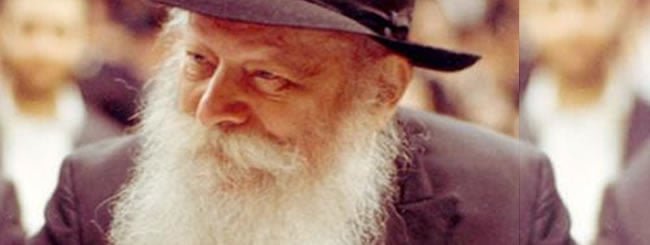
Each year on Simchat Torah from 1954 until 1964, the Lubavitcher Rebbe would teach an unknown Chasidic song. In addition to teaching the actual melody, the Rebbe would often explain its background and significance.
On one occasion, the Rebbe taught a song called Anim Zemirot, based on the devotional words of a liturgical poem attributed to R. Yehudah Hachasid:
“I shall sing sweet songs and poems I shall weave, because my soul longs for You.
My soul desires the shadow of your hand, to know every one of Your secrets.”
After teaching the song, the Rebbe shared the following story:
Once, on the day after Yom Kippur, the community of a certain shtetl arrived at the synagogue for Shacharit and were surprised to find a Chasid dancing at the podium, singing Anim Zemirot with great fervor. It turned out that the man had been so engrossed in the melody that he danced the entire night, not even noticing that the fast had ended.
As the song became popular among the Chasidim, rumors began circulating that the pious individual in the story was the Rebbe himself.
When one of the Chasidim visited the Rebbe for a private audience, he decided to clarify the matter and asked if the rumors were true. The Rebbe replied that they weren’t and then proceeded to recount the story in full:
“There once lived a rich man who made it his business to travel the region, locating and redeeming Jewish people who had been imprisoned by local barons after coming upon hard times. One day, he was passing by the local jail when he heard heartrending cries from a Jewish man who was being held there. He went to see the local baron in an effort to free the man from captivity, and he was told that the cost of the man’s freedom was an exorbitant sum. The rich man was hesitant.
“Returning home, his conscience didn’t let him rest. He proceeded to calculate the worth of his entire estate, which turned out to be approximately the amount it would take to free the Jewish man. He liquidated all of his assets and returned to the baron, handing him the necessary sum.
“With a wicked gleam in his eye, the baron burst out laughing as he opened the cell, calling out: ‘Take your Jew, as promised.’ To the wealthy man’s shock and dismay, the poor man had already passed away.
“Feeling utterly devastated over selling his possessions to no avail, the now destitute man fell into a deep depression. No matter how much his family tried, the man’s spirits could not be revived.
“One night, he fell into a deep sleep. As he slept, he had a dream, with a message from above: ‘Your money was not wasted. On the contrary, your altruistic actions are worthy of reward.’ The man was given two options. The first was to return to a life of extraordinary wealth. The second was to experience a taste of Gan Eden, heavenly bliss, while still in this world.
“The man chose the second option, and it was decided in heaven to bless him with spiritual rapture on Yom Kippur.
“Throughout that Yom Kippur, he experienced this sublime revelation, a taste of the World to Come. So caught up was he in ecstasy that he danced through the night, oblivious to his bodily needs.”
When retelling this story, Chasidim would say: “From the man’s choice, it is clear that he wasn’t a student of Chabad Chasidut. For had he benefited from the teachings of Chabad Chasidut, he would have chosen the wealth. Just imagine how many more lives he could have saved then!”1 2
The story above frames the difference between two fundamentally divergent approaches to seeking G‑d: Is our purpose in this life to seek transcendence and spiritual enlightenment for ourselves, or are we here to dedicate our lives to acts of service and mending our broken world?
Me, Myself, and I
Regardless of particular tradition, most spiritual seekers in our day are in pursuit of transcendence and enlightenment. But the exclusive pursuit of the metaphysical and spiritual can also blind us to the everyday struggles of the people around us.
At the heart of this pitfall is the desire of the spiritual individual to feel—to perceive and sense—the intangible beyond. The operative words are “feel” and “sense,” which ironically describe the gratification of selfhood rather than its transcendence. The seeker’s departure and arrival points are all too often the same: an expanse called Me.
Counter to this propensity, the Rebbe repeatedly reinforced the perspective of Chasidism, which privileges compassion over communion, empathy over ecstasy, and other-centeredness over self-centeredness.3
For example, in conversation with a spiritual seeker who asked how he might live a more spiritual life, the Rebbe reinforced this point, saying: “Although it’s important to work on self-refinement, the call of the hour is to better the lives of others.”
The Rebbe proceeded to illustrate this revolutionary perspective with the following story:
“A great Jewish sage was once asked for a substantial donation by a person in need. The rabbi went straight to his drawer, took out his savings, and gave the entire amount to the poor man. When the rabbi’s wife realized what he had done, she was very upset, exclaiming, ‘What have you done? You’ve given away all of our savings!’
“The rabbi replied, ‘My dear wife, last night I dreamed that I had passed away. When I arrived at the gates of heaven, a renowned Torah scholar was waiting to enter. After some time, it was confirmed by the heavenly court that he had spent his lifetime in the study of G‑d’s wisdom, but he was not admitted immediately.
“Then another soul came along. His passion in life had been giving charity. It was established that he had devoted most of his energies to helping others. The gates of heaven swung open immediately, and he was allowed into Gan Eden.
“Of all the worthy pursuits one can be involved in,” the Rebbe concluded, “acts of giving have the most merit in the eyes of G‑d.”4
A Holy Yom Kippur Meal
This was the message at the heart of the Rebbe’s very first address upon assuming the mantle of Chabad leadership in 1951.5 As his first official act as Rebbe, he delivered a maamar, a Chasidic discourse, during which he broke down in tears as he recounted a story about each of the Chabad Rebbes, highlighting their legendary ahavat Yisrael—their love for a fellow Jew. He began with a story about the first Rebbe of Chabad, R. Schneur Zalman, known as the Alter Rebbe, which he would retell many times throughout his four decades of leadership, reinforcing its powerful message.
It was the day of Yom Kippur, the holiest time of the year. The entire community was gathered in the synagogue waiting for the most hallowed prayers of the year to commence, when suddenly the Alter Rebbe removed his tallit and walked out.
Unbeknownst to the townspeople, the Alter Rebbe left the small village. While his Chasidim waited worriedly for him to return, he had gone to the edge of the town and entered a dilapidated cottage, where a young mother was lying with her newborn child. He chopped wood, made a fire to warm the house, and prepared a soup for her.
He acted with the sacred awareness that saving a life is so important that chopping wood and creating fire—normally forbidden on the holy day—were permitted. No task was beneath this great Torah scholar as he cooked a meal and tenderly fed the woman before returning to the synagogue to commence Yom Kippur services.
When he was later asked why, on the holiest day of the year, he chose to help this woman and her family himself rather than send an emissary, he replied that according to Jewish law, one should never delegate the holy task of saving a life, even if it is Shabbat, a festival, or Yom Kippur.6 7 8
How poignant a story for the Rebbe to share that evening in Brooklyn, especially considering what had transpired just one night earlier in his office at 770 Eastern Parkway.9
Moshe Groner was a rabbinical student at 770 and was catching up on his studies on the eve before that historic farbrengen, when he heard the phone in the office at Chabad headquarters ring incessantly. After checking that none of the secretaries were around, he picked up the phone thinking it might be an emergency.
Imagine his surprise when he recognized the voice of the Rebbe on the line.
The Rebbe asked him whether he was available to assist with an urgent matter at home. Moshe ran over to the Rebbe’s home, and the Rebbe explained that there was a Jew in poor health who had been admitted to a local hospital, and he was trying to reach the man’s doctor in order to get permission to visit the patient. The Rebbe asked Moshe whether he could stay on the line until the doctor was contacted, as he needed to tend to something in the next room.
When the doctor was finally reached, Moshe called the Rebbe to take the phone and stepped into the other room to give him some privacy.
On the dining room table lay a number of sefarim, sacred books, and it appeared that the Rebbe had been preparing a lesson. After hanging up the phone, the Rebbe told Moshe that he needed to go see the patient in the hospital, and he asked Moshe whether he could look up certain sources in the materials laid out and place them on the table before he left for home.
Imagine Moshe’s shock and amazement when the very next evening, during his very first address as Rebbe, the Rebbe referenced the holy books that had been spread out on his table the night before.
It was then that Moshe was struck by the profound ahavat Yisrael he had witnessed the previous evening.
While preparing the equivalent of his inaugural address, on the night before arguably the most important and transformative event of his life, the Rebbe had put everything on hold for a Jew in need.10
On his very last evening as a “private citizen,” less than a day before being propelled into the unrelenting spotlight that would follow him for the next forty-three years until his passing, instead of dedicating those precious moments to his own spiritual passions, he did not think twice about rushing to a hospital ward to ensure that an overlooked Jew with no family was being cared for.
Like the Alter Rebbe before him who refused to delegate the holy task of caring for a Jew in need on the holiest day of the year, the Rebbe chose not to delegate the hospital visit on that most important night of his life.
This quiet act of altruism and kindness is deeply symbolic of the mission of outreach for which the Rebbe would become known, in which he charged his students and followers to forgo some of their own spiritual comforts in order to ensure the material and spiritual well-being of others.
With every opportunity, the Rebbe drove this point home—a single act of kindness rises above all acts and practices, no matter how presumably lofty.
Indeed, at its heart, Judaism is a religion of concrete action, of deeds in the here and now. We were not placed on this earth to merely enjoy and experience the fruits of spiritual transcendence. We were sent to this world with a holy purpose, a mission defined by service, sanctified by the impact of our deeds on the lives of the people we touch.
In the following chapter, titled A Reluctant Rebbe, we encounter the moving story of the Rebbe’s personal struggle to assume the mantle of Chabad leadership, in which he sacrificed a life of private devotion to take on the unrelenting burden of public service. This heartfelt illustration is offered as a poignant portrait of the way in which the Rebbe himself resolved the universal tension between self and service, providing a powerful example for us all.