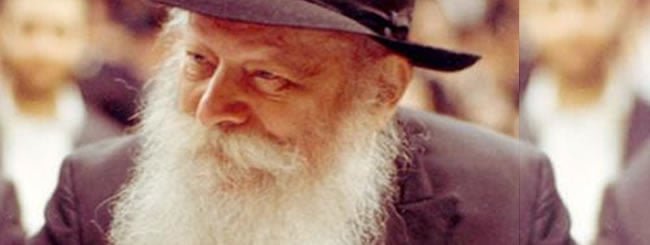
On the evening of Simchat Torah 5719 (1958),1 the central study hall of 770 Eastern Parkway was alive with revelry and song. Following the traditional hakafot [dancing with the Torah scrolls] and a festive meal, the Rebbe returned to the main sanctuary of 770 in the early morning hours to teach a Chasidic tune from days past, as he had for the previous several years.
Taking the center of the room, the Rebbe began to sing a haunting tune that rose and fell dramatically in melody, pitch, and emotional tone—from heartbroken longing to uplifting notes of fierce hope. The distinctive tune kindled the souls of the men who had gathered. After the song faded, leaving the crowd in almost tangible silence, the Rebbe told the story of the song’s origins.
There was once a Sufi Muslim warlord, tribal leader, and imam named Shamil, who had valiantly fended off Russian invaders from his stronghold in the Caucasus Mountains during successive incursions in the 1800s. Time and again, the mountain-dwelling rebels and their leader kept the Russian soldiers at bay thanks to the remoteness and fortitude of their mountain fortress. The Russians, repeatedly defeated but determined, drew Shamil out of hiding by offering a farcical truce. Shamil was ambushed and then exiled to the heart of Russia, where he mourned and yearned to return to his mountain home.
During the Simchat Torah farbrengen the next day, the Rebbe repeated the backstory to the song he had shared the previous evening:
“When he was in exile, he would occasionally remember the high mountains where he was free of the bonds of government, without the restrictions of the jail, and even without the restraints of a settled city of residence and the limitations and constraints of culture, and [how] now he was enslaved…and a great yearning for those high mountains, where he was as free as an eagle in the heavens, would awaken in him, and he would sing this song, which begins with yearning and ends with hope that he would eventually return home.”2
The story embodied in Shamil’s song, the Rebbe continued, served as a sublime, wordless metaphor that uniquely expresses the dramatic journey of each soul. The soul, which is inherently holy and in effortless alignment with G‑d, descends from the perfect, undifferentiated elation of the heavens into the physical world, where it is clothed in the body of a human being. The physical body, with its base needs, compulsions, and desires, restricts the soul, engendering a state of spiritual exile from the perfect oneness it had enjoyed prior to incarnation. The stirring song of Shamil, the Rebbe concluded, mirrors the intense pathos of the soul in exile, and its hope to one day return to dwell in the infinite light of its Creator and source.
With this simple song and story, the Rebbe addresses a critical and inevitable question regarding the soul’s relationship with the broken world into which it is born. If, as the Rebbe reinforced time and again, our truest self is part of G‑d’s essence, why rip us from a state of perfection and clarity and send us into a conflicted reality dominated by the agonizing illusion of separation?
The answer, according to the Rebbe, lies in the deep, essential connection between the story and purpose of creation, and the starring role assigned to humans within that Divine drama.
Descent for the Sake of Ascent
To understand the purpose of the soul’s descent into the world, we must first step back and take a brief look at the purpose of creation itself.
According to Kabbalah, our understanding of the true nature of reality is inherently limited. What we perceive to be a dead dance of forces, functions, and mute matter is actually a living, unified field of Divine energy that animates and orchestrates every aspect and iota of our universe. Mystical sources describe the process of creation as involving a series of obfuscations that hide Divinity behind an elaborate and thoroughly convincing illusion of fragmentation. Blinded to the infinite light that binds everything together, we instead see a simulation of disconnected forces and phenomena, seemingly devoid of meaning or purpose.
The appearance of fragmentation, as with all things, serves a distinct purpose in the story of creation. As philosopher Bertrand Russell summarized, “When creating the universe, G‑d wrote a good detective story with all of the clues pointing in the wrong direction.”
Similarly, Kabbalistic tradition tells us that sparks of G‑d’s essence were scattered and hidden throughout our world so they could be sought out and reunited by humankind. In this way, we become G‑d’s collaborative partners in the sacred work of unveiling the true, underlying oneness behind the facade of multiplicity, and revealing His infinite, illuminating presence on earth.
Each of us inherits an essential part in this great cosmic drama and is given a blessed corner of this world to redeem and elevate. The coordinates of our personal lives, in turn, become the constellation of our unique purpose.
Like Adam, the first human, who was empowered to replenish the earth and steward it3 by virtue of his inborn Divinity, we are each tasked with revealing the intimate link between creation and its Creator.
As the Rebbe writes in a communal letter issued in the days preceding Rosh Hashanah 5720 (1959):
“When G‑d created Adam, his soul—his Divine image—permeated and irradiated his whole being, by virtue of which he became the ruler over the entire Creation. All the creatures gathered to serve him and to crown him as their creator. But Adam, pointing out their error, said to them: “Let us all come and worship G‑d, our Maker!” The world conquest which was given to man as his task and mission in life, is to elevate the whole of Nature, including the beasts and animals…so that the whole of Creation will realize that G‑d is our Maker.”4
This short teaching helps frame the purpose of the soul’s disruptive descent, exile, and embodiment. Prior to incarnation, the soul exists in a state of utter awe and alignment with the Creator, experiencing no sense of self or separation—much like a child in the womb. From this perfect, spiritually amniotic existence, the soul is plucked and enclothed within a body, for whom G‑d or spirit doesn’t feel nearly as immediate or real as hunger and cold. But in so doing, the soul gains access to a vessel that allows it to inhabit and impact the physical world—the crown of G‑d’s creation. The soul must incarnate, because the physical world can’t be completed from the heavenly realms. It must be worked on from within.
This is why our souls are sent from on high to act as ambassadors of Divine consciousness and light to influence and illuminate the physical world. Ignited by the power of our purpose, we are each tasked with doing our part to reveal the seeds of Divinity planted throughout the events, circumstances, and trajectories of our lives. As we do, step by step, choice by choice, we move creation toward its ultimate redemption.
We are here on a mission, and we all arrive uniquely empowered to bring Divine light into the world. The soul’s descent represents a precious opportunity to participate in the ongoing process of creation. By definition, our physical existence is a purpose driven phenomenon laden with incredible spiritual significance. This purpose—to elevate and unify the world—is why we are here, and why each of us, body and soul, matters more than we can ever truly fathom.