


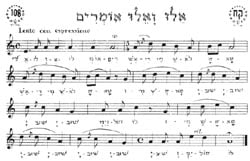

The Talmud in the tractate of Sukah describes the unbounded joy of Simchat Beit Hasho'eivoh celebrated in the Holy Temple from the Second night of Sukot until the end of Chol Hamoed -- the Intermediate Days. "He who has not witnessed the joy of Beit Hasho'eivoh has never seen joy in his lifetime." The Talmud adds that, in their greatest ecstasy, the "Chassidim and men of good Deeds" never overlooked the pressing need of repentance. Dancing together fervently they would sing out: "Fortunate is he who has not sinned; and let one who has sinned repent, and he will be forgiven."
This moving melody, composed by early Chabad Chasssidim, accurately brings forth the message of the melody to contemplate repentance even in moments of highest rapture.