


There is a superficial you and a spiritual you. The superficial you is made of the personality, habits, opinions and attitudes that are acquired over time; the spiritual you is the deep innate yearning of the soul to connect to community, mystical concepts and G‑d. In Kabbalah, the spiritual you is the real you, so a strong emphasis is made on deflating the superficial self in order to allow the deeper self to shine through.
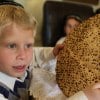
Correspondingly, there is leavened bread and unleavened bread. Leavened bread is fat, inflated and full of itself; unleavened bread is flat and humble. That's why the centerpiece of the Seder is matzah. At the Seder we relive the Exodus on a spiritual plane, freeing the soul from its slavery to the superficial self. Matzah, representing humility, the flattening of the self, the putting of one's ego to the side, is central to the process. In Kabbalah, matzah is considered the conduit for the flow of the Seder's redemptive light.
True humility starts with an insight: the humble recognition that the charming, witty, opinionated me is but a fat, inflated loaf of bread, while the real me is a conduit of divine strength, the inner me with which I light up the world. Humility is that which changes me from an everyday dough boy to a mystical Matzah Man.


Reply Dear DG of NJ,
Thank you for your comments.
Yes, there is a difference between the spiritual and superficial, all the difference in the world. The spiritual can also be expressed through the superficial.
Fundamental to Torah spirituality is the existence of an objective reality. Pursuit of that reality is wisdom. If there is a Creator of that reality, then knowledge of the Creator is the ultimate in objective truth and wisdom. That is Torah.
Having said all that, the article was meant to offer a practical suggestion - that humility is a conduit to reaching a higher self.
Regards,
R' BC