


Shelach
The Spies in Our Lives
Dear Friend,
Every complete lifetime is lived in three stages—childhood, adolescence and adulthood—and the Torah’s wisdom, from the practical to the esoteric, is an extended guide to how we and our children can most meaningfully navigate through each stage of life.
At its core, childhood is marked by dependence, adolescence by independence, and adulthood by interdependence.
This week we read the story of the spies—twelve elders and leaders who were dispatched to the land of Canaan and returned with a report that predicted complete failure—a conclusion that led to the rebellion of thousands. At the root of the spies’ complaint was the fact that they really didn’t want to grow up and grow the world. They wanted to continue to live entirely spiritual lives as man-children, where everything was handed to them from Above, where they would not be called on to use their effort and creative intelligence to proactively improve and perfect the world in which they lived.
The subsequent rebellion of the masses against, Moses, Aaron, the Torah’s promises, even G‑d Himself, was a model of irrational adolescent behavior, an obstinate, thoughtless rejection of that which they needed and would always need.
It’s a good reminder that a joyous, fulfilled, adult life can result only by happily embracing what we truly need in life—G‑d, the Torah, and each other—so we can interdependently raise up the world.
Yaakov Ort,
on behalf of the Chabad.org Editorial Team


Poor Rabbi Klein had not signed up for this. We stood in his office, and he wasn’t exactly sure what to do with this hysterical girl.

I have heard that the reason is that we are not supposed to adorn ourselves while in mourning, but I am looking for a deeper explanation.

Immediately following the commandment of the tallit, the Torah states, “I am the L-rd, your G-d, Who took you out of the land of Egypt to be your G-d . . .”

I feel so inadequate, like I'm letting down the whole chain of Jewish women before me, back to Sinai, by my lack of culinary talent.

Learn the laws and customs to properly perform the mitzvah of lighting candles for Shabbat.
“Aaron did so; he lit the lamps toward the face of the menorah” (Numbers 8:3). We contrast a chassidic and a non-chassidic interpretation of this verse in order to highlight the revolution that chassidic teachings have brought to our understanding of G-d, Torah and our fellow Jew.

When we do good, lots of good, we may be lured into a sense of entitlement. I gave 20% to charity; I can now buy whatever I want with the rest, without regard for social responsibility. I volunteered at the school for two hours; I am now entitled to laze around for the rest of the week . . .

What were the calculations of ten of the spies that caused them to err so profoundly? And what did the women of Israel intuitively understand that these great “men of distinction” failed to comprehend?

You can live a higher spiritual lifestyle when you are living in serenity, away from temptation and social challenges, but how do you know how you might respond when challenged?
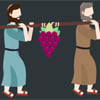
A condensation of the weekly Torah portion alongside select commentaries culled from the Midrash, Talmud, Chassidic masters, and the broad corpus of Jewish scholarship.



“Oh, you little boy,” said the man, resting his free hand on the little boy’s shoulder, “you don’t know what it’s like to have to schlep rocks. When you’ll be big like me, you’ll be happy with a little oven too.”
Watch our Jewish crafting guru, Abbey, demonstrate how to create unique candle holders that will be the centerpiece of your Shabbat or holiday table.

Amid bouts of deadly violence, Jewish residents of Mariupol have lived under the threat of invasion for months.

Writer Dovid Margolin’s article on decision allowing bearded rabbis in U.S. military gains first place

Unassuming visits to the sick influence lives in unexpected ways
That force that holds electrons in their orbit and planets in theirs, explodes incessantly within the stars above and is the darkness that fills the empty space—that force is a single whole, and it is G‑d.
It is not all of G‑d. It is an expression of G‑d. All of it could disappear in a single instant, and for Him nothin...


