


Tzav: Creating a Connection
Dear readers,
I will never forget the scene. My grandfather, Rabbi Chaim Meir Bukiet, a Talmudic scholar, was speaking in Lexington, Mass., where my uncle Rabbi Alter Bukiet is rabbi.
“The Gemara,” he began, quoting the Talmud, “says that when a wife and a husband are not at peace, the mizbe’ach sheds tears,” referring to the altar that stood in the Holy Temple in Jerusalem.
“Why specifically the altar? Why not the candelabrum or the laver?
“The Kabbalistic masters taught that sacrifices were not just in the Holy Temple; they are a part of every person’s daily life. When I put my needs aside for the good of another—that is sacrifice. When there is no peace in the home, no shalom bayit, we are not sacrificing enough. For this reason,” Grandfather concluded, “the altar sheds tears. It weeps, thinking that we have failed to sacrifice enough.”
This week we read the Torah portion of Tzav, which deals largely with sacrifices. Take some time to see where you can sacrifice, for your family, your community, for the world. And of course, enjoy the many articles that delve into the various practical lessons we learn from the sacrifices in the Holy Temple.
Have a great week!
Dovid Zaklikowski,
on behalf of the Chabad.org Editorial Team


I try to think back to yesterday, and in my tired, hazy, sleep-deprived state, a funny thing happens. I remember nothing. There is no yesterday . . .

As we attracted a small audience of people who likely felt grateful to not be in our shoes, standing with Josh, I couldn’t help but feel grateful to not be in theirs.


During the month of Nissan, when one sees a blossoming fruit tree, we make a blessing thanking G‑d for giving us trees that grow fruit.

In addition to inappropriate destruction, lessons about trees also teach us about proper use of resources.
Each of the first twelve days of Nissan, one of the tribal leaders, the nasi, offered inaugural sacrifices in the Tabernacle. We recite the section which describes the sacrifices of that day’s nasi.

On Passover we not only abstain from eating chametz, but we are enjoined to totally remove it from our possession. Hence the cleaning and koshering before the holiday.
Problem is, our homes are infested with the stuff. That’s why we go on a full search-and-destroy mission during the weeks before Passover.

Listen to the Four Questions in the traditional melody. Practice for Passover!

At most Seders the first question is about eating matzah, but the Chabad haggadah has the dipping question as number one. Isn’t the dipping only a custom? Why have it as the first one?
Rabbi Chaim Miller shares beautiful insights into the haggadah that will capture the interest of everyone around your Seder table.
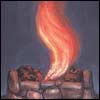
The priests are initiated into their service in the Tabernacle, and eat specific offerings. The fire on the altar must be kept burning at all times.
When you love life, you’re less likely to feel weighed down by your inadequacies.
We learn about the thanksgiving offering (korban todah), which is the basis for the blessing recited when one survives a life-threatening situation.

Good manners are a sign of breeding. And, if we wish our praise to be accepted, it is best to express gratitude in moderation.
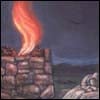
I can see the experiential quality of it all: an ancient temple with heavenly music and mystical song; priests in flowing robes deep in meditation; mesmerizing, choreographed ritual. But why the barbecue?
Unfortunately, moods can sometimes infringe on our relationship with G‑d, and with our fellows as well. “I am just not in the mood for prayer,” “I am not in the mood for my kids" . . .
At first the young man was impressed with the young lady’s character, but was repelled by the shape of her nose. Then he learned to ignore it. Now he loves it . . .
A horse needs to be reminded with the whip. But the human being should suffice with more subtle pointers as to how to order his priorities . . .

He took a full portion of the strong horseradish and ate it. As soon as he swallowed the whole mouthful, the cough grew worse and his whole body shook dreadfully.

During my freshman year of 1963–64, I was the only undergraduate female who identified herself as Jewish.
Yom Kippur is described in many ways. One very poignant description is that it is “once in a year.”
You see, the human soul is also described in many ways, with five different names, each describing a deeper level of her being. The fifth, deepest level is called yechidah, which means “one and unique.” Yechidah is th...


