


ב"ה
Chayei Sarah 5762 - November 9, 2001

The Emissaries
What do you do if you have a vision, and are determined to see that vision implemented in the life of every man, woman and child on the face of the earth?
What do you do if you have a vision, and are determined to see that vision implemented in the life of every man, woman and child on the face of the earth?
Parshah

Chayei Sarah Home Page
A bit about death, a lot about marriage and the art of storytelling. Also: sages and commentators ponder the significance of 400 shekels, 10 camels, two bracelets and a ring, a third wife and six more sons, and Chassidic masters discourse on life after death, a disappearing bridegroom and the return of Hagar.
A bit about death, a lot about marriage and the art of storytelling. Also: sages and commentators ponder the significance of 400 shekels, 10 camels, two bracelets and a ring, a third wife and six more sons, and Chassidic masters discourse on life after death, a disappearing bridegroom and the return of Hagar.
Story

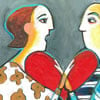
Love at First Sight: Five Biblical Examples
In five instances, the Torah describes the phe-nomenon of love at first sight: in the love of Adam for Eve, of Rebecca for Isaac, of Jacob for Rachel, of David for Abigail, and of David for Bathsheba. These five, in their historical order, are descending examples of how the intensity of love at first sight can be focused into mature, rooted love.
In five instances, the Torah describes the phe-nomenon of love at first sight: in the love of Adam for Eve, of Rebecca for Isaac, of Jacob for Rachel, of David for Abigail, and of David for Bathsheba. These five, in their historical order, are descending examples of how the intensity of love at first sight can be focused into mature, rooted love.

Such is the way of the world: As long as a person's mother is alive, he is attached to her; when she dies, he finds comfort in his wife.
— Rashi
Print Magazine
You don't learn by having faith. You learn by questioning, by challenging, by re-examining everything you've ever believed.
And yet, all this is a matter of faith
—the faith that there is a truth to be found.
It is another paradox: To truly question, you must truly have faith.
New on Chabad.org

