


Tzav
Haman in Jerusalem
Dear Friend,
With Purim in Jerusalem around the corner, I walk through the Machane Yehuda marketplace, and two signs of the impending holy day—one deliberate, one accidental—strike me.
The deliberate sign is the plethora of hamantaschen (or oznei Haman, “Haman’s ears,” in Hebrew) spread out on almost every other kiosk table. Every sweet filling your heart can desire. Chocolate. Poppy. Prunes. Walnuts. Jam. Halvah. Dates. And I think to myself: “Haman, how delicious your defeat is!”
The accidental sign is one not peculiar to Purim, yet Purim gives it new meaning. It is the ubiquitous presence of guns. Jericho 941s. Tavors. Micro Tavors. M16s. Galils. And I think to myself: “Haman, how incomplete your defeat is!”
Why are there so many guns in a sunny public marketplace? I conclude: the guns are there to protect the hamantaschen. We celebrate Purim because we survived Haman’s genocidal plan, true. But we survived only because we wanted to celebrate Purim. Even today, we continue to wage war on Haman. But not simply to stay alive. Life is not enough. We survive in order to experience a maximum of delight in the full Jewish existence that makes life worth living, worth fighting for. We survive on the merit of the desire to taste the sweetness, both on our tongues and in our souls, of the Torah and the honey dates of Jerusalem.
Michael Chighel,
on behalf of the Chabad.org Editorial Team


What message can I take from the celebration of Shushan Purim in my beloved Jerusalem, thousands of miles away? Is it my holiday, or am I merely a bystander while Jerusalemites are making merry?

On the surface the book of Esther reads as a fable of sorts, filled with drama, suspense and a happy ending. A secret tradition passed down orally tells the real story.

Of all Jewish holidays, this is the one when people let loose, dress up in silly costumes, and act in ways you’d never see them act during the rest of the year.

Your 2016 Purim guide contains the story of Purim, and all you need to know about the 4 mitzvahs of Purim and the other observances of the day.

Megillat Esther, “The Scroll of Esther,” is a firsthand account of the events of Purim, written by the heroes themselves—Esther and Mordechai. By special request of Esther to the Sanhedrin, the Megillah was included as one of the 24 books of the biblical canon.

Purim celebrates the deliverance of the Jewish people from the wicked Haman in the days of Queen Esther of Persia.

World War II had finally come to an end. My family was back from Siberia, where we had spent most of the war years . . .
Is this what Purim is all about—pretending to be something or someone you are not?

The plot thickened as news of Haman’s secret final solution leaked, and consequently plunged all the Jewish citizens of the vast Persian Empire into deep mourning and depression. Discover how Mordechai’s shocking response woke up a comatose nation. Learn the key insight embedded in a fascinating Midrash involving Mordechai, Moses and Elijah the prophet.

Why do we live? Are we here for ourselves, or is there a deeper purpose?

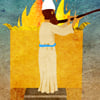
What is the significance of lifting and removing the ashes? Why is it so important that it’s the first ritual performed in the Temple, the first step in the service of G-d?
A condensation of the weekly Torah portion alongside select commentaries culled from the Midrash, Talmud, Chassidic masters, and the broad corpus of Jewish scholarship.



Accentuating the positive and the holy in Purim costumes, one family's themed outfits are designed each year to speak to the soul.

Flint’s close-knit Jewish community is doing what it has always done in times of crises: looking out for one another and helping the most vulnerable.

Two female Israeli backpackers were in distress. Stranded at 4,800 meters above sea level, in a remote part of the mountainous country.
Afterlife is a very rational, natural consequence of the order of things.
After all, nothing is ever lost—even the body only transforms into earth. But nothing is lost.
So too, the person you are is never lost. That person—that soul—only returns to its origin.
If your soul became acutely attached to the material worl...


