


Mikeitz and Chanukah
The Bat and the Rabbit: a Chanukah Fable
Dear Friend,
Remember learning as a kid how bats are blind, and how they fly around using an amazing anatomical radar mechanism built into their heads? The truth is, of course, that bats see well enough, and that their echolocation system (which actually works more like sonar than radar) is an extra ability they’re blessed with.
But imagine you still believed that. And imagine a bat lecturing a rabbit on the superiority of radar over eyesight as a navigational system. His lecture is so logical, complex and eloquent that the bat almost convinces the poor rabbit to close his eyes and give up seeing altogether. But as the rabbit walks to the radar store to purchase a system for himself, the simple truth hits him: “Wait a minute. The bat is really convincing. But gosh, things are so lovely and so real in the sunlight!”
This is just a little fable to keep in mind this Chanukah, when we celebrate the Maccabees’ victory over the Greek regime that wanted to impose its worldview on the Jews of ancient Israel. Whenever you hear the word “Greek,” please think of the bat. Think of how colorless, cold and crepuscular the world would be without the light of the Torah.
Michael Chighel,
on behalf of the Chabad.org Editorial Team.
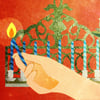
Who lights the menorah, when and how? What are the Chanukah prayers and traditions? This brief Chanukah tutorial will allow you to breeze through the Chanukah menorah-lighting ceremony.
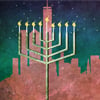
It’s Chanukah (sometimes spelled “Hanukkah” and pronounced HAH-new-kah), and you are planning on attending a public menorah lighting. Here’s what you need to know.
He listened quietly, then handed me a brochure. “There’s a seminar coming up on Chanukah, in Crown Heights, in Brooklyn. It’s for college students and others. You stay with a family over Shabbat. You might want to go.”
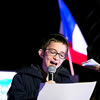
Adding light to a city that has seen significant darkness this year.

Join Chanukah celebrations from Paris, Jerusalem, Calgary, Florida, New York, Washington, D.C., U.S. military bases and more.
Rabbis say the incidents ‘will only unite us, strengthen us and encourage us to do even more’

Now, isn’t the mitzvah just to light the menorah at home? So why were the blessings recited at the public ceremony?

It turns out you get old when you stop growing up, and you grow up by remaining a child.

She was recuperating from an operation for a broken leg, and though she had been experiencing some occasional breathing problems since the operation, there had been no indication that anything was wrong, apart from her inability to walk.
For Joseph’s dreams to be fulfilled, Jacob had to mourn the loss of his beloved son for twenty-two years, and Joseph had to experience slavery and incarceration, and his brothers anguished remorse, for that same period. Why was it so important that Jacob and his sons “bow down” to Joseph?

Whatever happened to Joseph was the result of someone else’s deed: those of his father, his brothers, his master’s wife, the chief jailer, or G‑d himself. Joseph was the ball thrown by hands other than his own.
A condensation of the weekly Torah portion alongside select commentaries culled from the Midrash, Talmud, Chassidic masters, and the broad corpus of Jewish scholarship.

Why the Talmudic sages chose to omit the miraculous military victory from the Chanukah celebration.
To create space for the other is not to absent yourself and abandon them, but to be present in the right kind of way: to cultivate an environment in which the other can develop their individuality and ultimately enter into a fully reciprocal relationship.


The ancient Book of Formation teaches that there is more to the universe than time and space. There is a soul.
Whatever is found in the universe’s soul is found somewhere in its space. And whatever is found in space, is found in time.
In the soul of the universe there is a consciousness from which all consciousness exte...


