


Chayei Sarah
The Giant Gardening Convention Is This Week
It is well into autumn outside my window. The trees and bushes are already bare, but one solitary flower still blooms amongst the brambles.
In the Torah portion of Chayei Sarah we learn about our matriarch Rivkah, who despite all odds—growing up surrounded by swindlers and thieves—remained righteous and pure. Our sages applied to her the verse (Song of Songs 2:2), “Like a rose among the thorns, so is my beloved among the daughters.” From her we inherited our ability not only to survive our negative surroundings, but to thrive and attain the greatest heights despite negative environments, to bloom amidst the brambles.
The lone wildflower has a poetic beauty. But if you want a beautiful garden, you cannot afford to just sit around and wait for the flowers to bloom. There is work to be done. Appropriately, this week, thousands of Chabad emissaries—who, together with their wives, do so much to water, feed and nurture our nation’s garden—gather for the International Shluchim Conference. But it’s not just the rabbis. Each and every one of us has been tasked and empowered to tend to G‑d’s garden, helping each flower blossom, toiling until the day when G‑d will finally proclaim (Song of Songs 5:2), “I have come into My garden, My sister, My bride.”
Yehuda Shurpin,
on behalf of the Chabad.org Editorial Team
P.S.: Experience the energy of 5,600 Chabad emissaries and their guests on Sunday evening as we livestream the banquet from Brooklyn, New York.

I have undertaken to commit my life experiences to writing, so that my place in history is not forgotten.

If you look through a G‑dly lens, you can see the absolute beauty and divine brilliance of the human menstrual cycle.

“You should do it. It’ll give you something to write about!” my husband’s cousin Rochel effused in her inimitable, hard-to-refuse way.
Rabbis don’t like answering this question. Not because they can’t. Because of the risk.


The terrible wartime economy left us one year without any money for matzos or other food for Pesach.
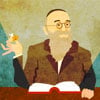
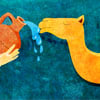
Surrounded by a group of able-bodied men, Eliezer did not appear as a helpless, weary chap begging for a drink. And Rebecca was a young woman of nobility, not a poor servant girl accustomed to lugging water from wells . . .

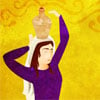
A condensation of the weekly Torah portion alongside select commentaries culled from the Midrash, Talmud, Chassidic masters, and the broad corpus of Jewish scholarship.


It is here in Hebron that the end of temporal life connects to the next world and eternity.

Join us for a live broadcast on Sunday evening.

Keynote speaker at annual Chabad gala to share his experiences with thousands.

Richard Lakin, 76, lauded as a dedicated educator; assaults continue around the country.

The story of one quadriplegic, who did not give up on his idea.

In less than a year, an online video series by Rabbi Shmuel Kaplan has found an active audience.
Why is Torah compared to light? Because it tells us the place of each thing.
Because, in truth, there is no need to change the world. Everything is here.
Each thing has a place, and in that place it is good. Altogether, it is very good, a beautiful world. All that’s needed is a little light.
What is light? Light...


