


Vayakhel-Pekudei
The Passion Factor
Dear Friend,
Reading the Torah portion of Vayakhel-Pekudei can feel like déjà vu. Haven’t we heard all this before? In fact, we have—in the portions of Terumah and Tetzaveh. First G‑d told us how to make the Tabernacle, and now the Torah is describing the actual construction. It seems kind of redundant.
As Shimon Posner writes in My Grandma’s Selective Memory, “The exhaustive repetition begs explanation, until we notice two words, "nediv libo," describing one who gave for the Tabernacle—that 'his heart was full of giving' . . . How do you get from divine concept to empirical reality? For that you need passion, a heart full of giving.”
It is uniquely satisfying to philosophize about Judaism, with its rich history and mystical ideas. But there is a second component that comes along with all the thinking, and that is the doing. Judaism has survived for over 3,000 years not because we are a nation of philosophers, but because we translate G‑d’s lofty will into action. But how do we keep doing without feeling that all this ritual, all these mitzvahs, are redundant? That takes “a heart full of giving.” That takes passion.
Comment below to let us know how you infuse your daily rituals with passion.
Sasha Friedman
on behalf of the Chabad.org Editorial Team
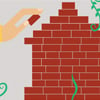
When the Jewish nation was still very, very young, we began setting aside materials for our own marital home. Our wedding was still hundreds of years, and hundreds of miles, away . . .

There must be transparency and accountability when it comes to public funds even if the people involved have impeccable reputations.

She built in America what architects of the land said could not be supported. But then, looking at blueprints, it can be hard to see passion.

A condensation of the weekly Torah portion alongside select commentaries culled from the Midrash, Talmud, Chassidic masters, and the broad corpus of Jewish scholarship.

Displaying patience and uncanny sensitivity to the psychological and sociological issues at play, the Rebbe persisted in his efforts. Eventually, it paid off. By the late 1960s, wearing a wig was the norm in most Orthodox circles.
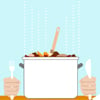
Reb Avigdor caught a whiff of the cholent, tasted it, then tasted it again, and again—until he finished it all.

I thought it would be fun to play some very harmless practical jokes, such as putting a piece of tape over a wireless mouse . . .
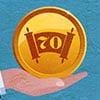
It appears several times in the Torah: seventy elders of the Jewish nation, seventy languages and nations of the world, and seventy members of Jacob's family.
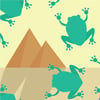

Some things are so very astounding that the casually passing mind refuses to notice the wonder.


At the northwestern tip of Tasmania, “The Edge of the World”, from which oceans sweep unimpeded for 10,000 kilometers before reaching the eastern shore of Argentina, was recently a meeting place for a Jew who had only recently discovered his identity and a trio of rabbinical students.

Crowd recalls joy and dedication of a woman sorely missed; a Torah scroll and building in her honor.

19th-century rabbi’s great-great-grandson comes to help for the holiday and dig into his roots.

The author's globe-trotting has taken her to the far reaches of Peru and India, Italy to Israel, Croatia to Southeast Asia and then some, where she has tasted the local flavors, photographed the feasts and recreated the bountifully flavored dishes of these exotic places in her own kitchen. Now she is sharing them with us in this beautiful new cookbook.

Even when perched at great spiritual heights, we must be ready to forego our own high, and fly off to help another.
For a mitzvah is a candle and Torah is light. (Proverbs 6:23)
Every mitzvah shines its particular light into our world. And there will come a time when you will see that light with your eyes.
Except the candles that are lit for Shabbat before sunset. They shine a light you can see right now.
It may seem an ordinary li...


