


Shelach
Spying on Yourself
Dear Friend,
At least once a year they come to visit, the misguided spies who earned a place in Jewish history through the unfortunate events of this week’s Torah portion, Shelach.
They had been dispatched with clear instructions: Scout out the land, survey its topography and inhabitants, and bring back a report to Moses. And that is what they did—even bringing back fruit samples.
So why are they viewed negatively for bringing a disparaging report? Weren’t they just carrying out divinely sanctioned orders?
One approach is that the problem was not the actual report, but the conclusions that they drew from it. They were sent to convey what they saw—not to give a feasibility analysis on G‑d’s planned conquest. If G‑d promised to do it, it could be done.
We all encounter obstacles. When we throw in the towel, we’re following the spies. On the other hand, shutting our eyes and pretending the issues don’t exist doesn’t either work—wandering blindly, we’re bound to trip.
This week’s lesson is that we are to take note of the rough terrain, meeting our issues with eyes wide open. But the conclusion mustn’t be “I can’t.” Rather, “It’s going to be hard, a real challenge, but with G‑d’s help I can rise above it all.”
Mendy Kaminker,
on behalf of the Chabad.org Editorial Team

The spies were “kosher for an hour.” This was taken into account when punishment was meted out.

One of the fundamental tasks of any leader, from president to parent, is to give people a sense of confidence: in themselves, in the group of which they are a part, and in the mission itself.

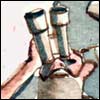
The twelve spies return with giant fruit, frightening the Jewish people, who complain and receive a severe punishment. Laws of challah and tzitzit. A man publically desecrates Shabbat, and is put to death.

No doctor or healer can tell you when you will become pregnant or when a treatment will work—it is purely in G-d’s hands.

No more weighing protein on little scales. No more arbitrary deadlines to lose X amount of weight. After I made this decision, I felt ten pounds lighter already!

The mitzvah of separating the consecrated “challah” portion from dough is a symbol for a woman’s influence on the kashrut of the Jewish home.

It wasn’t kosher, and I knew it. But I was hungry. In a weak moment, I ate the sandwich. And then . . . nothing happened.
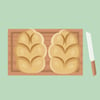
The pure, simple, unadorned word “challah” means “a loaf of bread.” However, in halachic terms the word “challah” has a very specific definition.

Being the youngest in my family, I was unfamiliar with the finer points of the art of diaper changing.

For one Arizona 9-year-old, there’s no choosing sides when it comes to Judaism—and his friends agree.

One man's mission to locate unused Torah scrolls, fix up others that are no longer fit for use, and send them out worldwide to communities in need.

Rabbi Meir Nissim (Michel) Abehsera, an acclaimed author and counselor on macrobiotic food and health whose open heart and home influenced thousands to return to Jewish tradition passed away Friday, June 6 in Jerusalem after a long illness. He was 80.

Maintaining Jewish life in the heart of the Amazon is anything but simple for Rabbi Arieh and Dvorah Lea Raichman. But they are up for the challenge of meeting the needs of Jewish fans who will be traveling to the jungle city of Manaus, Brazil, for the World Cup.

Biography resonates with people everywhere and sells out immediately.
“That is all fine and well,” replied Rabbi DovBer’s friend, “but there remains one slight problem: I need the
merchandise . . .”


Afterlife is a very rational, natural consequence of the order of things.
After all, nothing is ever lost—even the body only transforms into earth. But nothing is lost.
So too, the person you are is never lost. That person—that soul—only returns to its origin.
If your soul became acutely attached to the material worl...


