


Bechukotai
Humility in a Box
Dear Friend,
There was once a scholar who was quite arrogant despite—or perhaps because of—his Torah knowledge.
He once chanced upon Reb Zushia, a chassidic master known for his humility, who taught him a life lesson. Reb Zushia quoted the Talmudic discussion of whether the holy ark containing the Torah scrolls could be counted toward the 10 men required to form a prayer quorum—a notion the Talmud suggests and then rejects, noting that an ark is not a person, and only people can constitute a minyan.
“Why did the Talmud originally think,” Reb Zushia asked his visitor, “that the ark containing the Torah scrolls can be counted? Surely the Talmud's rejoinder, that an ark is not a person, is obvious?”
The man was dumbfounded, not knowing what to respond.
“Although an ark is merely a wooden box,” explained Reb Zushia, “it contains within it Torah scrolls. It was therefore supposed that the Torah it contains may elevate it to human status. The truth is, however, that despite the Torah you possess, if you remain a wooden box, unaffected by the Torah you’ve learned, you’re hardly a mentsch.”
The name of this week’s Torah portion, Bechukotai, can be linked to the Hebrew root word that means “engrave.” Just as words etched in stone are not a distinct entity from the stone itself, so must our studies be internalized and engraved upon our hearts—or else we are but wooden boxes.
Shaul Wolf,
Responder for Ask the Rabbi @ Chabad.org

Among the most searing curses ever to have been uttered, the sages found a fleck of pure gold.

When G-d communicates with us from a place closer to His essence, we don’t understand Him clearly. Was that a hug? ’Cause it felt like a slap in the face . . .

Two of the seemingly least-related concepts in the Bible are found side by side in this week’s Torah reading.

Rebuke, reward, and G-d’s promise of commitment. Also the mitzvah of tithing produce and livestock.

Understanding the difference between “living” and “existing” helps us understand why it’s sometimes so hard to like the people you love.
We count the Omer in anticipation of the giving of the Torah on Shavuot. But on Lag BaOmer we celebrate the life of R’ Shimon bar Yochai, who revealed the esoteric dimension of Torah.
A brief overview of the history of this little-known holiday and what it means to us.
Exploring the history of prayer, the structure of the siddur, and the morning blessings.

He cannot rule me; I am not my pain. Yes, he is in me, but I am the master.

Whether you’re ready to throw in the towel or just want to improve your marriage, here are four practical perspectives that can help your marriage survive and thrive.
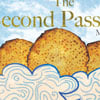
Thirty days ago we cleaned our homes and souls of leaven, and matzahed our way through the week-long festival of Passover. And now, Pesach Sheni—a second Passover experience!
Lag BaOmer is a festive day on the Jewish calendar, celebrating the anniversary of the passing of the great sage Rabbi Shimon bar Yochai and the end of a plague that raged amongst the disciples of the great sage Rabbi Akiva.


The little child jumping rope outside, the construction worker drilling steel girders, the ocean’s roar and the big blue sky will all speak of the oneness that breathes within all of them, without the need to sit and ponder. It will be the foreground experience. Because that is what they all truly are.


A bag of flour here, some eggs there, a package of yeast, salt, water … and what do you get? Eventually, delicious challah. And in one particular instance, lots and lots and lots of it.

Although various media reportsdescribed a hysterical Odessa Jewish community on the brink of evacuating, rabbis say everyone is staying put and Jewish institutions continue to function despite an economy in free-fall.

Rabbi Yerachmiel Gorelik gets a nod for his sense of humor, ease with people and ability to impart knowledge of Judaism to all

Chief Rabbi David Lau is known for his ability to connect with diverse Jewish communities


A creamy, frozen variation of traditional smokey campfire s’mores, with step-by-step pictures and instructions.
There are those who say that before we do any mitzvah, we must first understand why it needs to be done. Why else were we given a mind?
There are others who say we must just obey with simple faith. How else can we bond with One who is entirely beyond our understanding?
Abraham did both. He began with absolute faith,...


