


Ki Tisa: Heads Up for Passover
Dear Friend,
Purim just ended, and that means Passover is coming sooner than we think!
I was chatting with my acquaintance, Roz, and she was reminiscing about the Seders of her childhood. She couldn’t follow the Hebrew Haggadah the adults used, but she will never forget the special Passover fare. When she married Joe, her Moroccan-born husband, she experienced a different style of Seder. The food was exciting and new, but the Hebrew was equally unfamiliar. Forty years later, her daughter hosts the family for their unique blend of Sephardic and Ashkenazic cuisine, customs and songs. They take turns reading from the Haggadah and sharing insights, each person using the language and pronunciation they find most comfortable.
Although we all follow an (almost) identical script, every family's Seder is unique. We are telling and experiencing our own story, the narrative of our personal exodus.
Passover is less than a month away. In addition to cleaning and cooking, now is the time to start putting some serious thought into what you want to share at your Seder, and how you want to share it. After all, the mitzvah is “you shall tell your child…”
Menachem Posner,
on behalf of the Chabad.org Editorial Team


Why was the more holy object broken, while the less holy stayed whole?
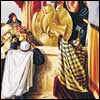
The Jews are counted, instructions are given for the remaining holy vessels, and two architects are chosen to direct the Tabernacle’s construction. When Moses doesn’t return on time, the people create and worship a golden calf. Moses breaks the two tablets, returns to heaven, and descends with two new tablets.

I wonder how often we allow ourselves to cheat. Sure, it can be easier or quicker to look as if we are doing the right thing, when in truth we are just taking the shortcut. But at what point do we recognize that truly, the only one we ultimately cheat is ourselves?

It all starts with the candles. The flames passed from generation to generation. Only now, looking back, can I appreciate the significance of a practice that connects us to the past, the present and the future . . .

Feel blessed if you are shame-bound rather than shameless! For you, the outlook is positive. Getting rid of excess shame is a like losing weight—it takes awareness and discipline. Go slowly, as this is a difficult “addiction,” probably the mother of all addictions . . .

The double triangle of the Star of David symbolizes the connection of both the inner and external dimensions of G‑d, Torah and Israel.

I have noticed that the graves of Orthodox Jews don’t have photographs on them. Is there a reason?

We need to learn from the hackers. Especially the criminal ones—and plenty of the most nefarious, criminal acts today are hacks.

In this first class in a series on women’s roles in Judaism, we analyze the blessing that men recite daily thanking G‑d “for not making me a woman.” How are we to understand the seemingly derogatory implications of this blessing?

As he approached, his eyes widened in shock and his jaw dropped. David felt a chill creeping up his spine, although he couldn’t imagine why Mr. Samson should be upset with him . . .

The rich man was no fool. “If my rebbe has a rebbe, why am I wasting time with the disciple?”

Bookworms often live in a fog of fiction–legends and fairy tales, battles and drama, building great things, even a brush with royalty. And sometimes, those tales actually come to life.
Many congregations have extra Torah scrolls, while others are desperate for a long-term loan. A volunteer brings them together. And like all good matchmakers, he creates happy long-term partnerships.


A Torah scroll is a high-precision document.
Journey deep inside the mysteries of this scroll and you will discover an amazing network of words and letters similar to the neuro-network of a human being.
Each letter of the scroll is a world of its own, surrounded by its own white space, without any other letter touch...


