


Ki Tisa: An Uplifting Purim
Dear readers,
While reading up on Purim, the historical context of the story suddenly hit me.
After nearly 1,000 years in Israel, the Jews were living in exile. Assimilation was at an all-time high, morale at an all-time low. Most of the prophets were gone, and it remained questionable whether Judaism could survive without a Temple at its nucleus.
When Haman wickedly plotted to wipe out all Jews, there was a simple way out: assimilate into Persian culture and be spared. There were no prophets to rebuke them, no miracles to inspire them. And yet, the Jews rallied behind Mordechai and stayed loyal to G‑d.
It was a pivotal moment in Jewish history. They decided, on their own terms, that they would live as Jews. And G‑d saved them.
“Why be Jewish?” is a question so many ask today. And our answer must go beyond—and give greater depth to—words like “tradition,” “history,” “culture.” We must live Jewishly in a way that is uniquely relevant to us. Through deepening our Jewish understanding and observance, we each become the next link in the chain that began at Sinai and will lead us to Moshiach and the era of universal perfection.
We did it once, and we will do it again.
Happy Purim!
Rabbi Yisroel Cotlar,
Responder for Ask the Rabbi @ Chabad.org

Visit our Purim site for all things Purim: Stories, insights, videos, songs, recipes & more.
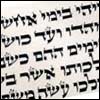
The original text of the Megillah (Book of Esther) with a running commentary culled from the Talmud and Midrash, the great Torah commentators and the chassidic masters.

Why was the fast instituted? Why is it called the Fast of Esther? What does fasting accomplish?

All cities that were walled when the Israelites entered Canaan observe Purim a day after everyone else. (This results in the occasional phenomenon of a three-day Purim.)

With Passover and Purim around the corner, we thought it would be appropriate to devote this week’s segment to the question, “What Is a Miracle?”

Instead of probing into prominent people’s privacies, I would pursue celebrities like Ahasuerus and Vashti of Persia.


Believe it or not, my children love to eat salad and other healthy goodies. How does this relate to Purim?

It is that essential, quintessential, burning question that we always ask ourselves: Who am I?

The community was in an uproar. How had they allowed such an accomplished scholar to be disdained in their midst, and to labor as a mere water-carrier for so many years?

I walked sedately from the auditorium, keeping my eyes straight ahead, though I could not see where my steps took me for the hot tears escaping down my flushed cheeks.

She had to visit the king. But how could she? She hadn’t seen the king in recent days, and who knows what his mood would be?
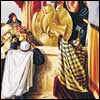
It’s all there in this week’s Torah reading: the golden calf, the broken tablets and the second set of tablets.

Between planning and building the temple, we’ll discuss tablet smashing, idolatry, adultery, and a bunch of other fiascos!
When one partner betrays the other, for reconciliation to occur, each must feel that “we are so connected that you mean more to me than whatever it was that you did.”

It’s all there: the underpinnings of creation, the saga of human struggle, and the ultimate triumph which arises from the imperfections and failings of man—all played out in four months . . .

Is G‑d so petty as to require an apology before forgiving? Can He not tolerate vicissitude in those He created?

One Friday the Baal Shem Tov arrived in town for Shabbat, unannounced and unexpected . . .
Mitzvah (mits-va): An instruction in life from the Giver of Life.
A stroke of brilliance arising from the innermost will of the Creator of all things, left for you to perform on the stage of His world.
A connection point in time, at which Heaven meets Earth, Earth meets Heaven, and the two embrace.
An instance, left in...


