


Vayeitzei: The Birth of a Nation
For the past few weeks, we’ve been living with our great-great-great-grandparents. Every year, these Torah portions allow us to connect with the common denominator of the Jewish people. No matter what our differences, we are all children of Abraham, Isaac and Jacob.
But then something funny happens: We split up into 12 parts. This week’s portion tells of the births of 11 of Jacob’s 12 sons, future fathers of the 12 tribes of Israel. This 12-way split sticks with us throughout our history. We traveled through the desert grouped by tribes. When we entered the land of Israel, it was divided according to tribe. Jewish mysticism even suggests that the various Jewish liturgical traditions are actually distinct pathways through which each tribe connects to G‑d.
So which is it? Are we one, or are we many? Does our Jewish identity demand conformity, or does it foster individuality? Are we a single cohesive unit, or are we a collection of unique souls with different routes to G‑d? Of course, the answer is “both.” Each one of us is Abraham, and at the same time, we are Reuben, Simeon, Levi, Judah, Issachar, Zebulun, Dan, Naphtali, Gad, Asher, Joseph and Benjamin. Or in my case, Dovid.
Have a great week!
Dovid Taub,
on behalf of the Chabad.org Editorial Team
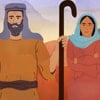
Jacob travels to Haran, dreams of the ladder, works for his uncle Laban, marries Rachel and Leah, starts a family and flees with them.

G‑d steps back to grant us the freedom to determine how good, how kind and how Jewish we will, or will not, be.
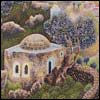

He ordered his servant to seize the ticket by force—which he did, and handed the ticket to his master.
While we sleep, our souls leave our bodies and ascend to their heavenly source to replenish their energy.

One world is that of his own personal material success. The other is holiness. How can they be joined?

We know that Jacob kept the divine commandments. Why, then, did he marry sisters, a direct prohibition?

In our quest for freedom we seek to unshackle ourselves, but in our search for love we seek to bind ourselves.

The moment we signed a mortgage, we demonstrated to all concerned that we were thinking long-term. We were here to stay, and people could begin to invest in us emotionally.
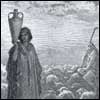
She finally had a child. Couldn’t she wait a day, or at least five minutes, before beginning to pray for her next child?

No matter how much respect we give our parents, we can never repay them for their part in bringing us into this world . . .

Why can’t people be endowed with hooves or tough leathery soles that grow along with them?

In a world where a person is worth something only after he proves himself, my child was nothing but a cute 6.5-pound mass.

It is hard for me to want to be wrong—even when all logic dictates that I would be crazy to hope for anything else.

You didn’t know how much it meant when you saw me, greeted me with warmth and made me feel like family.

I don’t know how she lived and I don’t know how she died. All I know is that I was blessed with the opportunity of preparing her body to leave this world.

Why is there an embroidered strip that looks like a crown on the top of the tallit prayer shawl?

Professor Velvl Greene, former chair of epidemiology and public health at Ben-Gurion University, professor emeritus there, and director of its Lord Jakobovits Center for Jewish Medical Ethics, passed away at the age of 83.
Last month’s surprise snowstorm that wreaked havoc on the Tri-State area toppled trees and snapped power lines, sweeping up Chabad-Lubavitch of New Jersey’s fifth annual Friendship Circle Walk—originally scheduled for Oct. 30—in its wake.
Afterlife is a very rational, natural consequence of the order of things.
After all, nothing is ever lost—even the body only transforms into earth. But nothing is lost.
So too, the person you are is never lost. That person—that soul—only returns to its origin.
If your soul became acutely attached to the material worl...


