


Va’etchanan—The Thread of Love
I spent a year in a small yeshivah in Hungary. We often had a hard time getting together the ten men needed for a minyan (prayer quorum). As soon as the ninth worshipper would enter, one of our regulars—a middle-aged man from Monsey—would always say, “The Baal Shem Tov promised that when there are nine Jews waiting for a minyan, there will be a tenth.” And the tenth man always did come.
The two most prominent fasts on the Jewish calendar—Yom Kippur and the ninth of Av—are polar opposites. On Yom Kippur we revel in our close connection to G‑d; spending the day in prayer, we feel like angels. The ninth of Av, on the other hand, marks our distance from Him; it is a day riddled with events demonstrating how far we have wandered from our Heavenly Father—including the destruction of both the first and second Temples in Jerusalem. Yet, at its core, buried in the estrangement of the ninth of Av lies the closeness of Yom Kippur celebrated on the tenth of Tishrei.
Following nine, there will be a tenth.
In the words of the sages, “He who cries over the destruction of the Temple will merit to see it rebuilt.”
Amen.
Menachem Posner,
on behalf of the Chabad.org Editorial Team
On the ninth of Av, both our Holy Temples were destroyed, and exile, persecution and spiritual darkness began.

On this miserable morning, I stand before G‑d hungry and unwashed, undignified and unadorned . . .
A certain man had a friend named Kamtza and an enemy called Bar Kamtza. He once made a party and said to his servant, “Go and bring Kamtza” . . .

Does my generation even believe that true love is possible? Do we realize what we are missing?

I believe. I have to believe. If I don’t believe, I am left with nothing. I believe, because how can I not?

“Why have they stopped crying?” wondered the villager. “Are they no longer hungry?” Then he remembered the cholent . . .

“Water!” the invalid rasped in a whispery voice. The priest, who had taken his final confession, turned pale.
When you’re feeling sad, do you turn to your father or to your mother? Is it transcendence that you seek, or a solacing embrace?

I never imagined that such a reductive view of my life’s stuff could so aptly tell the story of us, but in many ways it does . . .
Moses describes the Exodus, predicts Israel’s abandonment, and summarizes the fundamentals of the Jewish faith.
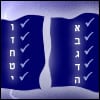
Seeing that in this week’s Parshah Moses reviews the Big Ten, why not go through the list to see how we score?

Why are the final letters in the Shema larger than all the others in the Torah scroll?

Why do we add it to one of the most fundamental Jewish prayers, and why do we say it quietly?
How does one restore the divine unity to our fragmented world? By delving even further into its plurality.

Our sages tell us that the creation of the entire world is considered a worthwhile endeavor just for the daily recital of Shema.

His terrified, screaming face, thankfully on the other side, is the last thing I see . . .

The daffodils that were planted in the hard-packed dirt at the base of the palm tree continue to break through the hard soil and proudly sprout their yellow blooms . . .

How can I inspire myself so that I will be more excited to do good things?
Within every love, there is fear: The fear of separation from that which you love.
A child fears separation from her parents, a lover from his beloved, the body fears separation from the soul, and the soul from its Source Above.
So what do you love? Look at your worries and you will know. If you seethe in worry over you...


