


1967-1986: Underground Aid; Aboveground Inspiration
Israel had been a source of aid for Soviet Jewry since 1948. Then, following the Six Day War in 1967, the Soviet Union cut all ties with Israel.
Lishkat Hakesher, the covert Israeli agency established to maintain ties with Jews behind the Iron Curtain, code named Nativ,, had established a relationship with the Rebbe in New York many years earlier. Knowing of the Chabad activists spread throughout the Soviet Union, Nativ became even more reliant on Chabad’s existing network.
This partnership continued, despite the Rebbe’s strong disagreement with Nativ’s tactic of spearheading the public protests that would eventually morph into the Soviet Jewry movement.
The Rebbe was a prominent opponent of the Western Soviet Jewry movement’s loud and often bombastic protests in support of Jewish emigration from the Soviet Union. Basing his position on his deep knowledge of the Soviet Union and the Russian mind, as well as his contacts within the U.S. and Israeli security establishments, he argued that only quiet diplomacy would have the desired effect on the Russians, who bristled at being commanded to release their Jews in loud confrontations. The goal, the Rebbe would stress in public and even more forcefully in private, was to help the Jews in the Soviet Union both materially and spiritually—both those attempting to leave and those remaining—and not score political points and in this way place the Jews of Russia in harm’s way.
The Six Day War had a deep impact on Soviet Jewry, sparking an awakening of the Jewish soul. Even as waves of emigration brought Jews to freedom, there remained in Russia Chassidim who kept the flame of traditional Judaism alive, including Moscow’s Reb Getche Vilensky and Reb Mottel Lifshitz, who helped a generation of Soviet Jews re-connect with their heritage.

A burning flame amidst the desolation
|
1969
The Rebbe dispatched emissaries to accommodate the spiritual and material needs of those Jews who remained in the former Soviet Union, ensuring that Russian Jewry would endure not only in body but also in soul.
|

In the Soviet Union, even getting a piece
of matzah for the Seder was fraught with danger
|

With an eye to the future, Yuli Edelstein relives his story of religious persecution in Russia
|

Their determined and proud stance as Jews brought about that, "For the Jews there was light, joy, gladness and honor," meaning also honor and admiration on the part of their erstwhile enemies.
|

Video | 6:24
Shortly after Mrs. Ella Skoblo arrived in New York, she had an audience with the Rebbe. While she knew that her grandfather, Rabbi Yehuda Leib Levin, the Chief Rabbi of Moscow during the Soviet era, had met with the Rebbe during his visit in 1968, she was surprised to discover that he was also part of a covert operation orchestrated by the Rebbe.
|

Video | 12:56
The Rebbe sends an American rabbi to open four Jewish religious underground schools and he comes back with a lesson in his mission in life.
|
Video | 3:52
1985
Dr. David Luchins served on the staff of US Senator Daniel Patrick Moynihan for twenty
years. He reveals the Rebbe’s influence in bringing down the Iron Curtain.
|

Video | 34:07
A Personal Family Saga Spanning Five Generations
An extraordinary address by Professor David Luchins, chair of Touro College’s department of political science and a longtime advisor to the late New York Sen. Daniel Patrick Moynihan, at the gala banquet of the International Conference of Chabad-Lubavitch Emissaries (Nov. 15, 2009).
|

Speaker of the Knesset Yuli Edelstein at the Conference of Chabad Emissaries
|

A Rabbi Eulogizes President Reagan
He gave brief descriptions of the people who my parents would be meeting and what their needs were: who needed to have a marriage performed, who needed tefillin, which families needed Jewish toys and candies...
|

Video | 5:32
When Irina Markish became active in the protests and demonstrations calling for the release of Soviet Jewry and on behalf of her husband, David Markish, in particular, her advocacy led her to a surprising and fruitful meeting with the Rebbe. (1972)
|

Video | 5:23
Rabbi Eliezer Nisilevitch recalls the dangers his family faced in the Soviet Union as members of the Jewish underground, and the strength and direction they received from the Rebbe even after they had succeeded in emigrating to Israel. (1971)
|

Video | 4:59
Professor Herman Branover is a world-renowned physicist. Living as a refusnik in Leningrad in
1972, he found the phone number to 770 in the inside page of a Jewish prayer book...(circa 1972)
|
Video | 6:43
The release of Rabbi Yosef Yitzchak Schneerson from Soviet Russia was more than a victory for an individual. The approach which proved to be successful in lobbying the Soviets to agree to his release was one of quiet yet forceful diplomacy, far away from the public arena.
|
Video | 7:28
Addressing Jews who had recently arrived from the Soviet Union at a Lag B’omer parade, the Rebbe explains that they demonstrate, for all to see, the steadfast commitment to Torah and Judaism that the Jewish people have, despite adversity.
|
Video | 3:56
Those trapped in the Soviet Union face a tremendous test. They have been in a predicament in which there was never a calm moment in matters of Judaism, yet they have never been deterred from their commitment to Judaism.
|

Video | 7:21
11 Nissan, 5732 · March 26, 1972
After over fifty years of persecution, Soviet Jews have come out whole in their Judaism and
with children following in their ways. Having served G-d with such sacrifice for over a halfcentury,
one might argue that they have done their fair share — now it’s time to relax a bit…
|
Video | 2:38
Chasidim sing a song with words in Russian; “We will not drown in water, and in fire we will not burn,” as the Rebbe distributes L’chaim to Jews who have recently arrived from the Soviet Union.
|
Video | 1:18
The Rebbe instructs Reb Hirshel Chitrik to sing the Russian version of “One is Hashem”.
|
Video | 10:50
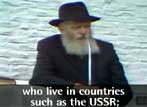
The following talk, as others in its genre, was meant as encouragement for the underground Russian Jewish movement. Some of these talks or their translation into Russian would be broadcast on Radio Free Europe, reaching the oppressed peoples of the Soviet Republics.
|

Video | 6:03
Rabbi Yitzchak Kogan serves as the director of the Bronnaya Synagogue in Moscow. He is a former refusenik and leading figure in the Soviet Jewish underground. Although he later had numerous encounters with the Rebbe, as a young child, all he knew was what he heard from his mother. (1981)
|
Video | 6:49
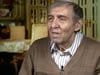
While Professor Evsey Nemoytin served as dean of Kazakh State University, his parents ran an underground mikvah. In the 1970s, the Rebbe arranged their eventual exit from the Soviet Union. Professor Nemoytin recalls the Rebbe’s valuable advice, as well as his delight at learning that the Rebbe understood his field of research. (Includes footage filmed by Rabbi Berel Levy to be smuggled out to the Rebbe.)
|

Video | 3:53
Rabbi Yosef Mendelevitch is a Rabbi and teacher living in Jerusalem, Israel. He is famous for his struggles in Soviet Russia where he was imprisoned for almost a decade for his public attempts to immigrate to Israel from the Soviet Union. It is the Rebbe’s care and direction, however, which led him down the path on which he finds himself until this day.(year 1980)
|
Video | 5:28
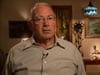
Elimelech Leiman relates that when the Rebbe heard about his father’s upcoming trip to the Soviet Union to visit family, he requested to see him. Handing him a bag of esrogim and a secret code, the Rebbe stated, “This mission will be good for them and good for you.”
|

Katya Umansky's Courageous Escape from Communist Russia
Katya Umansky was alone in her Moscow apartment when the phone rang. "All right, Umansky," said the caller. "Let's put the games aside. I'm a representative of the KGB. I need to talk to you."
|
|
Katya Umansky's Courageous Escape from Communist Russia
Katya couldn't move. She was dumbfounded. The office, the OVIR chief, everything seemed to be an illusion. In utter disbelief she watched the chief slide a red passport across the desk.
|

How a young woman in the Soviet Union discovers her soul
Every day brought new torment. Katya sat at her desk in the classroom, alone, isolated and shunned. She never cried, though. She didn’t cry when they chased her, or threw stones at her, or struck her with their backpacks.
|
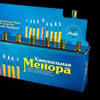
We are getting ready for the New Year at school. There is a huge Christmas tree in the auditorium, decorated with balls and garlands. During the day we practice for the end-of-year concert, where I play a “snowflake”—just like all the other Russian girls. But I can’t wait for the nighttime, when a different holiday will enter my life—the one I don’t talk about in school. It’s my Chanukah . . .
|
Video | 5:06
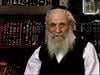
Reb Mottel Lifshitz, a key figure in the Soviet Jewish underground, served as Moscow’s only ritual slaughterer for almost three decades, and performed countless clandestine circumcisions.
|
She wanted to show Yona the impact she had made on her life, to tell her how her encouragement, kind words and warmth were coming to fruition 32 years later...
|
Video | 19:51
Lobbying for the Release of Soviet Jews in the 1980s
Rabbi Abraham Shemtov, the Rebbe's Shliach to the White House, recounts firsthand how the Rebbe influenced the U.S. government to push for the release of Soviet Jews in the 1980s.
|
How I saved lives with the Rebbe's precious advice in what became the most important story of my life.
|
The Rebbe said, “Since I am not in the Senate you will be my representative and speak in my place, and you will try to help the Jews in Russia.”
|
Video | 1:07:02
A first-hand account of a refusenik's battle to practice Judaism in Soviet Russia. An incredible story of resilience and defiance.
|

Video | 6:59
In 1970, Mordechai Gorelik was granted permission to leave the Soviet Union. His parents and brother, Rabbi Elozor Gorelik, remained there, trapped behind the Iron Curtain. During his first audience with the Rebbe, he presented the Rebbe with a photograph of the resting place of the Rebbe’s father in Almaty, Kazakhstan.
|

Yitzchak Kogan spent 14 years waiting for a Soviet exit visa. Then the Rebbe sent him back
|
Start a Discussion